
Pico Rivera sits on a strip of ground between two flood-control channels — the San Gabriel River on one side, the Rio Hondo on the other — and that position runs through everything about sewage work here. The water table is shallow. During a long wet stretch the ground saturates, groundwater finds its way into old cast iron and clay through cracked joints, and the sewer system carries more than it was ever sized for. That's when the calls come, and they tend to come together.
Above ground it's consistent housing — postwar tract from the Pico and Rivera years before the two merged in 1958, slab on grade, galvanized supply and cast iron waste lines, small to mid-size lots through the North Pico Rivera and Rivera districts. Uniform stock means uniform aging. When one street's laterals start giving up, the streets around it are on the same clock, and a wet winter is what brings the whole cohort forward at once.
What Pico Rivera Changes About Sewage Cleanup
1Groundwater infiltration into old laterals
With the water table this close to the surface, a cracked joint doesn't just leak out — it lets groundwater in. That extra volume fills a line that would otherwise cope, which is why a house that behaved all summer backs up in February. It also means any excavation to reach that pipe happens in wet, unstable soil.
2Storm-season calls arrive in batches
When a long system parks over the basin, we get several Pico Rivera addresses in a day and the plumbing trades are booked solid at the same time. We're honest about sequencing: containment and extraction go in first everywhere, because stopping the spread is what protects the house while a line repair waits its turn.
3The endorsement question comes up early
Because backups here follow the weather, we end up asking one question a lot: does your policy carry a sewer backup endorsement? Standard homeowners coverage often excludes it, and finding out at two in the morning is the wrong time. We bill insurance directly when the coverage is there and we tell you plainly when it isn't, before work starts.
How the Work Runs
The method is the same one we use on every sewage cleanup job, documented to the IICRC S500:2025 standard. Here it is in short — the full sewage backup cleanup process explains each stage in detail.
- Secure the area and set containment
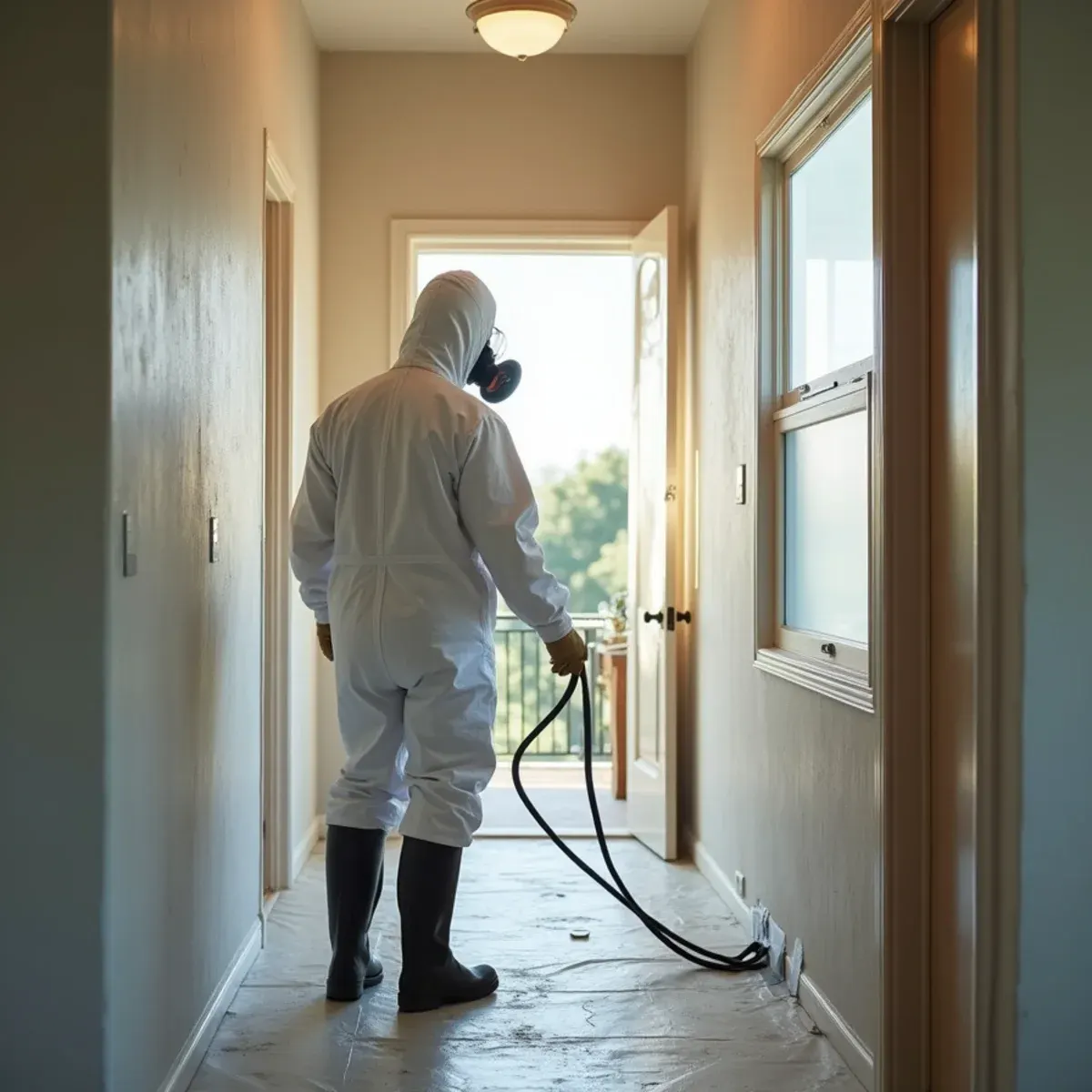
- Full PPE and safe extraction
- Remove contaminated porous materials
- Clean and disinfect all remaining surfaces
- Deodorize at the source
- Dry, verify, and clear
The Pico Rivera Background Worth Knowing
On a hillside, storm water leaves. In Pico Rivera it soaks in, and when the soil is already near capacity it stops soaking in and simply stands. That is why a yard here can hold water two days after the rain stops while a yard up in the Whittier hills is dry by morning. The lawn is not draining badly. The ground underneath it is full. Once that happens, every path water can take toward your house becomes the path it takes: the garage threshold, the slider track, the gap where a patio slab has settled back toward the wall.
There is more on the housing stock, drainage and plumbing history of this city on our water damage restoration in Pico Rivera page.
Pico Rivera at a glance
- Dominant construction era
- 1945–1965
- Foundation type
- slab on grade
- Supply piping found here
- original galvanized steel, copper
- Drain line materials
- cast iron
- Terrain and water table
- flat, shallow water table
- Most common local failure
- ground saturating fast during sustained storms because the water table between two channels sits high
- Highest-value local prevention
- clearing area drains and confirming downspouts discharge well away from the foundation
What It Costs in Pico Rivera
We do not quote a number over the phone before seeing the property — anyone who does is guessing. The variables that actually move the price on a sewage cleanup job are affected square footage, volume of porous material removed, contents in the affected area, and they are broken down in full on the sewage backup cleanup page. The assessment and the written estimate are free anywhere in Pico Rivera, day or night, with no obligation.
Sewage Cleanup Questions from Pico Rivera Homeowners
Because nothing inside the house is the problem. Between the San Gabriel River and the Rio Hondo the water table sits high, and in a long storm groundwater pushes into cracked joints in old cast iron and clay laterals. The line ends up carrying rain it was never meant to carry, and the first thing to give is the lowest fixture in your house. A camera scope in dry weather usually finds the cracks.
It depends on the source. A toilet that overflows with clean bowl water because of a stuck fill valve is Category 1 or 2 and is far less serious. A toilet that backs up from the main line is carrying waste from the whole system, and that is Category 3 — it needs the full protocol.
No. Standard practice for Category 3 water is removal and disposal of carpet and pad that were contacted. Porous materials cannot be reliably disinfected all the way through, and the health risk of leaving them is not worth the savings.
Not in the way people picture it. The channels are engineered, and what we actually see is a groundwater and surface drainage problem rather than a channel overtopping. Because the water table between the two runs high and the ground is flat, soil here reaches saturation faster than it does a few miles inland. Once it does, storm water stops soaking in and starts looking for the lowest opening in your house, which is almost always the garage.