
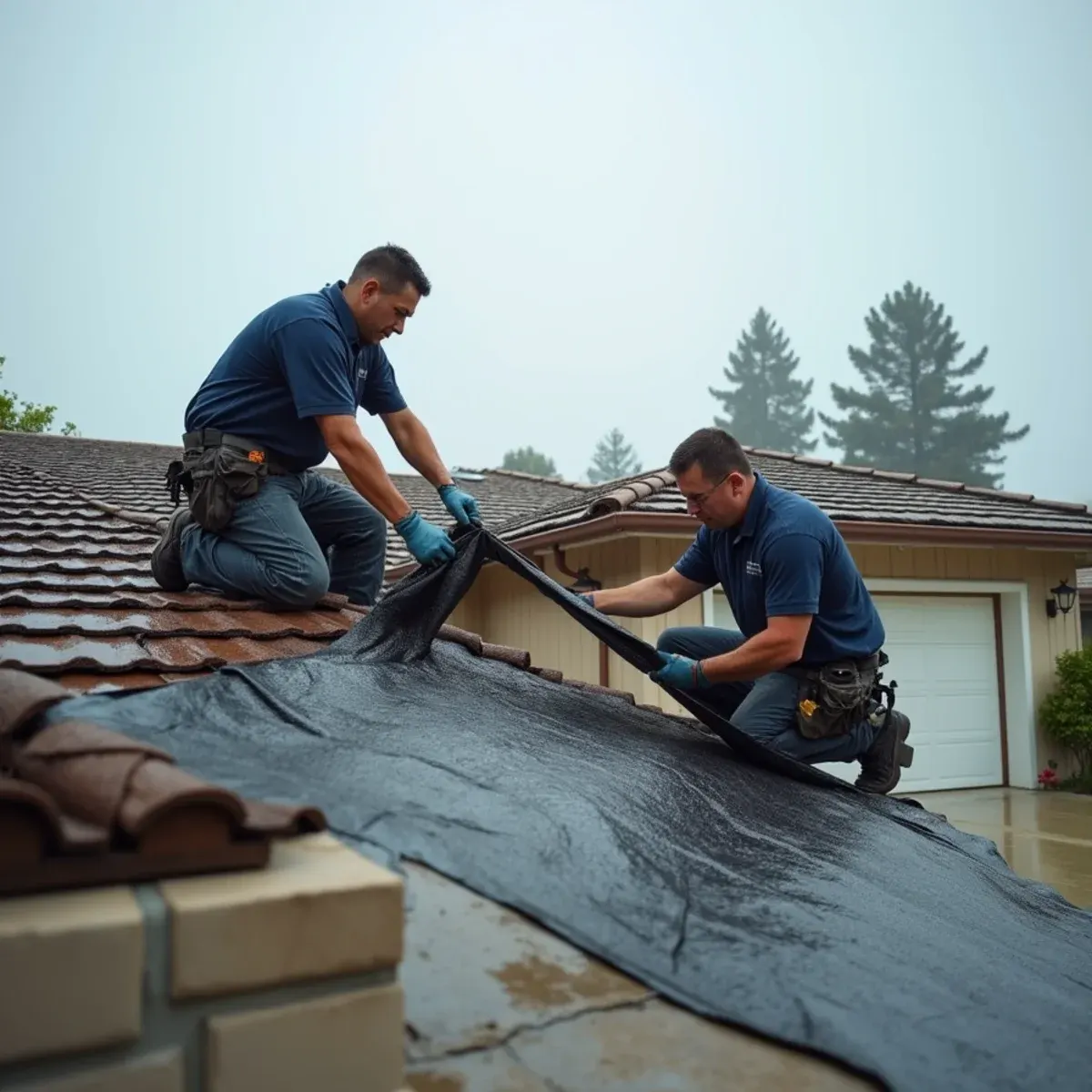
Whittier is old enough to show it. Uptown, around Greenleaf Avenue and Philadelphia Street, holds late-Victorian houses with bay windows, early-1900s Craftsman with deep porches, and 1920s Spanish Revival under clay tile — nearly all on raised foundations. Clay tile is deceptive during a storm: the tile itself is fine, but the underlayment beneath it is the actual waterproofing, and on a hundred-year-old roof that felt is long past its service life. Wind lifts a few tiles and the storm finds the gap the same night.
Go uphill and it's another city. College Hills, subdivided in 1923 as Whittier's first planned hillside development, still has the steep grades and curving streets, and Friendly Hills and the Whittier Hills drain toward the same streets. Turnbull Canyon sheds a lot of water into the northeast side. East Whittier, by contrast, is conventional postwar slab tract with ordinary tract failures. We're about twenty minutes north of Cypress, and where you live decides which crew and which equipment we send.
What Whittier Changes About Storm Damage
1Clay tile roofs and failed underlayment
Spanish Revival roofs in Uptown look intact from the street while leaking freely. We walk tile carefully or not at all, because broken tile creates the next leak. We tarp over the affected field with weighted, low-anchor methods rather than screwing battens through hundred-year-old sheathing. Before the season, the honest question is the age of the underlayment, not the condition of the tile.
2Steep College Hills grades
The 1923 hillside street layout means driveways that drop or climb hard from the road and rear yards well above or below the house. Storm water arrives with speed rather than pooling, so it overtops thresholds instead of seeping in slowly. Retaining walls, stair drains and hillside catch basins on these lots need clearing before the season, and equipment access on the steepest lots takes us longer.
3Raised foundations hide the damage
Under an Uptown house, storm intrusion goes into the dirt and stays there. Nothing pools on a floor to tell you about it. We open the crawl space, meter the subfloor and sill plates, and look for standing water and displaced insulation. Under S500:2025 that soil contact makes it Category 3, so it gets extracted and cleaned rather than ventilated and forgotten.
How the Work Runs
The method is the same one we use on every storm damage job, documented to the IICRC S500:2025 standard. Here it is in short — the full storm damage restoration process explains each stage in detail.
- Emergency tarping and board-up
- Water diversion and extraction
- Full damage documentation
- Interior mitigation
- Structural drying to standard
- Permanent repairs
The Whittier Background Worth Knowing
A leak under a raised foundation does not announce itself the way a slab leak does. There is no puddle on the floor and no warm spot underfoot, because the water drips down into the soil and stays there. What you get instead is a smell that is stronger in the morning, a board that feels slightly soft, and eventually a floor that has been quietly feeding fungal growth for months. By the time an Uptown homeowner calls us about a crawl space leak, the question is rarely how to dry it. It is how much of the joist and subfloor is still doing its job.
There is more on the housing stock, drainage and plumbing history of this city on our water damage restoration in Whittier page.
Whittier at a glance
- Dominant construction era
- 1890–1980
- Foundation type
- mixed on grade
- Supply piping found here
- original turn-of-century piping, galvanized steel, under-slab copper
- Drain line materials
- cast iron, clay
- Terrain and water table
- hillside-mixed, moderate water table
- Most common local failure
- raised-foundation crawl-space leaks in Uptown, and slope drainage failures in the hillside tracts
- Highest-value local prevention
- an annual crawl-space or slope-drain check, depending which Whittier you live in
What It Costs in Whittier
We do not quote a number over the phone before seeing the property — anyone who does is guessing. The variables that actually move the price on a storm damage job are size of the opening and duration of intrusion, emergency mitigation scope, how many rooms the water reached, and they are broken down in full on the storm damage restoration page. The assessment and the written estimate are free anywhere in Whittier, day or night, with no obligation.
Storm Damage Questions from Whittier Homeowners
Yes, before the next system. The tile isn't what keeps water out — the underlayment under it does, and where tiles are missing that felt is now exposed to sun and wind and will fail quickly. One dry week can turn a small tile problem into a ceiling. We'll tarp or dry-in the exposed field and photograph the missing tiles for your claim, and then you can schedule the tile work without pressure.
During. Emergency tarping and board-up happen in the rain — that is the entire point of them. We triage by severity, so active intrusion into occupied living space goes to the front of the queue.
Sudden wind and rain damage is generally covered, including the resulting interior water damage. What gets excluded is damage from a roof that had already failed or from deferred maintenance, and flooding from water that came across the ground, which needs separate flood insurance.
It cuts both ways. A crawl space leak hides longer, because the water drips into soil instead of pooling on your floor, so it often runs for months and reaches the framing before anyone notices. The upside is real though: the plumbing is accessible, so locating and repairing it does not mean breaking concrete. On balance, detection is your weak point in Uptown, which is why an annual look under the house is worth doing.