
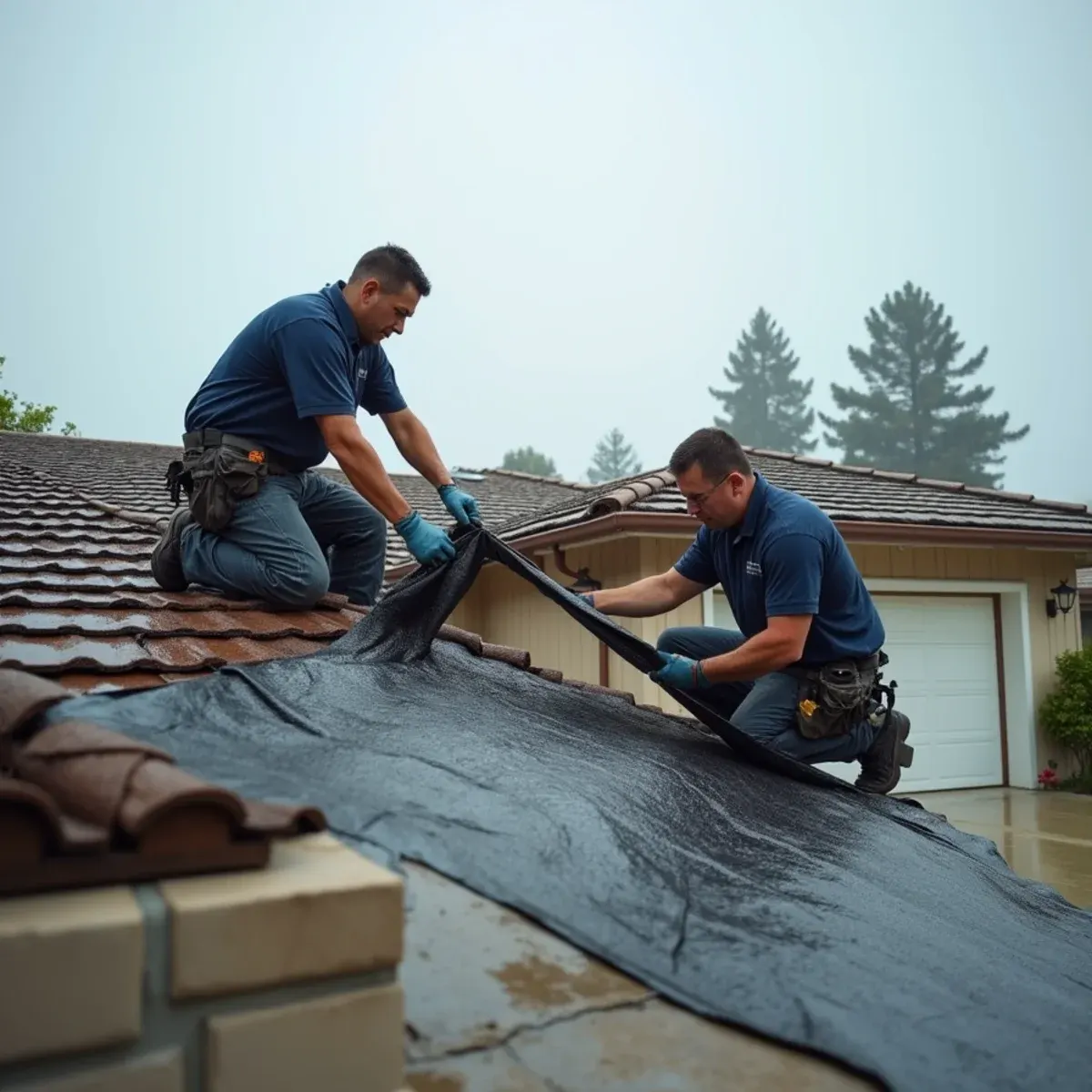
In Leisure World, a storm leak is rarely one household's problem. Nine thousand units built in the early 1960s share walls, roofs and mutual responsibility, so water entering above one unit crosses into the next and immediately involves a mutual, a management company and more than one policy. The residents we meet are usually being told to wait for someone else's approval while the ceiling is still wet. We document each unit separately from the first hour so nobody's damage disappears into a shared file.
Old Town is a different animal — dense lots off Main Street, mixed foundations going back to the 1920s, and salt air that eats flashing and fasteners within a mile of the pier. The marine layer is the part people underestimate. Ambient humidity stays high here for days at a stretch, so a drying plan that would work in Fullerton runs long in Seal Beach. We bring more dehumidification capacity than the square footage suggests, because the outside air isn't going to help us.
What Seal Beach Changes About Storm Damage
1Shared walls, separate documentation
When storm water crosses between attached units, each one needs its own moisture map, photographs, drying log and contents record. Mutuals and management companies coordinate the building; they don't document your interior for you. Doing this from the first hour is what keeps a resident from being told months later that their damage was never properly recorded in the first place.
2Marine air lengthens every dry-out
Within a mile of the water, outdoor air is often too humid to be useful, so we close the space up and dry with dehumidifiers rather than ventilating. Expect readings to move more slowly than an inland job and expect more equipment in the room. Pulling machines on day three because things look dry is how hidden moisture becomes a mold call in April.
3Salt-corroded flashing lets storms in
Coastal exposure shortens the life of every fastener, sealant and metal flashing on the building. Nail heads rust through, counter-flashing loosens, and a detail that would hold fifteen years inland fails here in seven. Wind-driven rain finds those openings. Renewing exterior caulking and flashing on a shorter cycle than the manufacturer suggests is ordinary maintenance this close to the pier.
How the Work Runs
The method is the same one we use on every storm damage job, documented to the IICRC S500:2025 standard. Here it is in short — the full storm damage restoration process explains each stage in detail.
- Emergency tarping and board-up
- Water diversion and extraction
- Full damage documentation
- Interior mitigation
- Structural drying to standard
- Permanent repairs
The Seal Beach Background Worth Knowing
Structural drying works by creating a vapor pressure differential — dry air pulls moisture out of wet materials. When the surrounding air is already carrying a heavy moisture load, that differential shrinks and everything slows down.
There is more on the housing stock, drainage and plumbing history of this city on our water damage restoration in Seal Beach page.
Seal Beach at a glance
- Dominant construction era
- 1920–1965
- Foundation type
- mixed on grade
- Supply piping found here
- galvanized steel, copper, shared community mains
- Drain line materials
- cast iron, clay
- Terrain and water table
- coastal-flat, shallow water table
- Most common local failure
- losses that cross shared walls between attached units, involving several policies and a mutual at once
- Highest-value local prevention
- documenting each affected unit separately from the first hour
What It Costs in Seal Beach
We do not quote a number over the phone before seeing the property — anyone who does is guessing. The variables that actually move the price on a storm damage job are size of the opening and duration of intrusion, emergency mitigation scope, how many rooms the water reached, and they are broken down in full on the storm damage restoration page. The assessment and the written estimate are free anywhere in Seal Beach, day or night, with no obligation.
Storm Damage Questions from Seal Beach Homeowners
Get your own unit documented right away, regardless of who ends up doing the repair. Timestamped photos, moisture readings, a list of affected contents, and the date and time you reported it. That record is yours and it protects you if the shared-wall question takes weeks to sort out. We're glad to do that documentation and start drying your interior while the mutual works out responsibility for the building side — the two don't have to happen in order.
During. Emergency tarping and board-up happen in the rain — that is the entire point of them. We triage by severity, so active intrusion into occupied living space goes to the front of the queue.
Sudden wind and rain damage is generally covered, including the resulting interior water damage. What gets excluded is damage from a roof that had already failed or from deferred maintenance, and flooding from water that came across the ground, which needs separate flood insurance.
Coastal marine layer conditions keep ambient humidity high for extended periods, which reduces the vapor pressure differential that drives drying. Jobs near the water need sealed chambers and more dehumidification capacity than an equivalent loss inland, and the equipment stays on longer.