
Two calls come in from the same block off Somerset. One is a family with water coming in under a bedroom slider. The other is a manufacturing building with three inches across a production floor and racked inventory sitting in it. Same storm, same street, completely different jobs — different equipment, different documentation, different insurance path, different clock. Paramount is one of the more industrially dense cities we serve, with housing packed tightly between the commercial corridors, and storm nights here regularly look exactly like that.
The residential stock is 1945 to 1965, slab, on lots with very little permeable ground left. The Los Angeles River channel runs the western edge and the city carries elevated flood risk, so during sustained rain the storm drain system is what stands between a street and a living room. When area drains are silted and curb gutters are packed with debris, water backs into driveways and side yards quickly. We're about fourteen minutes east in Cypress and dispatch in call order as conditions allow.
What Paramount Changes About Storm Damage
1Almost no permeable ground left
Between the house, the driveway, the patio slab and the added garage or workshop, a typical Paramount lot absorbs very little. Everything the roof sheds has to reach a drain or the street. That makes your area drains and driveway drains load-bearing infrastructure, not landscaping. One silted drain in a back yard with a six-inch curb around it is a swimming pool waiting for the next system.
2Board-up for commercial frontage
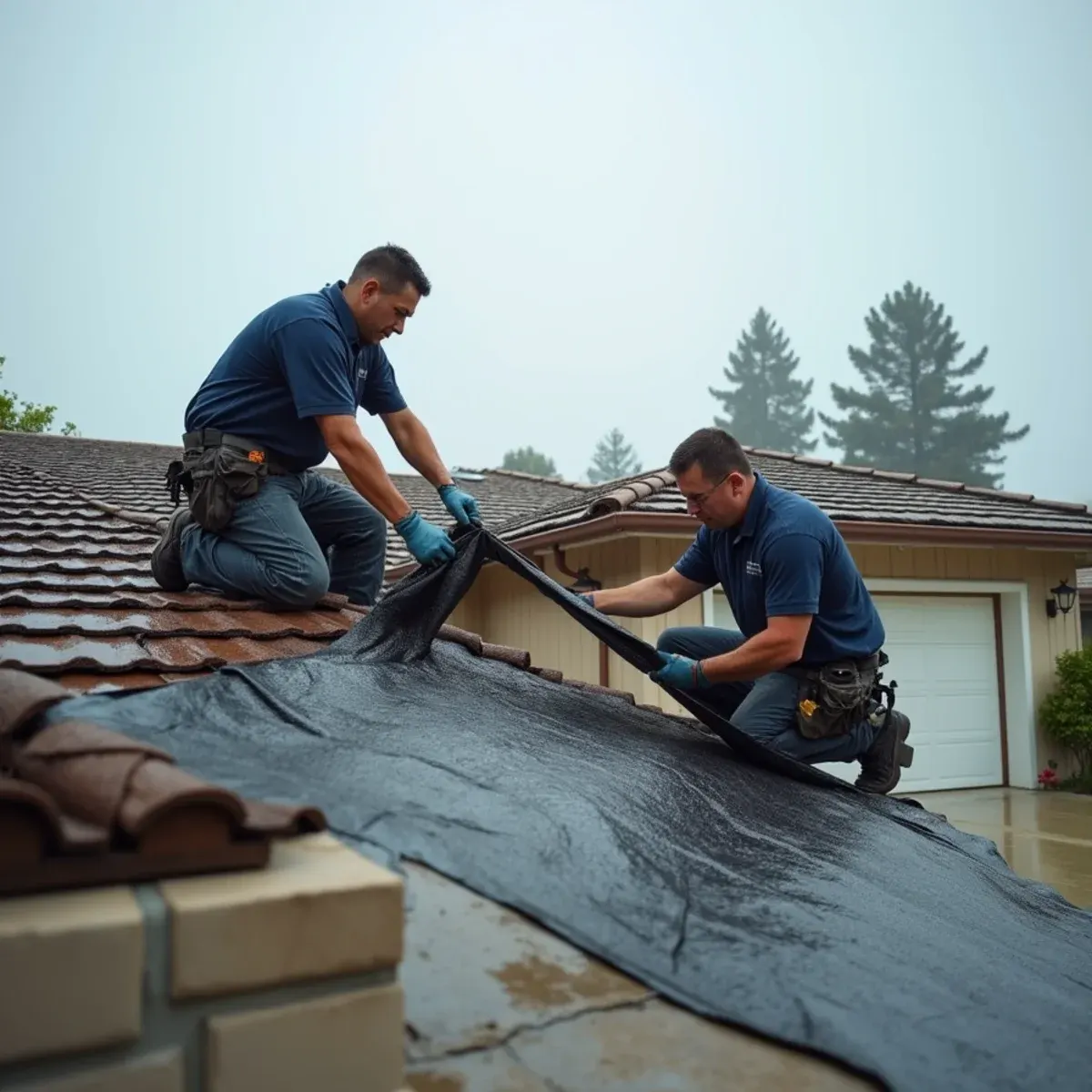
Storm damage on the industrial and commercial corridors isn't only water. Wind takes rollup door panels, storefront glass and signage, and a building left open overnight in this area is a security problem as much as a drying problem. We carry board-up material on storm calls and can secure an opening before the drying plan is even written.
3Production floors and inventory
Drying a warehouse or manufacturing floor is a different discipline than drying a house — large air volume, racked goods, floor coatings that trap moisture underneath, and equipment that can't be shut down casually. We prioritize moving product off wet concrete and getting airflow under racking, and we document inventory contact for the claim before anything gets moved.
How the Work Runs
The method is the same one we use on every storm damage job, documented to the IICRC S500:2025 standard. Here it is in short — the full storm damage restoration process explains each stage in detail.
- Emergency tarping and board-up
- Water diversion and extraction
- Full damage documentation
- Interior mitigation
- Structural drying to standard
- Permanent repairs
The Paramount Background Worth Knowing
On a typical Paramount lot, the house, the driveway, the walkways and the rear slab cover most of the parcel. What is left is a narrow side yard, and everything that lands on the roof and the paving is supposed to leave through a couple of small area drains. That system has no margin. When a grate silts up, when a downspout dumps straight onto paving, or when the outlet at the curb has been crushed by a parked truck, the water has no soil to soak into and nowhere else to be. It ponds against the slab edge and comes in at the lowest threshold, which is usually a garage or a side door.
There is more on the housing stock, drainage and plumbing history of this city on our water damage restoration in Paramount page.
Paramount at a glance
- Dominant construction era
- 1945–1965
- Foundation type
- slab on grade
- Supply piping found here
- original galvanized steel, copper
- Drain line materials
- cast iron
- Terrain and water table
- flat, moderate water table
- Most common local failure
- residential and commercial losses on the same block, needing very different handling
- Highest-value local prevention
- clearing area drains before the season on lots with very little permeable ground
What It Costs in Paramount
We do not quote a number over the phone before seeing the property — anyone who does is guessing. The variables that actually move the price on a storm damage job are size of the opening and duration of intrusion, emergency mitigation scope, how many rooms the water reached, and they are broken down in full on the storm damage restoration page. The assessment and the written estimate are free anywhere in Paramount, day or night, with no obligation.
Storm Damage Questions from Paramount Homeowners
Both, usually. The curb inlet belongs to the city, and if it's blocked they want to know — report it with the cross street. What's on you is the drainage on your own lot: the area drains in the back yard, the trench drain across the driveway if you have one, and where your downspouts actually discharge. We'll dry the house either way, and we document the water's path so you have something factual if responsibility ever matters.
During. Emergency tarping and board-up happen in the rain — that is the entire point of them. We triage by severity, so active intrusion into occupied living space goes to the front of the queue.
Sudden wind and rain damage is generally covered, including the resulting interior water damage. What gets excluded is damage from a roof that had already failed or from deferred maintenance, and flooding from water that came across the ground, which needs separate flood insurance.
Almost certainly your area drains. Paramount lots have very little permeable ground, so everything that falls on the roof and the paving has to leave through a couple of small drains. If a grate silts up or the outlet is crushed, the water ponds against the slab and enters at the lowest threshold, which is usually the garage. Rodding the drains and checking the outlet before the season costs far less than drying the garage wall afterward.