
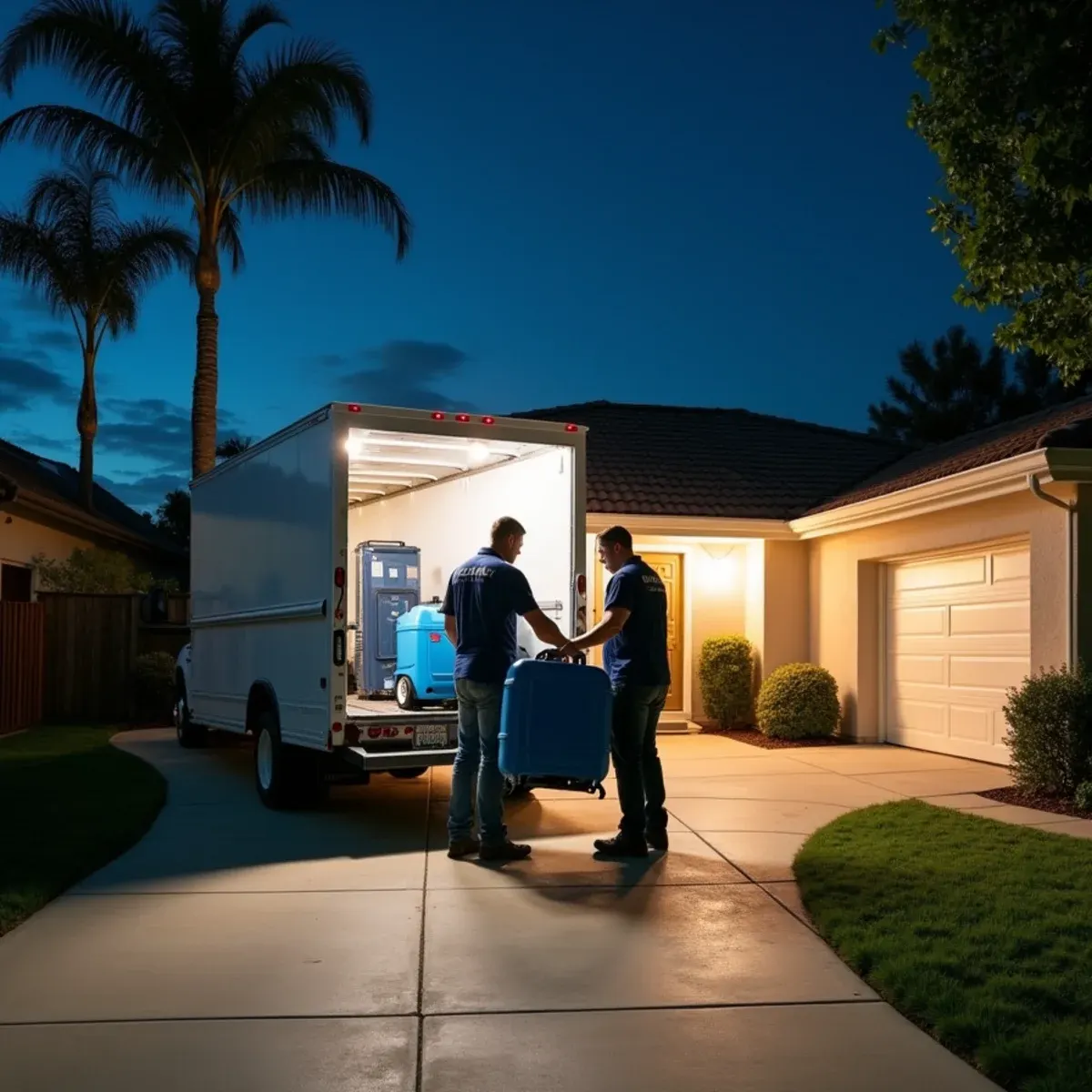
In Paramount, a single block can hold a fourplex, a machine shop and a family home built in 1952. The city came together from the old Hynes and Clearwater communities on dairy and hay land and industrialized hard, with housing packed tightly between the commercial corridors along Paramount Boulevard and Rosecrans. That mix is the first thing we sort out on an emergency call, because water that ran across a residential kitchen floor and water that ran through a shop bay next door do not get the same handling.
The second thing is the ground. Lots here have very little permeable surface left. Between paving, slabs, driveways and yard hardscape, storm water has almost nowhere to soak in, so it moves to the lowest opening, which is frequently a garage or a back door threshold. The Los Angeles River channel runs the western edge of the city and the flood risk here is elevated. Area drains that nobody has cleared since last winter are a genuine cause of interior flooding. We are roughly fourteen minutes east in Cypress.
What Paramount Changes About Emergency Restoration
1Industrial neighbors change the category
Water that has crossed a shop floor, a loading area or a yard drain shared with light industry is not clean water, whatever it looks like. We ask what is next door and what the water traveled over before it reached your living space, then classify under IICRC S500:2025 accordingly. That call determines whether carpet pad and insulation get dried or removed, and it is not a judgment we make from the doorway.
2Paved lots have nowhere to shed water
When most of a Paramount lot is hardscape, the drainage system is the only thing standing between a heavy hour of rain and your floor. Area drains and yard inlets on these small lots plug quickly with leaves and debris from the corridors. Clearing them before the season, and confirming they actually discharge somewhere rather than into a buried line that collapsed years ago, prevents most of the storm calls we take here.
3Two building types, one arrival
We regularly find a residential loss and a commercial loss connected by the same event on the same parcel. They need different documentation, different drying targets and often different insurers. We keep the files separate from the start, set containment so equipment noise and airflow in the commercial side do not affect the home, and prioritize whichever side has occupants first.
How the Work Runs
The method is the same one we use on every emergency restoration job, documented to the IICRC S500:2025 standard. Here it is in short — the full emergency water damage restoration process explains each stage in detail.
- Call answered and crew dispatched
- Arrival, safety check, and moisture mapping
- Documentation before anything is touched
- Extraction
- Controlled structural drying
- Cleaning, sanitizing, and final verification
The Paramount Background Worth Knowing
On a typical Paramount lot, the house, the driveway, the walkways and the rear slab cover most of the parcel. What is left is a narrow side yard, and everything that lands on the roof and the paving is supposed to leave through a couple of small area drains. That system has no margin. When a grate silts up, when a downspout dumps straight onto paving, or when the outlet at the curb has been crushed by a parked truck, the water has no soil to soak into and nowhere else to be. It ponds against the slab edge and comes in at the lowest threshold, which is usually a garage or a side door.
There is more on the housing stock, drainage and plumbing history of this city on our water damage restoration in Paramount page.
Paramount at a glance
- Dominant construction era
- 1945–1965
- Foundation type
- slab on grade
- Supply piping found here
- original galvanized steel, copper
- Drain line materials
- cast iron
- Terrain and water table
- flat, moderate water table
- Most common local failure
- residential and commercial losses on the same block, needing very different handling
- Highest-value local prevention
- clearing area drains before the season on lots with very little permeable ground
What It Costs in Paramount
We do not quote a number over the phone before seeing the property — anyone who does is guessing. The variables that actually move the price on a emergency restoration job are water category, affected square footage and number of rooms, how many days of equipment, and they are broken down in full on the emergency water damage restoration page. The assessment and the written estimate are free anywhere in Paramount, day or night, with no obligation.
Emergency Restoration Questions from Paramount Homeowners
Not without knowing what it carried. Runoff crossing an industrial yard in Paramount can pick up oils, solvent residue and whatever was on the pavement, and none of that is obvious by sight or smell. Keep children and pets out, do not run a household vacuum through it, and let us test and classify before anything gets wiped down. If it turns out to be clean storm water, the job gets simpler and we will say so.
We commit to being on-site within 60 minutes of a confirmed emergency call anywhere in Cypress, and we credit $100 off your invoice if we miss it. Most of the time we are there in 30 to 45 minutes because our trucks stage on Katella Avenue, right here in the city.
No. The emergency assessment and written estimate are free, 24 hours a day. You are not obligated to hire us after we walk the property, and we will tell you plainly if we think the damage is small enough to handle yourself.
Almost certainly your area drains. Paramount lots have very little permeable ground, so everything that falls on the roof and the paving has to leave through a couple of small drains. If a grate silts up or the outlet is crushed, the water ponds against the slab and enters at the lowest threshold, which is usually the garage. Rodding the drains and checking the outlet before the season costs far less than drying the garage wall afterward.