
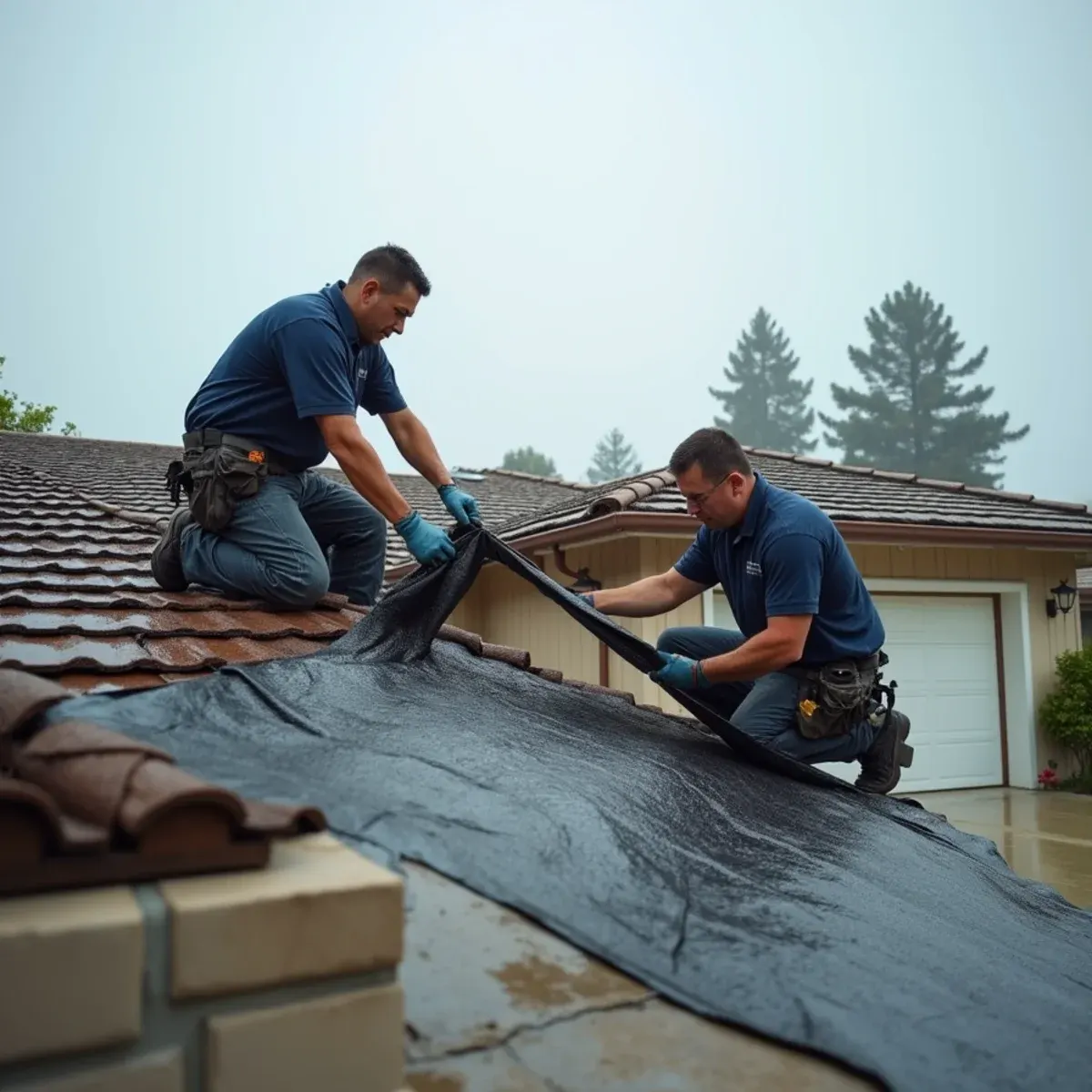
The classic Huntington Beach storm loss doesn't come through the roof. It comes through a window. Salt air corrodes flashing and breaks down exterior sealant faster here than anywhere else we work, and when a storm arrives with thirty-mile-an-hour wind behind it, rain stops falling down and starts driving horizontally into the wall. Water gets behind the window head, runs the framing, and appears at the base of the wall or in the ceiling below — with no roof damage at all to explain it.
Where you are in the city changes the job. Downtown near Main Street, lots are narrow with no driveway, so a truck-mount sits on the street and we run long hose lines through the house. In Huntington Harbour, tidal ground water and seawall conditions mean the ground under a waterfront property doesn't drain the way an inland yard does. Out in the 92646 and 92647 tracts it's more conventional slab work — but the marine humidity that slows drying applies everywhere in this city.
What Huntington Beach Changes About Storm Damage
1Wind-driven rain beats the envelope
Storm intrusion here concentrates at windows, doors, and anywhere two materials meet on a weather-facing wall. We look at the windward elevation first and use moisture mapping to find the entry height, because sealing the wrong joint means the same wall gets wet in the next system three days later. Exterior sealant on this coast needs renewing far sooner than the label suggests.
2Downtown access shapes the plan
On the narrow lots off Main Street there's no driveway and often no legal place to park a truck close by. That means longer hose runs, more portable equipment inside, and staging worked out before we arrive rather than in the street at two in the morning. Tell us the address and the parking situation on the first call and we'll load the truck accordingly.
3Coastal humidity extends drying
Sustained marine air means the outdoor air we'd normally use to help dry a structure is frequently wetter than the inside. We run closed drying systems with more dehumidification capacity than an inland job of the same size, and we monitor daily. Waterfront properties in Huntington Harbour also carry higher baseline ground moisture, which shows up in ground-level slabs and lower walls.
How the Work Runs
The method is the same one we use on every storm damage job, documented to the IICRC S500:2025 standard. Here it is in short — the full storm damage restoration process explains each stage in detail.
- Emergency tarping and board-up
- Water diversion and extraction
- Full damage documentation
- Interior mitigation
- Structural drying to standard
- Permanent repairs
The Huntington Beach Background Worth Knowing
Salt does not damage buildings directly. It damages the details that keep water out, and then water does the rest.
There is more on the housing stock, drainage and plumbing history of this city on our water damage restoration in Huntington Beach page.
Huntington Beach at a glance
- Dominant construction era
- 1960–1990
- Foundation type
- slab on grade
- Supply piping found here
- under-slab copper
- Drain line materials
- cast iron, ABS
- Terrain and water table
- coastal-flat, shallow water table
- Most common local failure
- wind-driven rain entering through salt-corroded window flashing and failed exterior sealant
- Highest-value local prevention
- renewing exterior caulking and flashing on a far shorter cycle than inland guidance suggests
What It Costs in Huntington Beach
We do not quote a number over the phone before seeing the property — anyone who does is guessing. The variables that actually move the price on a storm damage job are size of the opening and duration of intrusion, emergency mitigation scope, how many rooms the water reached, and they are broken down in full on the storm damage restoration page. The assessment and the written estimate are free anywhere in Huntington Beach, day or night, with no obligation.
Storm Damage Questions from Huntington Beach Homeowners
Usually it's age and salt rather than a defect. This close to the ocean, flashing corrodes and sealant joints fail years earlier than the same materials would inland, and wind-driven rain finds those openings the moment a storm turns sideways. We dry the wall assembly, verify the framing and sheathing are back to a documented dry standard, then identify the real entry point so the repair addresses the flashing detail instead of just repainting the stain.
During. Emergency tarping and board-up happen in the rain — that is the entire point of them. We triage by severity, so active intrusion into occupied living space goes to the front of the queue.
Sudden wind and rain damage is generally covered, including the resulting interior water damage. What gets excluded is damage from a roof that had already failed or from deferred maintenance, and flooding from water that came across the ground, which needs separate flood insurance.
Ambient humidity near the coast stays high enough for long enough that materials dry slowly on their own, which widens the window in which growth can establish after any moisture event. Combined with salt-accelerated failures of exterior sealants and flashings, coastal homes simply get more moisture intrusion and dry from it more slowly.