
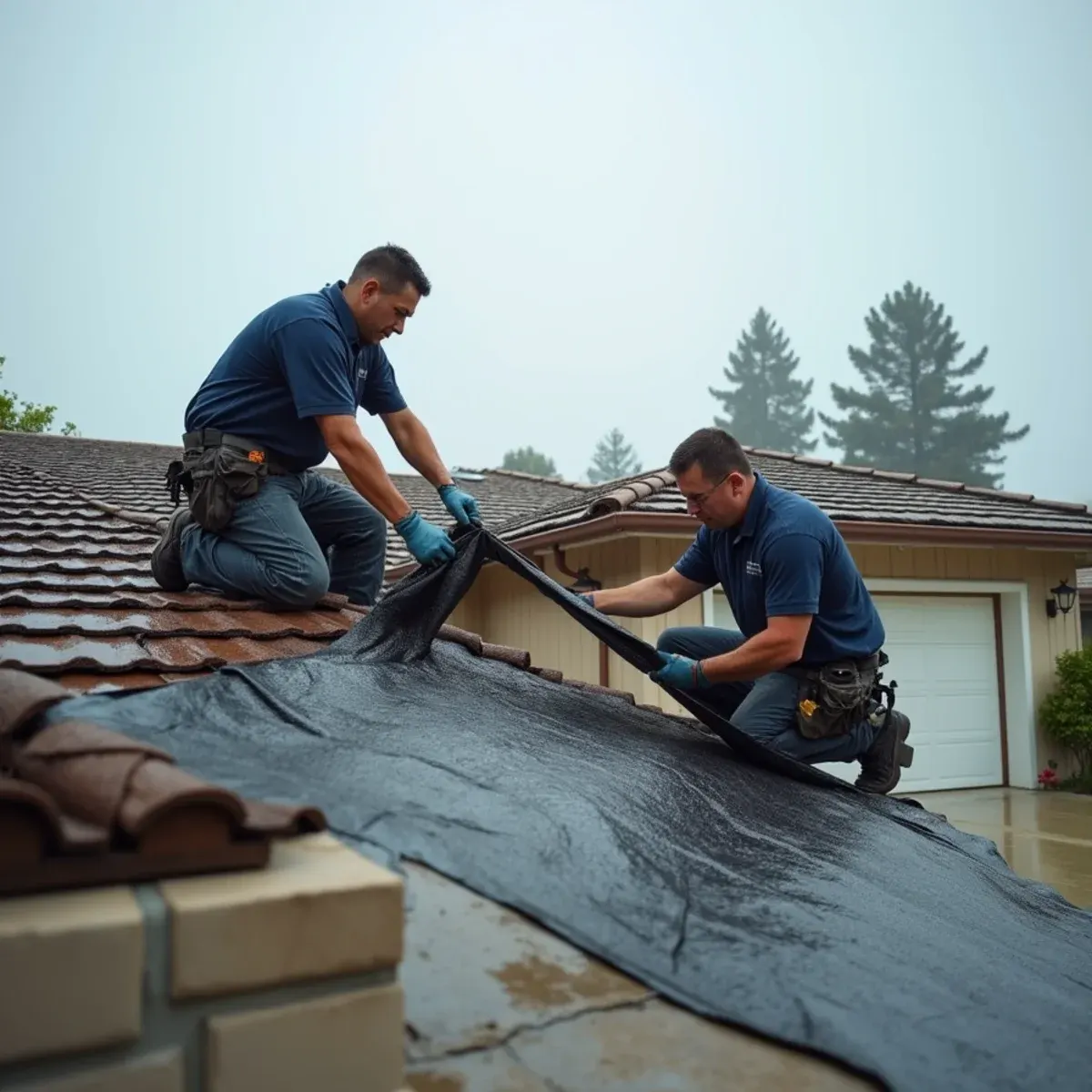
A roof leak into a Floral Park bungalow behaves nothing like a roof leak into a 1960s tract house. The plaster ceiling takes on several times the water drywall would, holds it, and gets heavy. Then the keys — the plaster that squeezed through the wood lath and hardened there a century ago — soften. That's the sound people describe as a crack just before a section lets go. Santa Ana is the county's oldest city, and this is the storm failure that defines it.
The stock runs from 1900s and 1920s homes in Floral Park, French Park and Washington Square to dense postwar apartments and the civic core downtown. Historic review applies to exterior work and some interior work, which means the repair conversation starts before the drying ends. The materials aren't replaceable in kind either — original wood windows, old-growth fir and oak flooring with grain nobody mills anymore. That's why we push hard on speed here. Saving the original is a matter of hours, not days.
What Santa Ana Changes About Storm Damage
1Desiccant drying for plaster assemblies
Conventional refrigerant dehumidifiers can't bring plaster down to a safe moisture content quickly enough on their own. We bring desiccant capacity for these walls, dry from both faces where access allows, and take readings on the lath as well as the finish. IICRC S500:2025 treats an assembly like this as its own drying problem, and it should be scoped that way from the first hour.
2Old-growth floors are worth the effort
The fir and oak in these houses is denser than anything milled today and can often be dried in place and refinished rather than replaced. It needs air moving under it as well as over it, which sometimes means lifting a few boards deliberately instead of losing the whole floor. Waiting a week removes the option — cupped, delaminated boards don't come back.
3Historic review shapes the repair
In the designated districts, exterior repairs and some interior work go through preservation review, and the material you put back matters. During emergency work we document original conditions thoroughly — trim profiles, window construction, plaster detail — so the repair scope has something to match. Tarping and board-up on these homes also has to be done without damaging original fascia and trim.
How the Work Runs
The method is the same one we use on every storm damage job, documented to the IICRC S500:2025 standard. Here it is in short — the full storm damage restoration process explains each stage in detail.
- Emergency tarping and board-up
- Water diversion and extraction
- Full damage documentation
- Interior mitigation
- Structural drying to standard
- Permanent repairs
The Santa Ana Background Worth Knowing
Lath and plaster is wood strips nailed across the studs with several coats of plaster troweled over them. The plaster that squeezes through the gaps between lath forms keys that hook over the wood and hold the whole wall in place. That construction is why plaster walls last a century — and why they behave so differently from drywall when wet.
There is more on the housing stock, drainage and plumbing history of this city on our water damage restoration in Santa Ana page.
Santa Ana at a glance
- Dominant construction era
- 1900–1970
- Foundation type
- mixed on grade
- Supply piping found here
- original early-century piping, galvanized steel, copper
- Drain line materials
- cast iron, clay
- Terrain and water table
- flat, moderate water table
- Most common local failure
- plaster key failure, where wet plaster softens and releases from the wood lath holding it to the wall
- Highest-value local prevention
- starting aggressive drying within hours on any plaster loss — waiting is the one thing that costs you the wall
What It Costs in Santa Ana
We do not quote a number over the phone before seeing the property — anyone who does is guessing. The variables that actually move the price on a storm damage job are size of the opening and duration of intrusion, emergency mitigation scope, how many rooms the water reached, and they are broken down in full on the storm damage restoration page. The assessment and the written estimate are free anywhere in Santa Ana, day or night, with no obligation.
Storm Damage Questions from Santa Ana Homeowners
Treat a bulge as a structural warning and stay out from under it. A sagging plaster ceiling means the keys have released from the lath and the weight of wet plaster is doing the rest. We'll shore or take down the failed section safely, then dry the surrounding plaster aggressively so the release doesn't spread across the ceiling. The undamaged plaster around it is usually salvageable if equipment gets in the same day.
During. Emergency tarping and board-up happen in the rain — that is the entire point of them. We triage by severity, so active intrusion into occupied living space goes to the front of the queue.
Sudden wind and rain damage is generally covered, including the resulting interior water damage. What gets excluded is damage from a roof that had already failed or from deferred maintenance, and flooding from water that came across the ground, which needs separate flood insurance.
Usually, if drying starts quickly. Plaster holds much more water than drywall and dries far more slowly, so it needs more equipment and often desiccant dehumidification. The risk is the plaster keys softening and releasing from the lath, which is why waiting is the one thing that genuinely costs you the wall.