
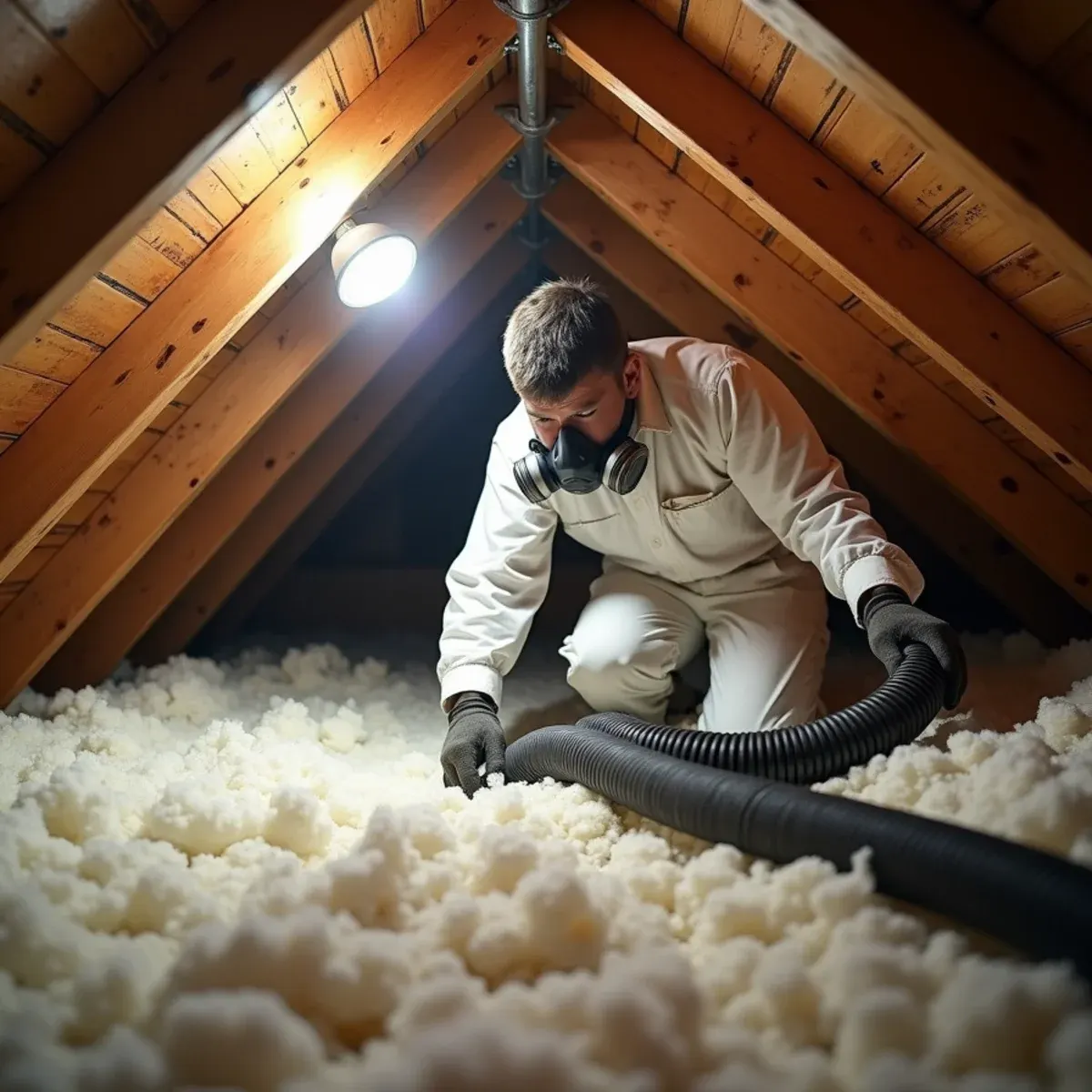
The shallow groundwater under Fountain Valley gets blamed for almost everything, and in the attic it deserves none of it. Water at four or five feet does not climb thirty. What the old Gospel Swamp ground does do is set the baseline. Slab vapor emission is a routine background condition in 92708, so the air inside these houses starts wetter than the air inside a house on higher, drier ground. When we hang dehumidification for a wet attic here, we are drying the attic and holding back the load from below at the same time.
The attics themselves are 1960s and 1970s tract attics, low pitch over a dead flat lot, and most of them have been insulated twice. Original kraft-faced batts on the ceiling, blown fiberglass or cellulose dumped on top during some later energy retrofit. Water that gets in sits between the two layers where nothing can see it and nothing can dry it. From the hatch the top layer often looks fine. We probe it, weigh what comes out, and pull the batts underneath, because that is where the moisture usually is.
What Fountain Valley Changes About Attic & Insulation
1Old blow-ins that buried the eave vents
A lot of 92708 attics got a second layer of blown insulation during an energy retrofit, and it was pushed right out over the top plate into the soffits. Blocked intake vents mean the attic never breathes, so it stays humid and dries slowly after any event. When we reinstall, baffles go in first and the eaves stay open. It is the cheapest lasting improvement in the job.
2Ducting spread across a single-story plan
These ranch plans put the trunk line and every branch across the full attic footprint, so wet insulation ends up packed around flex duct and register boots far from the leak. We pull back the insulation at each boot, check the duct interior and the coil cabinet, and clear contamination before anything goes back. Supply air moves attic conditions into every room, so a dirty duct undoes good drying.
3Low pitch carries water a long way
The 1970s roofs here sit at a shallow pitch, and water that enters at a pipe boot or an old cooler curb runs down the deck underside for several feet before it drips. The stain on your ceiling marks where it landed, not where it came in. We map the whole plane with a meter and a camera before deciding how much insulation has to come out.
How the Work Runs
The method is the same one we use on every attic & insulation job, documented to the IICRC S500:2025 standard. Here it is in short — the full attic water damage & insulation replacement process explains each stage in detail.
- Map the wet area before touching it
- Contain the hatch and protect the path
- Vacuum out the saturated insulation
- HEPA vacuum and treat the plane
- Dry the deck, joists, and top plates
- Reinstall insulation and check the details
The Fountain Valley Background Worth Knowing
Groundwater beneath Fountain Valley sits close enough to the surface that moisture vapor migration up through concrete slabs is a routine background condition rather than an anomaly. Homeowners here regularly describe a slab that feels cool and damp, or a closet on an exterior wall that never quite feels dry, without any leak at all.
There is more on the housing stock, drainage and plumbing history of this city on our water damage restoration in Fountain Valley page.
Fountain Valley at a glance
- Dominant construction era
- 1960–1980
- Foundation type
- slab on grade
- Supply piping found here
- under-slab copper
- Drain line materials
- cast iron
- Terrain and water table
- flat, shallow water table
- Most common local failure
- slab vapor emission mistaken for a leak, and flooring failures caused by installing over an untested slab
- Highest-value local prevention
- clearing the yard and area drains before the season, because a blocked drain on dead-flat ground ponds water against the house
What It Costs in Fountain Valley
We do not quote a number over the phone before seeing the property — anyone who does is guessing. The variables that actually move the price on a attic & insulation job are how much of the attic got wet, clearance, access, and layout, the type of insulation up there, and they are broken down in full on the attic water damage & insulation replacement page. The assessment and the written estimate are free anywhere in Fountain Valley, day or night, with no obligation.
Attic & Insulation Questions from Fountain Valley Homeowners
Partly. Clearing the eave vents and putting insulation back at the right depth cuts attic condensation and helps the ceiling plane stay dry, which you will notice. What it will not do is stop vapor coming up through the slab, and in Fountain Valley that is a real, separate condition. If your floors sweat or your baseboards stay damp, that is a slab and flooring conversation, and we will say so rather than sell you insulation for it.
Only the affected area plus a margin back to dry, lofted material. If the wet section covers a small part of the attic, that is all that comes out. Once it reaches roughly half the plane, replacing the whole field usually costs less than blending old and new to an even depth, and it leaves you with one consistent R-value instead of a patchwork ceiling that performs unevenly room to room.
Most attics take a few days once the wet insulation is out, but we will not promise a number on day one, and you should be careful with anyone who does. Plywood sheathing dries at a different rate than old plank decking, a sealed attic dries faster than a heavily vented one, and marine-layer mornings slow everything down. The daily readings decide when equipment leaves, not the calendar.
The city sits on former wetland with one of the shallowest water tables in Orange County, so moisture vapor migrating up through slabs is a normal background condition here rather than a defect. It matters most when installing flooring over the slab, which is why we test with in-situ RH probes before anything goes back down.