
The water table under Westminster doesn't reach your attic. What it does is set the floor for everything else. Slabs near the Bolsa Chica channel carry a high baseline moisture content, that moisture keeps moving up into the house, and the air an attic dries into is already wetter than it would be a few miles inland. So the same dehumidifier that finishes an attic in two days somewhere else runs a day longer here, and a reading that looks acceptable on paper can still be the wrong target.
The Bolsa Avenue side of town is mostly older commercial, independent restaurants and small retail in single-story buildings with low-slope roofs and ceiling cavities rather than vented attics. Above a kitchen, that cavity holds years of grease-laden dust, and wet insulation up there isn't something you HEPA and reuse. It comes out, the cavity gets cleaned, and the exhaust and makeup-air ducting gets checked. We schedule around service hours because a week dark is worse than the leak for most of these owners.
What Westminster Changes About Attic & Insulation
1Set the drying goal against local baseline
Standards call for drying to a comparable dry standard, and in Westminster that comparison has to be taken in your house, not from a table. Slabs near the channel keep feeding vapor upward, so the unaffected rooms read higher than they would inland. We record baseline readings on day one and dry the attic to that, then keep dehumidification running until the whole envelope holds steady.
2Two wet planes competing for the same air
When a house has both a wet attic and a damp slab, the dehumidifiers work against each other if you treat them as separate jobs. Vapor rising off the floor becomes the load the attic equipment has to pull. We size and place equipment for the whole volume, seal the attic off from the living space where it helps, and stage the two so one finishes first.
3Bolsa Avenue kitchens change the scope
In Little Saigon's older commercial buildings the cavity above a kitchen ceiling carries years of grease film on the deck, the joists and the insulation. Wet material there isn't cleaned and reused. It comes out, the surfaces get degreased before drying, and the hood, exhaust and makeup-air ducts get checked. It's a longer scope than a house, and worth writing correctly for the insurer the first time.
How the Work Runs
The method is the same one we use on every attic & insulation job, documented to the IICRC S500:2025 standard. Here it is in short — the full attic water damage & insulation replacement process explains each stage in detail.
- Map the wet area before touching it
- Contain the hatch and protect the path
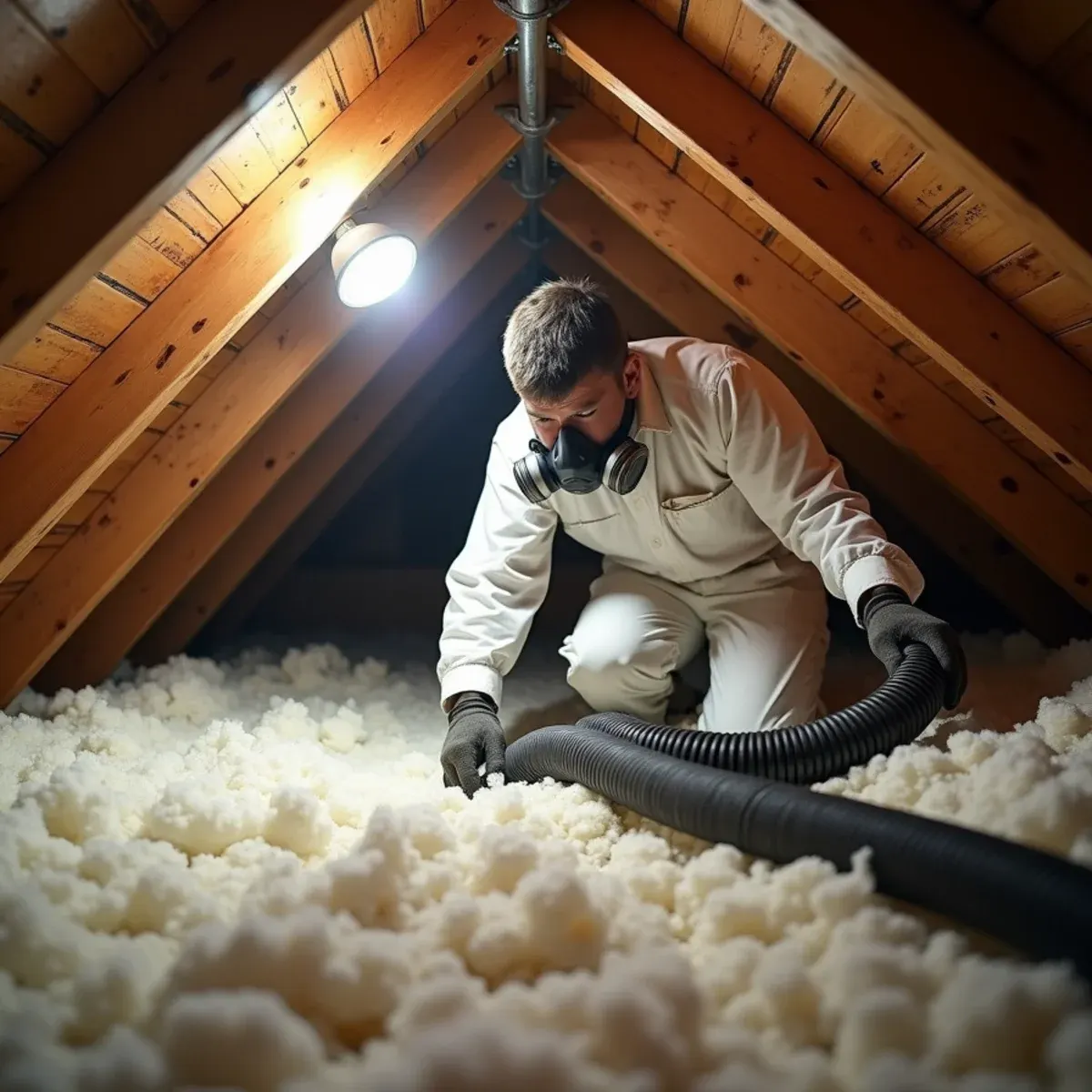
- Vacuum out the saturated insulation
- HEPA vacuum and treat the plane
- Dry the deck, joists, and top plates
- Reinstall insulation and check the details
The Westminster Background Worth Knowing
Westminster's shallow groundwater means many slabs here carry a higher baseline moisture load than slabs a few miles inland. In an undamaged home with breathable flooring that is usually a non-issue. It becomes an issue in two situations.
There is more on the housing stock, drainage and plumbing history of this city on our water damage restoration in Westminster page.
Westminster at a glance
- Dominant construction era
- 1950–1970
- Foundation type
- slab on grade
- Supply piping found here
- under-slab copper, galvanized steel
- Drain line materials
- cast iron
- Terrain and water table
- coastal-flat, shallow water table
- Most common local failure
- flooring installed over a slab that was never tested and is still releasing vapor
- Highest-value local prevention
- in-situ slab relative humidity testing before any new floor goes down
What It Costs in Westminster
We do not quote a number over the phone before seeing the property — anyone who does is guessing. The variables that actually move the price on a attic & insulation job are how much of the attic got wet, clearance, access, and layout, the type of insulation up there, and they are broken down in full on the attic water damage & insulation replacement page. The assessment and the written estimate are free anywhere in Westminster, day or night, with no obligation.
Attic & Insulation Questions from Westminster Homeowners
Not yet, and near the channel that's a common finish. Attic framing can hit target while the air in the house is still carrying a heavy vapor load off the slab and out of the wall bases. We keep a dehumidifier on the living space and re-check over a couple of days, because a smell that persists after the wood is dry usually means there's a second wet assembly nobody has opened.
Only the affected area plus a margin back to dry, lofted material. If the wet section covers a small part of the attic, that is all that comes out. Once it reaches roughly half the plane, replacing the whole field usually costs less than blending old and new to an even depth, and it leaves you with one consistent R-value instead of a patchwork ceiling that performs unevenly room to room.
Most attics take a few days once the wet insulation is out, but we will not promise a number on day one, and you should be careful with anyone who does. Plywood sheathing dries at a different rate than old plank decking, a sealed attic dries faster than a heavily vented one, and marine-layer mornings slow everything down. The daily readings decide when equipment leaves, not the calendar.
Westminster has a shallow water table, so slabs here carry more baseline moisture than slabs further inland. Normally that is harmless, but it matters when installing flooring over the slab and it means drying after a loss takes longer. We test with in-situ relative humidity probes before any new floor goes down.