
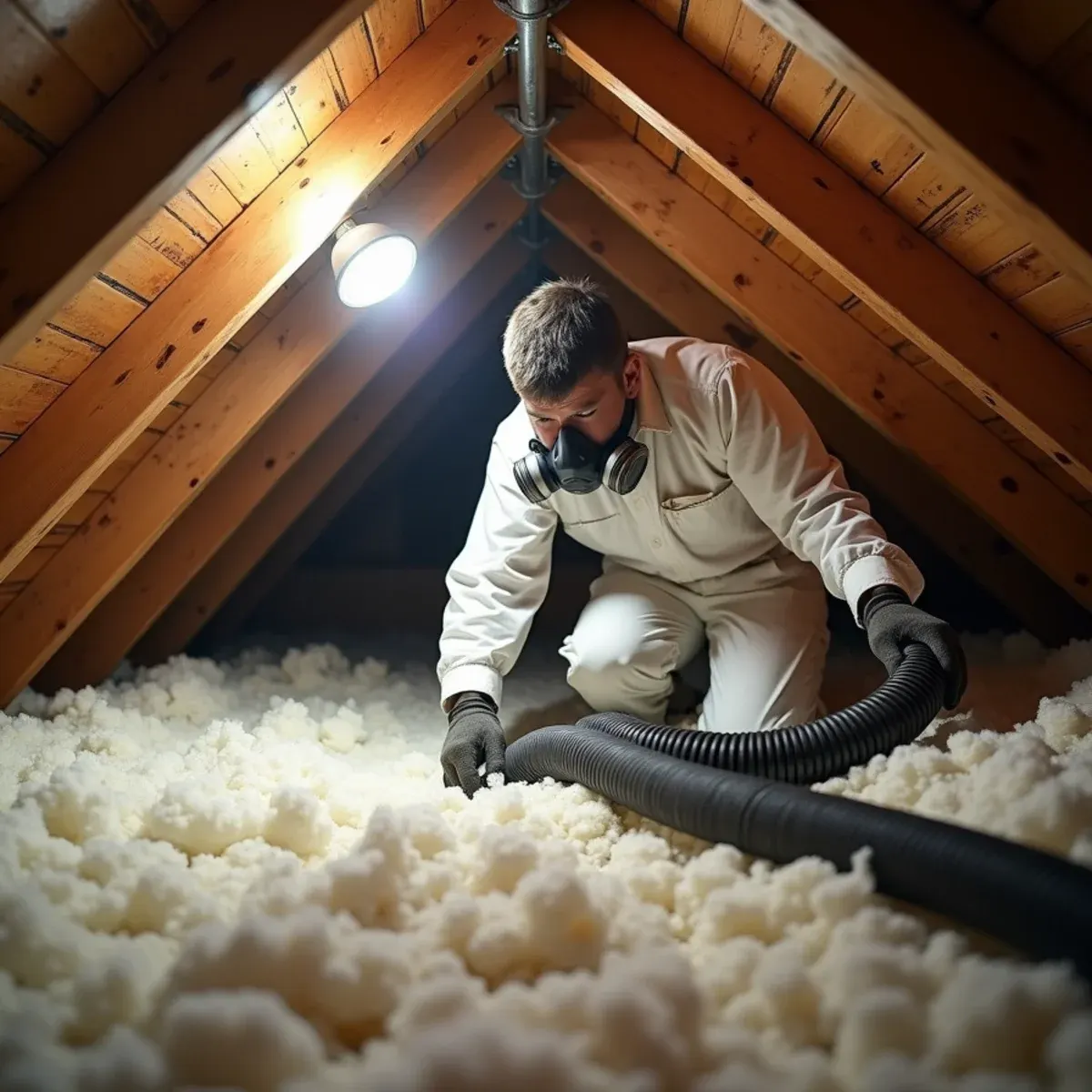
Half the roofs we work on in this square mile are not attics in the normal sense. Midway City has a lot of manufactured housing, and a manufactured home has a shallow roof cavity, a few inches of blown fiberglass between the ceiling board and the roof panel, no hatch, no room to crawl. When that cavity gets wet, you reach it by lifting roofing from above or dropping ceiling panels from below, and the insulation comes out in strips. Different work, different sequence, same principle: wet insulation does not go back.
The ducting assumption changes here too. In a manufactured home the trunk runs under the floor in the belly, not overhead, so a wet roof cavity and a contaminated duct system are two separate investigations instead of one. On the site-built side, the 1940s and 1950s houses do have conventional attics with ducting up top, and those run like any older tract job. One more thing worth saying out loud: Midway City is unincorporated, permits go through the County, and plenty of contractors never list it because it is not a city name on a map.
What Midway City Changes About Attic & Insulation
1County permitting and a confusing address
There is no city hall here. Permits for the rebuild end of the job go through Orange County, and mail on some blocks reads Westminster or Huntington Beach, which throws off adjusters and dispatchers who work from city names. We are about fourteen minutes down the road on Katella. Give us a cross street and we will find you, and we handle the county paperwork rather than handing it back.
2A roof cavity cannot be dried in place
In a manufactured home there is no crawlable attic and no way to set an air mover in the cavity. Getting soaked insulation out means opening the assembly, either lifting roofing or taking down ceiling panels, and the repair is visible work rather than a hatch nobody sees. We would rather you hear that before we start than discover it when the panels come down.
3Documenting for a different kind of policy
Coverage on a manufactured home is often written on a different form than a site-built homeowner policy, and adjusters ask different questions about roof and ceiling assemblies. We photograph the cavity before anything comes out, log readings section by section, and itemize insulation removal separately from ceiling repair so the file reads clean. We bill the carrier directly, and if coverage looks thin you get numbers first.
How the Work Runs
The method is the same one we use on every attic & insulation job, documented to the IICRC S500:2025 standard. Here it is in short — the full attic water damage & insulation replacement process explains each stage in detail.
- Map the wet area before touching it
- Contain the hatch and protect the path
- Vacuum out the saturated insulation
- HEPA vacuum and treat the plane
- Dry the deck, joists, and top plates
- Reinstall insulation and check the details
The Midway City Background Worth Knowing
Midway City's housing stock is older than its neighbors on average, with a good deal of it predating 1960, and it includes a substantial mobile home population. That combination produces a specific mix of problems.
There is more on the housing stock, drainage and plumbing history of this city on our water damage restoration in Midway City page.
Midway City at a glance
- Dominant construction era
- 1940–1960
- Foundation type
- mixed on grade
- Supply piping found here
- galvanized steel, copper, manufactured-home supply lines
- Drain line materials
- cast iron, clay
- Terrain and water table
- coastal-flat, shallow water table
- Most common local failure
- manufactured-home underfloor leaks trapped in the belly wrap, which can sit for months
- Highest-value local prevention
- treating any spongy floor area as a moisture problem until a meter says otherwise
What It Costs in Midway City
We do not quote a number over the phone before seeing the property — anyone who does is guessing. The variables that actually move the price on a attic & insulation job are how much of the attic got wet, clearance, access, and layout, the type of insulation up there, and they are broken down in full on the attic water damage & insulation replacement page. The assessment and the written estimate are free anywhere in Midway City, day or night, with no obligation.
Attic & Insulation Questions from Midway City Homeowners
No, and anyone who tells you it is has not been in one. Your ceiling cavity is a few inches deep with no access hatch, so we cannot crawl it, dry it in place, or vacuum it from a distance. We open a section, pull the wet insulation out in strips, dry the framing and the ceiling board, then close it back up. Smaller footprint, more visible repair, and usually a shorter job overall.
Only the affected area plus a margin back to dry, lofted material. If the wet section covers a small part of the attic, that is all that comes out. Once it reaches roughly half the plane, replacing the whole field usually costs less than blending old and new to an even depth, and it leaves you with one consistent R-value instead of a patchwork ceiling that performs unevenly room to room.
Most attics take a few days once the wet insulation is out, but we will not promise a number on day one, and you should be careful with anyone who does. Plywood sheathing dries at a different rate than old plank decking, a sealed attic dries faster than a heavily vented one, and marine-layer mornings slow everything down. The daily readings decide when equipment leaves, not the calendar.
Yes, fully. It is about a fourteen-minute run from our Cypress base — closer than several cities we serve routinely — and the 60-minute response commitment applies here the same as anywhere else in our area.