
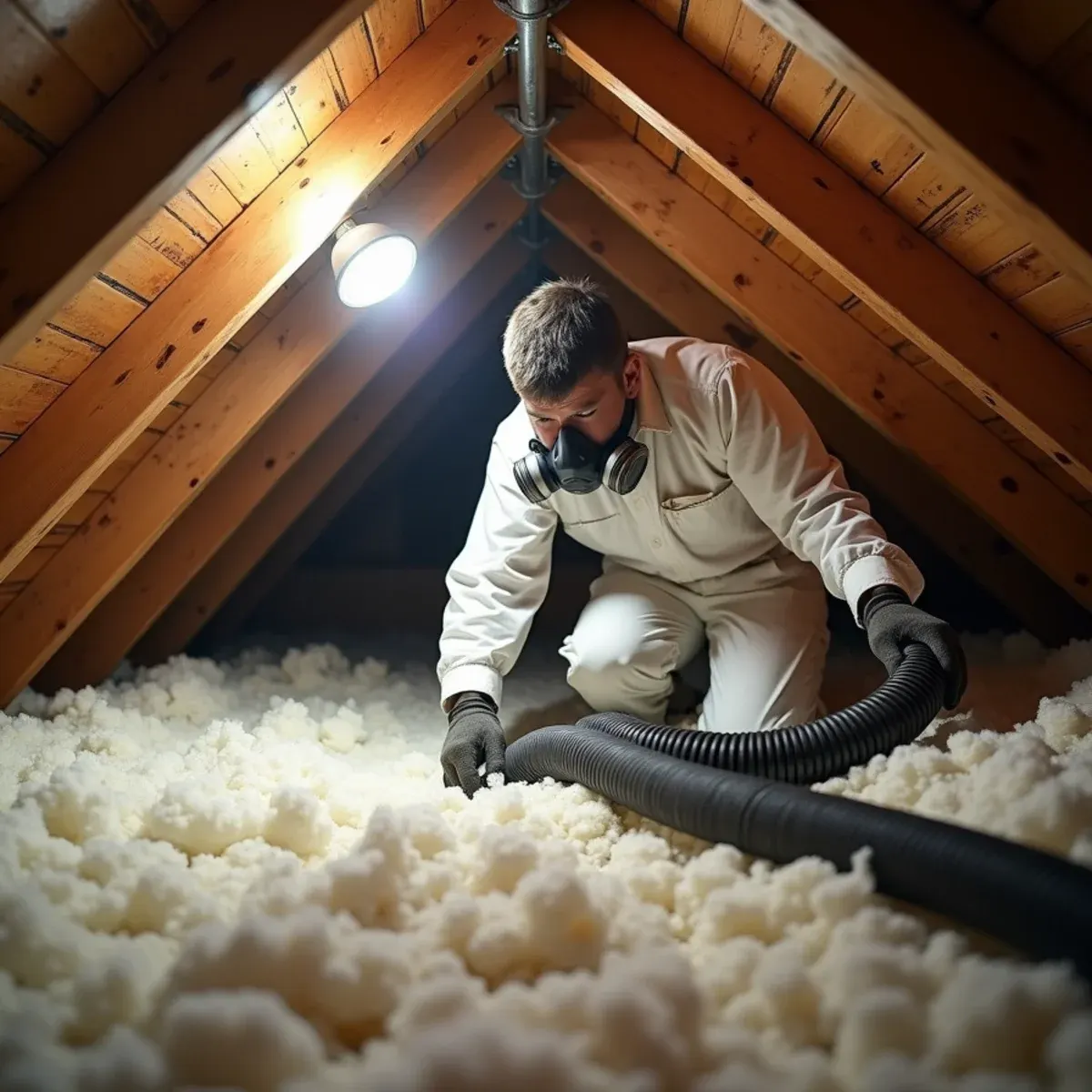
Out here the attic usually gets wet from above, and it starts at the metal. Salt air chews through vent boots, skylight flashings, and the sealant around HVAC curbs years before those parts would fail inland. The leak is small, it only runs when the rain comes sideways off the ocean, and the insulation under it holds the water quietly for a season. By the time it shows on a ceiling, the roof deck above has been damp through several cycles and the nail plates are rusting.
Access is the other Huntington Beach problem. Downtown lots are narrow with no driveway, so the vacuum hose and the negative air ducting run from the street, through or around the house, sometimes a hundred feet before they reach the hatch, and every foot of hose costs suction. In the Harbour, the houses are three levels with the attic at the top and the ground floor near tidal groundwater, so we're often drying the highest and lowest parts of one house on the same ticket.
What Huntington Beach Changes About Attic & Insulation
1Corrosion at the penetrations, not the pipes
Salt shortens the life of every metal and sealant on a Huntington Beach roof. Vent boots crack, skylight flashings pit, and the mastic around HVAC curbs gives up early. That's where most wet attics here begin. When we pull insulation we photograph the penetration above the wet zone, because the insulation is the symptom and the flashing is what has to be fixed.
2Long hose runs on downtown lots
Downtown blocks are narrow, and plenty of these houses have no driveway at all. The vacuum hose, the negative air ducting and the power all come from wherever we can legally park, which can be most of a block away. Long runs cut suction, so we stage differently: more hose sections, an intermediate collection point, and bagging in the attic where the reach is worst.
3Salt-laden dust keeps pulling moisture
Attic insulation near the coast collects salt aerosol along with dust, and salt is hygroscopic, so it holds humidity and re-wets material that already dried. That's part of why we take out marginal insulation here that we might leave three cities inland. It's also why truss plates, duct straps and fastener heads get inspected for rust while the plane is open.
How the Work Runs
The method is the same one we use on every attic & insulation job, documented to the IICRC S500:2025 standard. Here it is in short — the full attic water damage & insulation replacement process explains each stage in detail.
- Map the wet area before touching it
- Contain the hatch and protect the path
- Vacuum out the saturated insulation
- HEPA vacuum and treat the plane
- Dry the deck, joists, and top plates
- Reinstall insulation and check the details
The Huntington Beach Background Worth Knowing
Salt does not damage buildings directly. It damages the details that keep water out, and then water does the rest.
There is more on the housing stock, drainage and plumbing history of this city on our water damage restoration in Huntington Beach page.
Huntington Beach at a glance
- Dominant construction era
- 1960–1990
- Foundation type
- slab on grade
- Supply piping found here
- under-slab copper
- Drain line materials
- cast iron, ABS
- Terrain and water table
- coastal-flat, shallow water table
- Most common local failure
- wind-driven rain entering through salt-corroded window flashing and failed exterior sealant
- Highest-value local prevention
- renewing exterior caulking and flashing on a far shorter cycle than inland guidance suggests
What It Costs in Huntington Beach
We do not quote a number over the phone before seeing the property — anyone who does is guessing. The variables that actually move the price on a attic & insulation job are how much of the attic got wet, clearance, access, and layout, the type of insulation up there, and they are broken down in full on the attic water damage & insulation replacement page. The assessment and the written estimate are free anywhere in Huntington Beach, day or night, with no obligation.
Attic & Insulation Questions from Huntington Beach Homeowners
If it got wet, yes. Fixing the flashing stops new water; it doesn't restore insulation that already compressed and lost R-value, and near the ocean that material is carrying salt that keeps drawing humidity back in. We meter it rather than guess. If it reads dry and the fibers are intact, we say so and leave it. Where it's matted, stained or smells, it comes out and the deck gets dried underneath.
Only the affected area plus a margin back to dry, lofted material. If the wet section covers a small part of the attic, that is all that comes out. Once it reaches roughly half the plane, replacing the whole field usually costs less than blending old and new to an even depth, and it leaves you with one consistent R-value instead of a patchwork ceiling that performs unevenly room to room.
Most attics take a few days once the wet insulation is out, but we will not promise a number on day one, and you should be careful with anyone who does. Plywood sheathing dries at a different rate than old plank decking, a sealed attic dries faster than a heavily vented one, and marine-layer mornings slow everything down. The daily readings decide when equipment leaves, not the calendar.
Ambient humidity near the coast stays high enough for long enough that materials dry slowly on their own, which widens the window in which growth can establish after any moisture event. Combined with salt-accelerated failures of exterior sealants and flashings, coastal homes simply get more moisture intrusion and dry from it more slowly.