
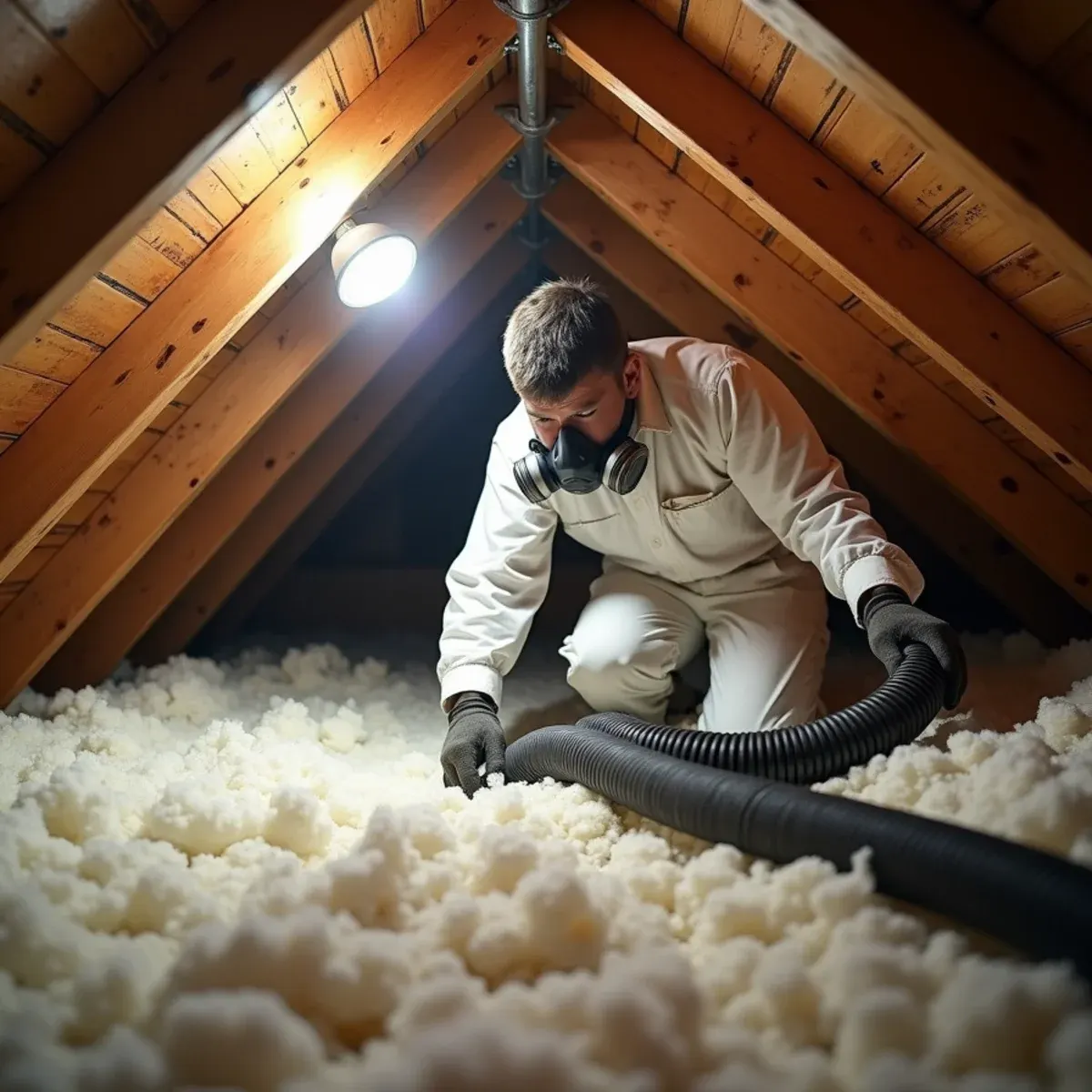
In Floral Park, French Park and Washington Square, the ceiling under the insulation is lath and plaster, and it is the reason we move differently up there. Plaster hangs by keys squeezed through wooden lath. Wet insulation adds weight to those keys, and a knee set down in the wrong place breaks a hundred of them at once. So the crew stays on the joists, works off boards, and takes saturated material out in smaller loads than we would in a tract house. Slower, and cheaper than replastering a room.
Santa Ana is the county's oldest city and the attics show every decade of it. Board sheathing instead of plywood. Original loose fill nobody has touched. Central air added long after the house was built, with flex duct threaded through framing that was never laid out for it. We test suspect old loose fill before disturbing it rather than guessing. Preservation review does not usually touch what happens inside the attic, but it can touch the roof repair above it, and that changes the sequence. We will tell you that before the tear-out, not after.
What Santa Ana Changes About Attic & Insulation
1Old loose fill gets tested before it moves
Attics in the oldest parts of the city can hold original loose fill that predates modern fiberglass. We do not shovel unknown material. If what is up there looks like a legacy product, it gets sampled and identified first, because the answer decides whether this is our scope or a licensed abatement scope. That pause costs a day. Disturbing the wrong material costs far more.
2Apartment attics run past your unit
The postwar apartment blocks through 92703 and 92707 typically have one attic space running the length of the building. Water that entered above one unit spreads along the joist bays into the next two. We scope the whole run rather than the square footage over the complaining tenant, and we tell the owner up front how far the wet line actually reaches.
3Gable vents only, and what that limits
Many pre-war houses here were built with gable vents and nothing at the eaves. Baffles protect intake that does not exist, so the honest answer is that we can restore depth and R-value but cannot manufacture ventilation the roof never had. Where the framing allows it, we will point out what a roofer could add. Where it does not, we say that too and set drying expectations accordingly.
How the Work Runs
The method is the same one we use on every attic & insulation job, documented to the IICRC S500:2025 standard. Here it is in short — the full attic water damage & insulation replacement process explains each stage in detail.
- Map the wet area before touching it
- Contain the hatch and protect the path
- Vacuum out the saturated insulation
- HEPA vacuum and treat the plane
- Dry the deck, joists, and top plates
- Reinstall insulation and check the details
The Santa Ana Background Worth Knowing
Lath and plaster is wood strips nailed across the studs with several coats of plaster troweled over them. The plaster that squeezes through the gaps between lath forms keys that hook over the wood and hold the whole wall in place. That construction is why plaster walls last a century — and why they behave so differently from drywall when wet.
There is more on the housing stock, drainage and plumbing history of this city on our water damage restoration in Santa Ana page.
Santa Ana at a glance
- Dominant construction era
- 1900–1970
- Foundation type
- mixed on grade
- Supply piping found here
- original early-century piping, galvanized steel, copper
- Drain line materials
- cast iron, clay
- Terrain and water table
- flat, moderate water table
- Most common local failure
- plaster key failure, where wet plaster softens and releases from the wood lath holding it to the wall
- Highest-value local prevention
- starting aggressive drying within hours on any plaster loss — waiting is the one thing that costs you the wall
What It Costs in Santa Ana
We do not quote a number over the phone before seeing the property — anyone who does is guessing. The variables that actually move the price on a attic & insulation job are how much of the attic got wet, clearance, access, and layout, the type of insulation up there, and they are broken down in full on the attic water damage & insulation replacement page. The assessment and the written estimate are free anywhere in Santa Ana, day or night, with no obligation.
Attic & Insulation Questions from Santa Ana Homeowners
Generally not. Review attaches to what is visible from the street, meaning roof material, new vents, dormers and window changes, and insulation inside the attic is none of those. The part that can trigger it is the repair above your head, if the leak means new tile, a different vent or altered flashing. We flag that on the first visit, get the drying started, and stage the visible work so it does not stall the file.
Only the affected area plus a margin back to dry, lofted material. If the wet section covers a small part of the attic, that is all that comes out. Once it reaches roughly half the plane, replacing the whole field usually costs less than blending old and new to an even depth, and it leaves you with one consistent R-value instead of a patchwork ceiling that performs unevenly room to room.
Most attics take a few days once the wet insulation is out, but we will not promise a number on day one, and you should be careful with anyone who does. Plywood sheathing dries at a different rate than old plank decking, a sealed attic dries faster than a heavily vented one, and marine-layer mornings slow everything down. The daily readings decide when equipment leaves, not the calendar.
Usually, if drying starts quickly. Plaster holds much more water than drywall and dries far more slowly, so it needs more equipment and often desiccant dehumidification. The risk is the plaster keys softening and releasing from the lath, which is why waiting is the one thing that genuinely costs you the wall.