
Fountain Valley was Gospel Swamp before it was a city. Wetland, drained and filled ahead of the 1960s and 70s tracts standing here now. The name is a clue: this is one of the shallowest water tables in Orange County. Slab vapor emission is not an anomaly here, it is the normal background condition, and it is the single most common thing behind the mold we find under flooring. A homeowner pulls up a warped plank, sees black on the underside and assumes a leak. Often there is no leak at all.
The other half of the story is drainage. This ground is dead flat, so water that does not go down a drain does not go anywhere. A yard drain packed with leaves from a mature ficus, or an area drain silted up over a couple of seasons, and the first heavy rain ponds against the stucco instead of leaving. Water sits at the wall base, wicks into the bottom plate and the drywall paper, and growth starts inside the wall while the outside looks perfectly fine. Clearing those drains before the season is the cheapest prevention in this city.
What Fountain Valley Changes About Mold Remediation
1Test the slab before you refloor
The ground water here sits close to the surface, which is why the city has the name it does. Slab vapor emission is a routine background condition rather than a defect, and it is the most common reason flooring fails and grows mold from underneath. In-situ relative humidity probes before installation tell you what the concrete will do to whatever you put on top of it.
2Dead flat ground ponds against stucco
With no fall to speak of, water that does not reach a drain simply sits. A yard drain packed with leaves or an area drain silted over a couple of seasons puts standing water against the wall through every storm, and it wicks up into the bottom plate. Clearing those drains before the rainy season is the cheapest mold prevention available in Fountain Valley.
3What goes back matters here
Replacing a failed floor with the same low-permeance product over the same slab produces the same result in a few years. Depending on what the probes read, the right answer may be a vapor retarder system, a different underlayment or a material that tolerates emission. We will tell you when the honest fix is a change in specification rather than more mold work later.
How the Work Runs
The method is the same one we use on every mold remediation job, documented to the IICRC S500:2025 standard. Here it is in short — the full mold remediation & removal process explains each stage in detail.
- Inspection and moisture source identification
- Testing where it is warranted
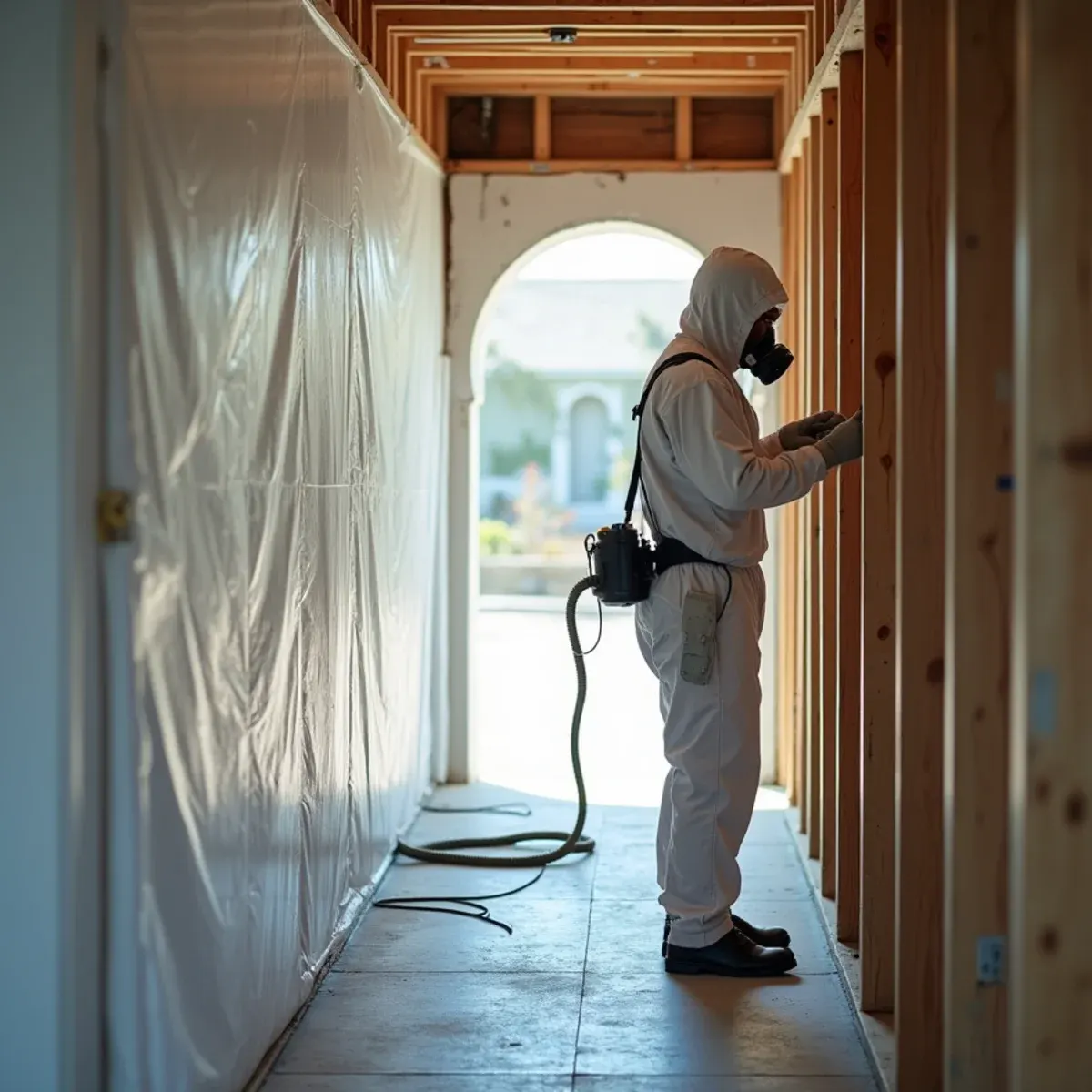
- Containment and negative pressure
- Removal of contaminated material
- HEPA cleaning and antimicrobial application
- Verification before containment comes down
The Fountain Valley Background Worth Knowing
Groundwater beneath Fountain Valley sits close enough to the surface that moisture vapor migration up through concrete slabs is a routine background condition rather than an anomaly. Homeowners here regularly describe a slab that feels cool and damp, or a closet on an exterior wall that never quite feels dry, without any leak at all.
There is more on the housing stock, drainage and plumbing history of this city on our water damage restoration in Fountain Valley page.
Fountain Valley at a glance
- Dominant construction era
- 1960–1980
- Foundation type
- slab on grade
- Supply piping found here
- under-slab copper
- Drain line materials
- cast iron
- Terrain and water table
- flat, shallow water table
- Most common local failure
- slab vapor emission mistaken for a leak, and flooring failures caused by installing over an untested slab
- Highest-value local prevention
- clearing the yard and area drains before the season, because a blocked drain on dead-flat ground ponds water against the house
What It Costs in Fountain Valley
We do not quote a number over the phone before seeing the property — anyone who does is guessing. The variables that actually move the price on a mold remediation job are square footage of affected material, where it is, containment complexity, and they are broken down in full on the mold remediation & removal page. The assessment and the written estimate are free anywhere in Fountain Valley, day or night, with no obligation.
Mold Remediation Questions from Fountain Valley Homeowners
Vapor. The slab under that floor emits moisture continuously, which is normal for ground this close to the water table, and a low-permeance plank traps it at the adhesive line. No leak required. We would pull a section, look at the underside and the adhesive, then drill in-situ probes to measure what the concrete is actually doing. That number tells you whether the replacement needs a vapor retarder, a different underlayment or a different material entirely.
On a hard, non-porous surface like tile or glass, bleach handles surface growth. On drywall, wood, or anything porous it does not — the water content soaks in and can feed further growth while the chlorine stays on the surface. Porous material with real growth needs to be removed, not treated.
Usually not for visible growth with an obvious cause — you can see the problem and the work would be identical regardless of species. Testing is worthwhile when there is odor but nothing visible, when you need documentation for a claim or dispute, or when you want independent verification that the job was done right.
The city sits on former wetland with one of the shallowest water tables in Orange County, so moisture vapor migrating up through slabs is a normal background condition here rather than a defect. It matters most when installing flooring over the slab, which is why we test with in-situ RH probes before anything goes back down.