
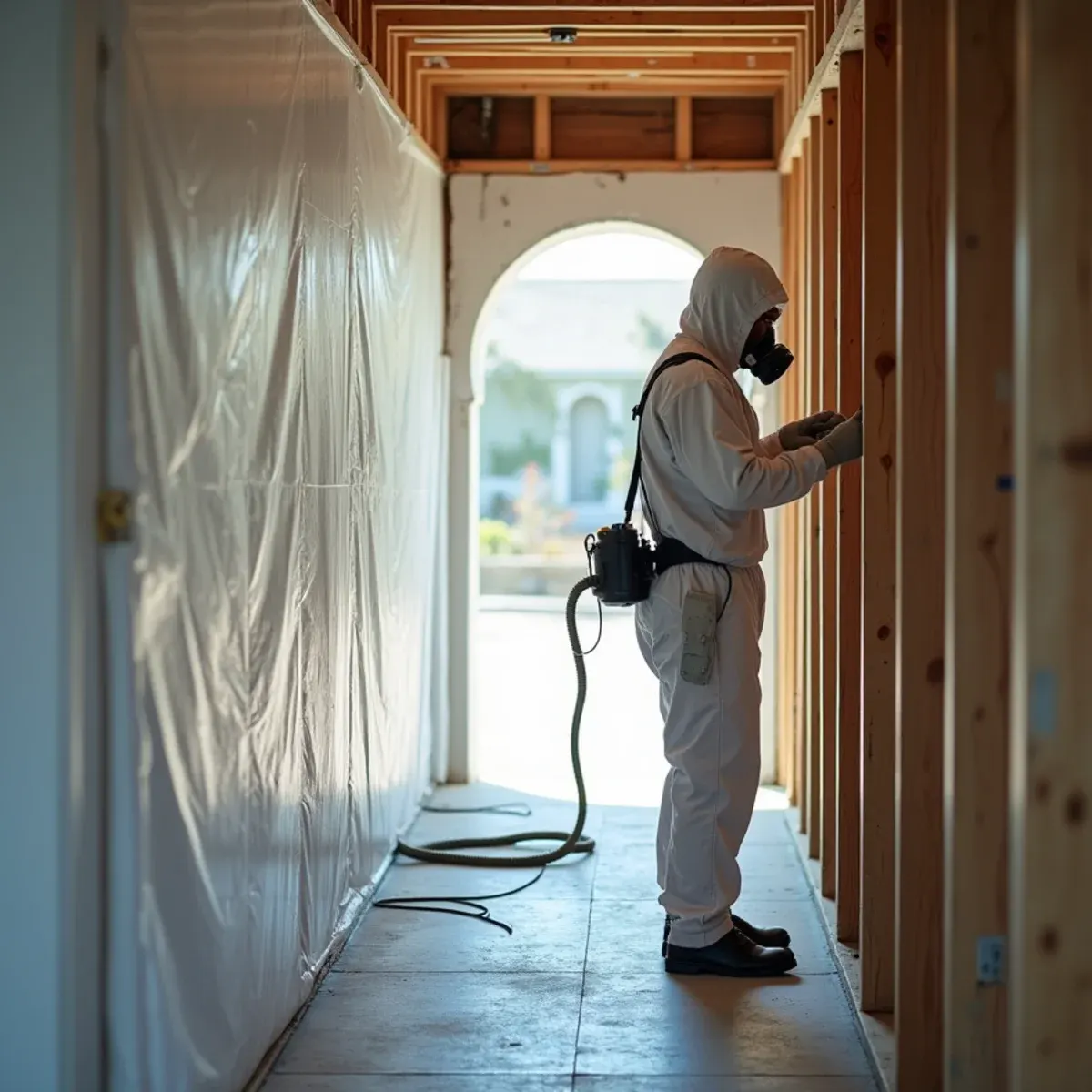
Removing mold means physically taking out contaminated porous material. In Floral Park, French Park and Washington Square, that principle runs straight into a wall hand-troweled in the 1920s over wood lath, with no modern equivalent available. So the judgment call in Santa Ana is where the line falls. Plaster that is saturated, soft and losing its keys is coming out, because it is failing structurally as well as biologically. Plaster that is sound, with contamination on one face, can often be saved with controlled drying and careful HEPA cleaning. That distinction deserves time.
Time is also the enemy. Wet plaster holds several times the water drywall does and releases it slowly, so the window between a manageable job and a full loss is short, measured in hours rather than days. We bring desiccant dehumidification to these houses because refrigerant machines struggle to pull the last of it out of a thick assembly. Santa Ana is the county's oldest city, and the same care applies to original fir and oak floors, which are usually worth drying in place rather than replacing with something that will never match.
What Santa Ana Changes About Mold Remediation
1Desiccant drying for thick plaster
Plaster over wood lath holds several times the water drywall does and releases it slowly, and refrigerant dehumidifiers cannot finish that job. Desiccant equipment can. That is often the difference between saving a hand-troweled 1920s wall and replacing it with something that never quite matches the rest of the room. Speed matters more on plaster than on any other assembly we work on.
2Historic review shapes what goes back
Homes in Floral Park, French Park and Washington Square fall under design review for exterior work and, in some cases, interior features. That does not slow the emergency work, since source correction, containment and removal of failed material proceed regardless. It does affect replacement, so we scope the urgent portion in a way that keeps your options open rather than committing you to a substitution.
3Old floors are usually worth drying
Original fir and oak flooring in these houses came from timber that is not commercially available now. Where boards are cupped but sound and growth sits on the surface or in the finish, drying in place with specialized panels and refinishing later beats replacement. Where water has been under them for weeks and the subfloor is contaminated, we will tell you plainly.
How the Work Runs
The method is the same one we use on every mold remediation job, documented to the IICRC S500:2025 standard. Here it is in short — the full mold remediation & removal process explains each stage in detail.
- Inspection and moisture source identification
- Testing where it is warranted
- Containment and negative pressure
- Removal of contaminated material
- HEPA cleaning and antimicrobial application
- Verification before containment comes down
The Santa Ana Background Worth Knowing
Lath and plaster is wood strips nailed across the studs with several coats of plaster troweled over them. The plaster that squeezes through the gaps between lath forms keys that hook over the wood and hold the whole wall in place. That construction is why plaster walls last a century — and why they behave so differently from drywall when wet.
There is more on the housing stock, drainage and plumbing history of this city on our water damage restoration in Santa Ana page.
Santa Ana at a glance
- Dominant construction era
- 1900–1970
- Foundation type
- mixed on grade
- Supply piping found here
- original early-century piping, galvanized steel, copper
- Drain line materials
- cast iron, clay
- Terrain and water table
- flat, moderate water table
- Most common local failure
- plaster key failure, where wet plaster softens and releases from the wood lath holding it to the wall
- Highest-value local prevention
- starting aggressive drying within hours on any plaster loss — waiting is the one thing that costs you the wall
What It Costs in Santa Ana
We do not quote a number over the phone before seeing the property — anyone who does is guessing. The variables that actually move the price on a mold remediation job are square footage of affected material, where it is, containment complexity, and they are broken down in full on the mold remediation & removal page. The assessment and the written estimate are free anywhere in Santa Ana, day or night, with no obligation.
Mold Remediation Questions from Santa Ana Homeowners
Often, yes. If the plaster is still firm and its keys are intact behind the lath, we can dry it with desiccant equipment and clean it rather than tear it out. What we cannot save is plaster that is soft, bulging or already releasing from the lath, since that is a structural failure as much as a mold one. The variable you control is speed. The sooner drying starts, the more original wall stays on the house.
On a hard, non-porous surface like tile or glass, bleach handles surface growth. On drywall, wood, or anything porous it does not — the water content soaks in and can feed further growth while the chlorine stays on the surface. Porous material with real growth needs to be removed, not treated.
Usually not for visible growth with an obvious cause — you can see the problem and the work would be identical regardless of species. Testing is worthwhile when there is odor but nothing visible, when you need documentation for a claim or dispute, or when you want independent verification that the job was done right.
Usually, if drying starts quickly. Plaster holds much more water than drywall and dries far more slowly, so it needs more equipment and often desiccant dehumidification. The risk is the plaster keys softening and releasing from the lath, which is why waiting is the one thing that genuinely costs you the wall.