
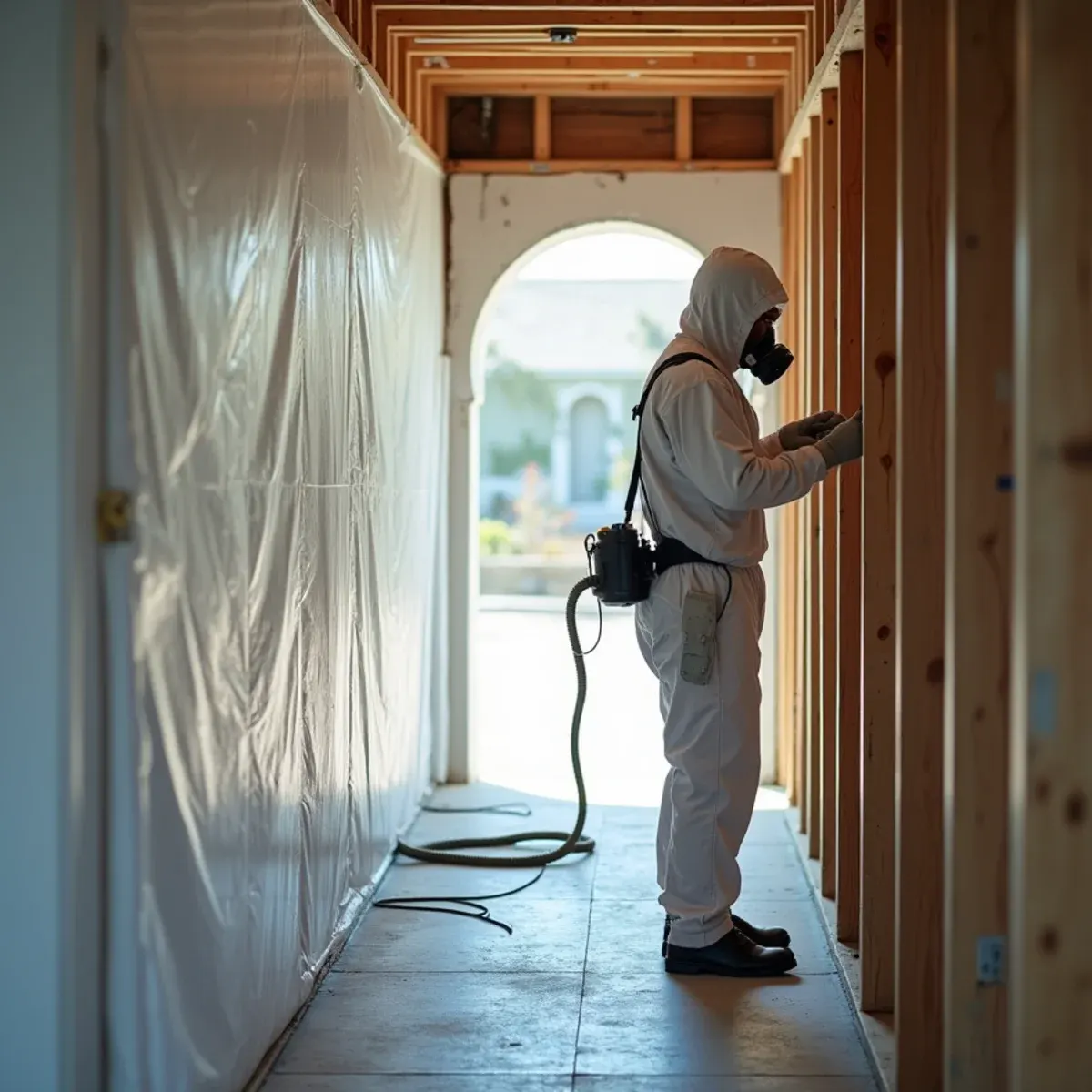
A lot of the mold we find in Westminster is not coming from a pipe. The city sits low and flat near the Bolsa Chica channel with a shallow water table, so slabs here carry a higher baseline moisture load than slabs a few miles inland. Vapor moves up through that concrete continuously. Put a vinyl plank or a glued laminate over it without testing, and the underside of the flooring becomes the wet surface. Growth develops in the adhesive and on the backing, and the room smells before anything looks wrong.
That is why we test rather than guess. In-situ relative humidity probes drilled into the slab tell us what the concrete is actually doing, which is a different question from whether the surface feels dry. IICRC S500 puts correcting the source first, and here the source can be the ground under your house. The other half of our Westminster work is Bolsa Avenue, where Little Saigon's restaurants and shops occupy older buildings and kitchen steam, floor washdown and sixty-year-old wall assemblies produce growth behind FRP panels and cooler walls.
What Westminster Changes About Mold Remediation
1Test the slab, don't assume
A slab near the Bolsa Chica channel can feel dry to the hand and still be emitting vapor steadily. Surface meters will not tell you. In-situ relative humidity probes drilled into the concrete measure what is genuinely moving through it, and that number decides what flooring can safely go back. Skipping the test is how the same mold problem returns two years after the repair.
2Kitchens and shops on Bolsa Avenue
Little Saigon packs an extraordinary number of independent restaurants and shops into buildings from the 1950s and 60s. Constant steam, floor washdown and cooler condensation against those old wall assemblies produce growth behind FRP panels and under equipment nobody moves. These are occupied businesses that cannot close for long, so the work gets zoned and sequenced around service hours.
3Shallow groundwater lengthens drying
Slabs here carry more background moisture than slabs a few miles inland, which means drying targets take longer to reach and need more dehumidification capacity. We would rather set an extra machine and finish on schedule than pull containment early because a calendar said so. Verification readings decide when a job here is finished, not elapsed days.
How the Work Runs
The method is the same one we use on every mold remediation job, documented to the IICRC S500:2025 standard. Here it is in short — the full mold remediation & removal process explains each stage in detail.
- Inspection and moisture source identification
- Testing where it is warranted
- Containment and negative pressure
- Removal of contaminated material
- HEPA cleaning and antimicrobial application
- Verification before containment comes down
The Westminster Background Worth Knowing
Westminster's shallow groundwater means many slabs here carry a higher baseline moisture load than slabs a few miles inland. In an undamaged home with breathable flooring that is usually a non-issue. It becomes an issue in two situations.
There is more on the housing stock, drainage and plumbing history of this city on our water damage restoration in Westminster page.
Westminster at a glance
- Dominant construction era
- 1950–1970
- Foundation type
- slab on grade
- Supply piping found here
- under-slab copper, galvanized steel
- Drain line materials
- cast iron
- Terrain and water table
- coastal-flat, shallow water table
- Most common local failure
- flooring installed over a slab that was never tested and is still releasing vapor
- Highest-value local prevention
- in-situ slab relative humidity testing before any new floor goes down
What It Costs in Westminster
We do not quote a number over the phone before seeing the property — anyone who does is guessing. The variables that actually move the price on a mold remediation job are square footage of affected material, where it is, containment complexity, and they are broken down in full on the mold remediation & removal page. The assessment and the written estimate are free anywhere in Westminster, day or night, with no obligation.
Mold Remediation Questions from Westminster Homeowners
That is the classic Westminster picture. The slab feels dry on top while still emitting vapor, and the underside of the plank is the cool surface where moisture collects and growth starts. We would remove the flooring and adhesive, clean and verify the slab, then test it properly with in-situ relative humidity probes rather than a surface reading. What that number says determines what you can safely install next, and sometimes the answer is a different flooring system.
On a hard, non-porous surface like tile or glass, bleach handles surface growth. On drywall, wood, or anything porous it does not — the water content soaks in and can feed further growth while the chlorine stays on the surface. Porous material with real growth needs to be removed, not treated.
Usually not for visible growth with an obvious cause — you can see the problem and the work would be identical regardless of species. Testing is worthwhile when there is odor but nothing visible, when you need documentation for a claim or dispute, or when you want independent verification that the job was done right.
Westminster has a shallow water table, so slabs here carry more baseline moisture than slabs further inland. Normally that is harmless, but it matters when installing flooring over the slab and it means drying after a loss takes longer. We test with in-situ relative humidity probes before any new floor goes down.