
It shows up after the first real storm of the season. A dark line on the wall under a bedroom window, or a bubble in the paint at the corner of a slider. Salt air has been working on the flashing and the exterior sealant for years, and wind-driven rain found the gap. The water never came from a pipe, so there is nothing to shut off, and by the time you notice it the wall cavity has been damp through several storms. This is the most common mold source we find in Huntington Beach.
Coastal air also changes the drying math. Sustained marine humidity means we run more dehumidification for longer than we would on the same size loss inland, which is a scheduling reality worth knowing before you plan around it. Then there is access. Downtown lots off Main Street are narrow with no driveway, so extraction and equipment mean long hose runs and staging we plan before we arrive. Out in Huntington Harbour, tidal groundwater sits close under the surface and lower walls hold moisture inland slabs simply do not.
What Huntington Beach Changes About Mold Remediation
1Flashing and sealant on a coastal clock
Salt air degrades exterior sealant, flashing and fasteners far faster than inland maintenance schedules assume. Wind-driven rain then enters at window heads and slider corners and reloads the wall cavity with every storm. If the envelope is not corrected, interior mold work is temporary by definition, because the water returns with the next system off the ocean.
2Narrow downtown lots, long hose runs
Downtown blocks off Main Street have no driveways and limited frontage, so truck-mounted extraction means long hose runs and equipment staged where it will not block a neighbor for a week. We plan that before we arrive. It affects how many air movers we can power, too, on older panels never sized for a full drying setup.
3Harbour homes and tidal groundwater
Around Huntington Harbour the water table moves with the tide, and lower walls, garages and slab edges hold moisture in ways inland construction never does. Seawalls and dock structures add their own exposure. Drying to target takes longer here, and we are careful about what porous material goes back, because some assemblies need a more forgiving specification.
How the Work Runs
The method is the same one we use on every mold remediation job, documented to the IICRC S500:2025 standard. Here it is in short — the full mold remediation & removal process explains each stage in detail.
- Inspection and moisture source identification
- Testing where it is warranted
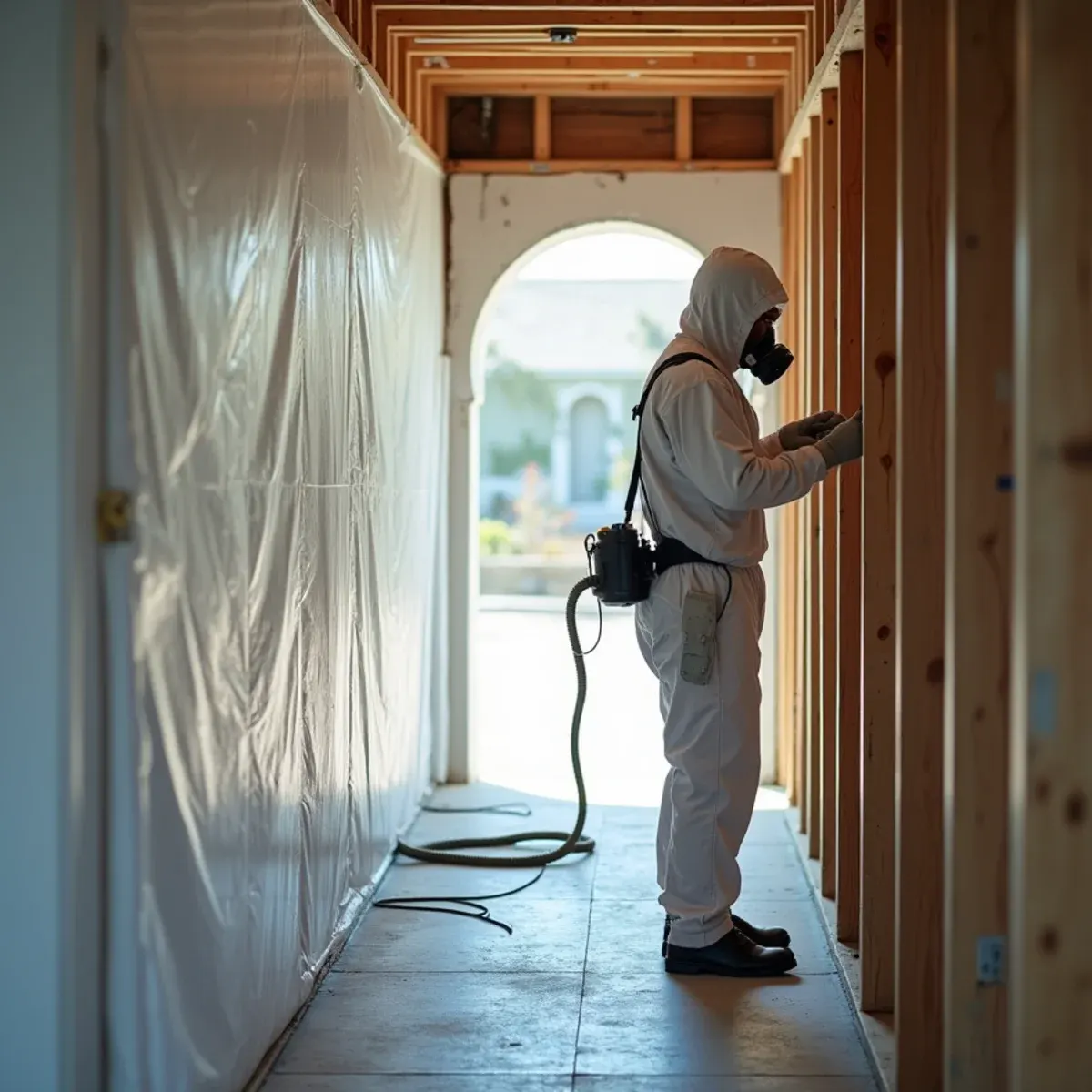
- Containment and negative pressure
- Removal of contaminated material
- HEPA cleaning and antimicrobial application
- Verification before containment comes down
The Huntington Beach Background Worth Knowing
Salt does not damage buildings directly. It damages the details that keep water out, and then water does the rest.
There is more on the housing stock, drainage and plumbing history of this city on our water damage restoration in Huntington Beach page.
Huntington Beach at a glance
- Dominant construction era
- 1960–1990
- Foundation type
- slab on grade
- Supply piping found here
- under-slab copper
- Drain line materials
- cast iron, ABS
- Terrain and water table
- coastal-flat, shallow water table
- Most common local failure
- wind-driven rain entering through salt-corroded window flashing and failed exterior sealant
- Highest-value local prevention
- renewing exterior caulking and flashing on a far shorter cycle than inland guidance suggests
What It Costs in Huntington Beach
We do not quote a number over the phone before seeing the property — anyone who does is guessing. The variables that actually move the price on a mold remediation job are square footage of affected material, where it is, containment complexity, and they are broken down in full on the mold remediation & removal page. The assessment and the written estimate are free anywhere in Huntington Beach, day or night, with no obligation.
Mold Remediation Questions from Huntington Beach Homeowners
Almost certainly the exterior. If the flashing above that window or the sealant around it is still open, every wind-driven storm reloads the wall and any interior work is temporary by definition. Salt air chews through coastal sealant and fasteners far faster than inland guidance assumes. We inspect the outside before scoping the inside, and if the envelope needs work first, we will say so, even though that means another trade and a delay to your finish work.
On a hard, non-porous surface like tile or glass, bleach handles surface growth. On drywall, wood, or anything porous it does not — the water content soaks in and can feed further growth while the chlorine stays on the surface. Porous material with real growth needs to be removed, not treated.
Usually not for visible growth with an obvious cause — you can see the problem and the work would be identical regardless of species. Testing is worthwhile when there is odor but nothing visible, when you need documentation for a claim or dispute, or when you want independent verification that the job was done right.
Ambient humidity near the coast stays high enough for long enough that materials dry slowly on their own, which widens the window in which growth can establish after any moisture event. Combined with salt-accelerated failures of exterior sealants and flashings, coastal homes simply get more moisture intrusion and dry from it more slowly.