
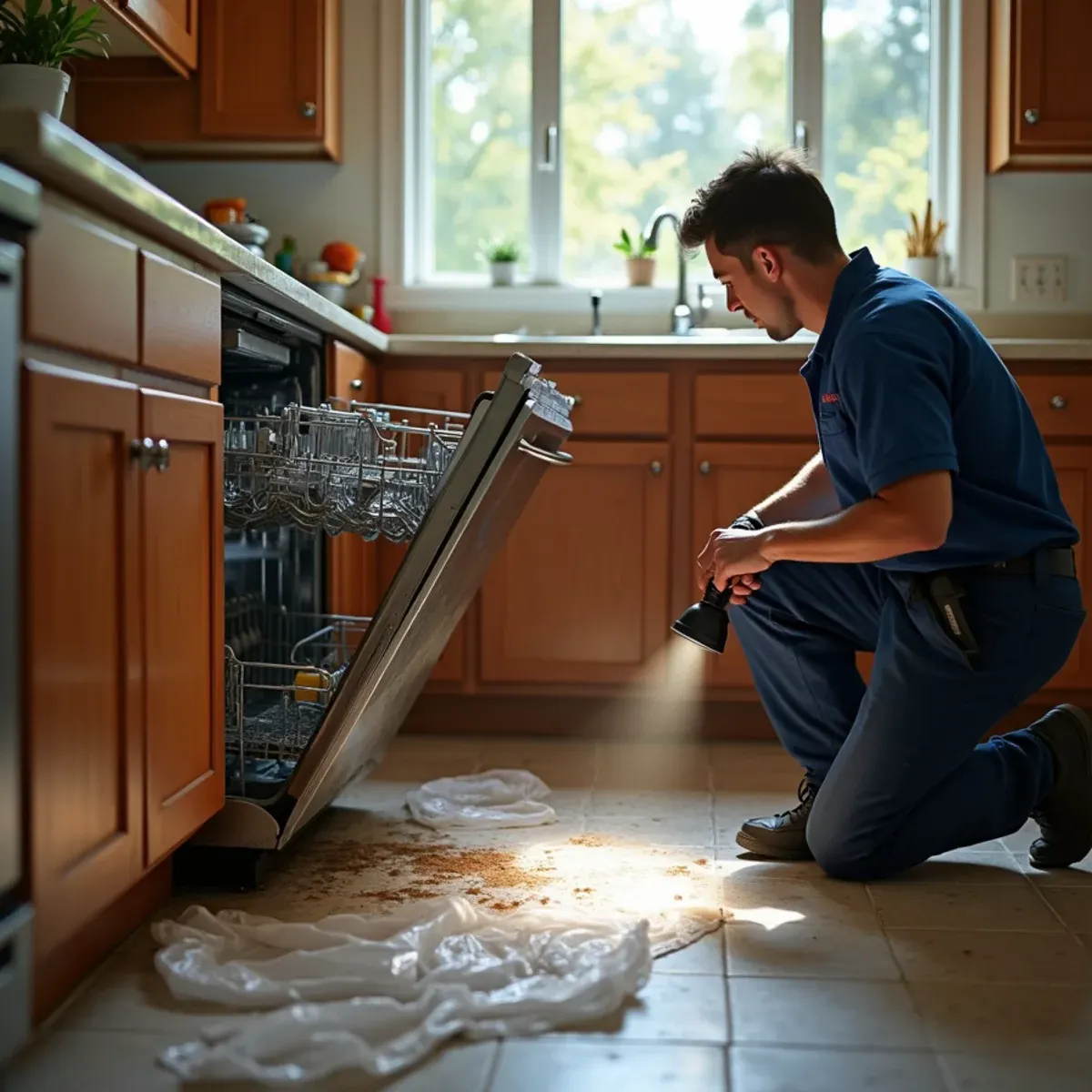
A damp reading at the base of your kitchen cabinets in Fountain Valley doesn't automatically mean the dishwasher is leaking. This city was built on drained wetland, Gospel Swamp on the old maps, and it has one of the shallowest water tables in Orange County. Slab vapor emission is background here, not an anomaly. Concrete pulls moisture up out of the ground and releases it into whatever sits on top of it, which shows up on a surface meter looking a great deal like a small, slow appliance leak.
Telling the two apart is the whole job on the front end. We look for a moisture gradient that points back toward the appliance, check the toe-kick and cabinet deck separately from the field of the slab, and where flooring has to come up we test the concrete in situ rather than reading the surface. Getting it wrong is expensive in both directions: tearing out a kitchen over a slab condition that was always there, or drying a real leak that keeps rewetting because the source is still dripping under the unit.
What Fountain Valley Changes About Appliance Leaks
1Slab vapor emission is the baseline
Fountain Valley was built on drained wetland, and the water table under it is among the shallowest in the county. Concrete here pulls ground moisture up and releases it continuously. That reads on a surface meter much like a small appliance leak, so before anything comes out we look for a gradient that genuinely points back to the dishwasher, the ice maker or the sink supply.
2Dead-flat ground has no fall
With essentially no slope anywhere in the city, water leaving an appliance doesn't run off. It sits and spreads evenly in every direction. It also means a blocked yard or area drain ponds against the house instead of draining away, so we check exterior drainage on any job where the base plate reads wet along more than one wall.
3Uniform tract plumbing speeds diagnosis
The 1960s and 70s tracts here were built to a small set of plans with under-slab copper, so once we've traced the supply route in one house on a street we know roughly where it runs in the next one. That shortens the search on a slow leak and reduces how much flooring has to come up before we find the source.
How the Work Runs
The method is the same one we use on every appliance leaks job, documented to the IICRC S500:2025 standard. Here it is in short — the full appliance leak water damage cleanup process explains each stage in detail.
- Isolate the supply
- Pull the appliance and read behind it
- Open cabinet bases where needed
- Extract and remove unsalvageable material
- Targeted drying of the enclosed spaces
- Rebuild and reinstall
The Fountain Valley Background Worth Knowing
Groundwater beneath Fountain Valley sits close enough to the surface that moisture vapor migration up through concrete slabs is a routine background condition rather than an anomaly. Homeowners here regularly describe a slab that feels cool and damp, or a closet on an exterior wall that never quite feels dry, without any leak at all.
There is more on the housing stock, drainage and plumbing history of this city on our water damage restoration in Fountain Valley page.
Fountain Valley at a glance
- Dominant construction era
- 1960–1980
- Foundation type
- slab on grade
- Supply piping found here
- under-slab copper
- Drain line materials
- cast iron
- Terrain and water table
- flat, shallow water table
- Most common local failure
- slab vapor emission mistaken for a leak, and flooring failures caused by installing over an untested slab
- Highest-value local prevention
- clearing the yard and area drains before the season, because a blocked drain on dead-flat ground ponds water against the house
What It Costs in Fountain Valley
We do not quote a number over the phone before seeing the property — anyone who does is guessing. The variables that actually move the price on a appliance leaks job are slow leak versus sudden failure, how much cabinetry is affected, subfloor condition, and they are broken down in full on the appliance leak water damage cleanup page. The assessment and the written estimate are free anywhere in Fountain Valley, day or night, with no obligation.
Appliance Leaks Questions from Fountain Valley Homeowners
Two likely answers. Either water from the original leak is still held in the slab and the cabinet deck and hasn't finished releasing, or what you're reading is ordinary slab vapor emission, which is background in this city and was almost certainly there before the appliance ever failed. Those call for opposite responses, so we test the concrete in situ rather than trusting a surface reading before recommending that anything be torn out.
Yes. Dishwasher leaks run backward and sideways under the unit into the cabinet bases and subfloor, which is why the visible floor often looks untouched. A free moisture reading takes twenty minutes and will tell you definitively whether anything behind or beneath is wet.
Often only the affected base or toe-kick, not the whole box. Particleboard bottoms that have swollen and delaminated have to be replaced, but the cabinet frame, doors, and countertop can usually stay. We repair at the smallest reasonable scope.
The city sits on former wetland with one of the shallowest water tables in Orange County, so moisture vapor migrating up through slabs is a normal background condition here rather than a defect. It matters most when installing flooring over the slab, which is why we test with in-situ RH probes before anything goes back down.