
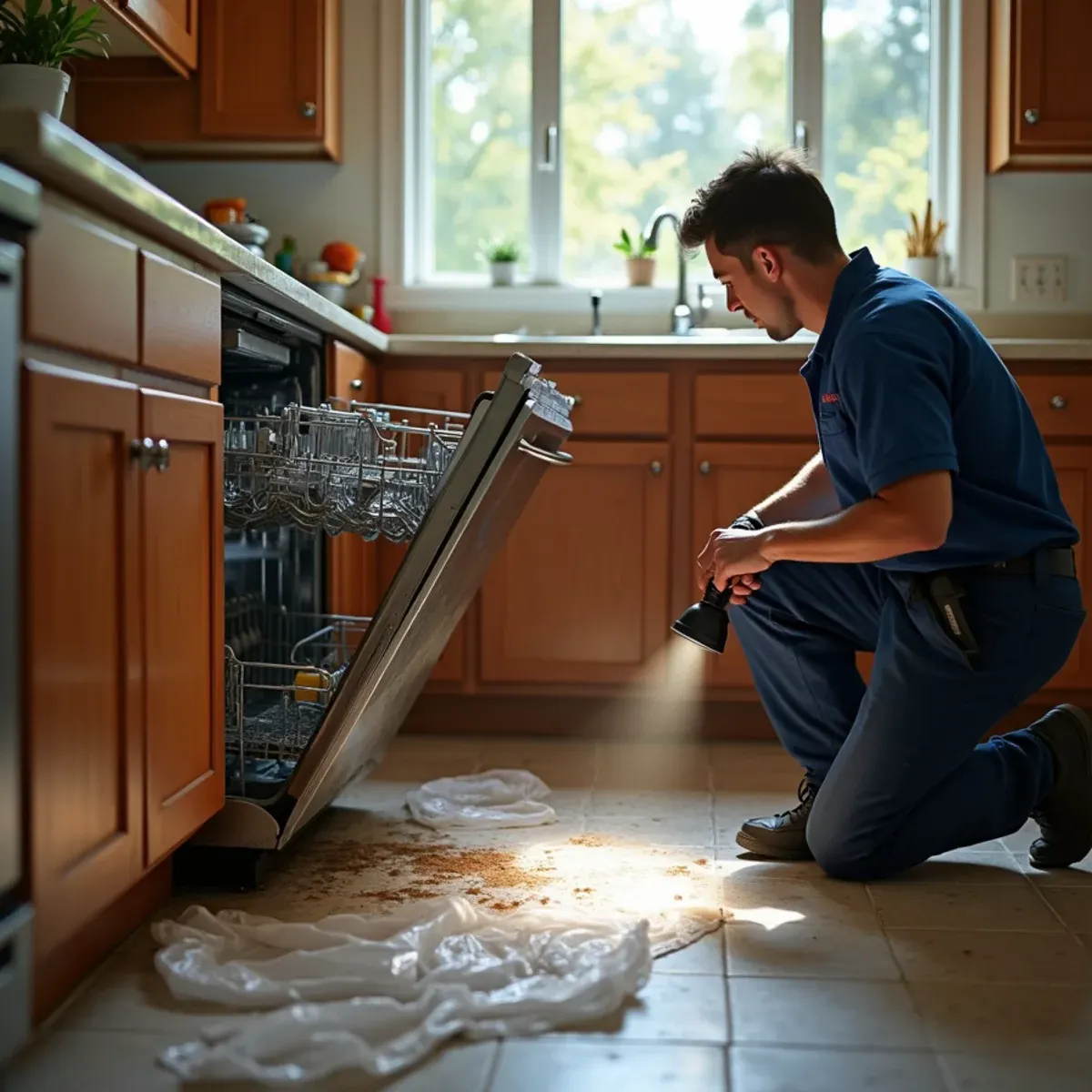
Downtown, plenty of the lots are twenty-five feet wide with no driveway. When a water heater fails in a garage off Main Street, our truck parks on the street and we run extraction hose the length of the house, which we plan before we arrive rather than after. It's a small thing that decides whether extraction starts in ten minutes or forty, and with an appliance leak the first hour is most of the outcome you're going to get.
Then the air works against you. Sustained marine humidity this close to the water means the same dishwasher leak that dries in three days a few miles inland takes four or five here, and it needs more dehumidification capacity to get there at all. In Huntington Harbour, tidal groundwater sits close beneath the slab, so there's less dry ground below to pull moisture into. Out in the 92646 and 92647 tracts it's more straightforward: slab, under-slab copper, and water tracking sideways under laminate toward the nearest wall.
What Huntington Beach Changes About Appliance Leaks
1Narrow downtown lots limit equipment access
Downtown lots are often twenty-five feet wide with no driveway, so the truck stays on the street and extraction runs through long hose lays. We plan that route before arrival instead of working it out with water still moving. On an appliance leak the first hour decides most of the outcome, and setup time is the easiest hour to lose.
2Marine humidity extends drying timelines
Sustained humidity this close to the water gives dehumidifiers less headroom, and in Huntington Harbour tidal groundwater sits close beneath the slab, so there's less dry ground below to draw moisture into. The same dishwasher leak that dries in three days inland can run four or five here. We bring extra capacity rather than asking for extra days.
3Salt reaches the connections too
Salt air corrodes more than flashings and fasteners. Angle stops, hose fittings and water heater connections in garages within a mile of the shore show pitting and crust years earlier than the same parts inland. When we replace a failed braided hose here, we look hard at the valve and the nipple behind it, because that's usually where the corrosion actually is.
How the Work Runs
The method is the same one we use on every appliance leaks job, documented to the IICRC S500:2025 standard. Here it is in short — the full appliance leak water damage cleanup process explains each stage in detail.
- Isolate the supply
- Pull the appliance and read behind it
- Open cabinet bases where needed
- Extract and remove unsalvageable material
- Targeted drying of the enclosed spaces
- Rebuild and reinstall
The Huntington Beach Background Worth Knowing
Salt does not damage buildings directly. It damages the details that keep water out, and then water does the rest.
There is more on the housing stock, drainage and plumbing history of this city on our water damage restoration in Huntington Beach page.
Huntington Beach at a glance
- Dominant construction era
- 1960–1990
- Foundation type
- slab on grade
- Supply piping found here
- under-slab copper
- Drain line materials
- cast iron, ABS
- Terrain and water table
- coastal-flat, shallow water table
- Most common local failure
- wind-driven rain entering through salt-corroded window flashing and failed exterior sealant
- Highest-value local prevention
- renewing exterior caulking and flashing on a far shorter cycle than inland guidance suggests
What It Costs in Huntington Beach
We do not quote a number over the phone before seeing the property — anyone who does is guessing. The variables that actually move the price on a appliance leaks job are slow leak versus sudden failure, how much cabinetry is affected, subfloor condition, and they are broken down in full on the appliance leak water damage cleanup page. The assessment and the written estimate are free anywhere in Huntington Beach, day or night, with no obligation.
Appliance Leaks Questions from Huntington Beach Homeowners
Because the air and the ground are both working against us. Coastal humidity means our dehumidifiers pull against a wetter starting point, and near the Harbour the water table sits close under the slab, so there's less dry material below to move moisture into. Drying is judged by readings, not by days on a calendar. We run until the numbers hold, which here typically means an extra day or two.
Yes. Dishwasher leaks run backward and sideways under the unit into the cabinet bases and subfloor, which is why the visible floor often looks untouched. A free moisture reading takes twenty minutes and will tell you definitively whether anything behind or beneath is wet.
Often only the affected base or toe-kick, not the whole box. Particleboard bottoms that have swollen and delaminated have to be replaced, but the cabinet frame, doors, and countertop can usually stay. We repair at the smallest reasonable scope.
Ambient humidity near the coast stays high enough for long enough that materials dry slowly on their own, which widens the window in which growth can establish after any moisture event. Combined with salt-accelerated failures of exterior sealants and flashings, coastal homes simply get more moisture intrusion and dry from it more slowly.