
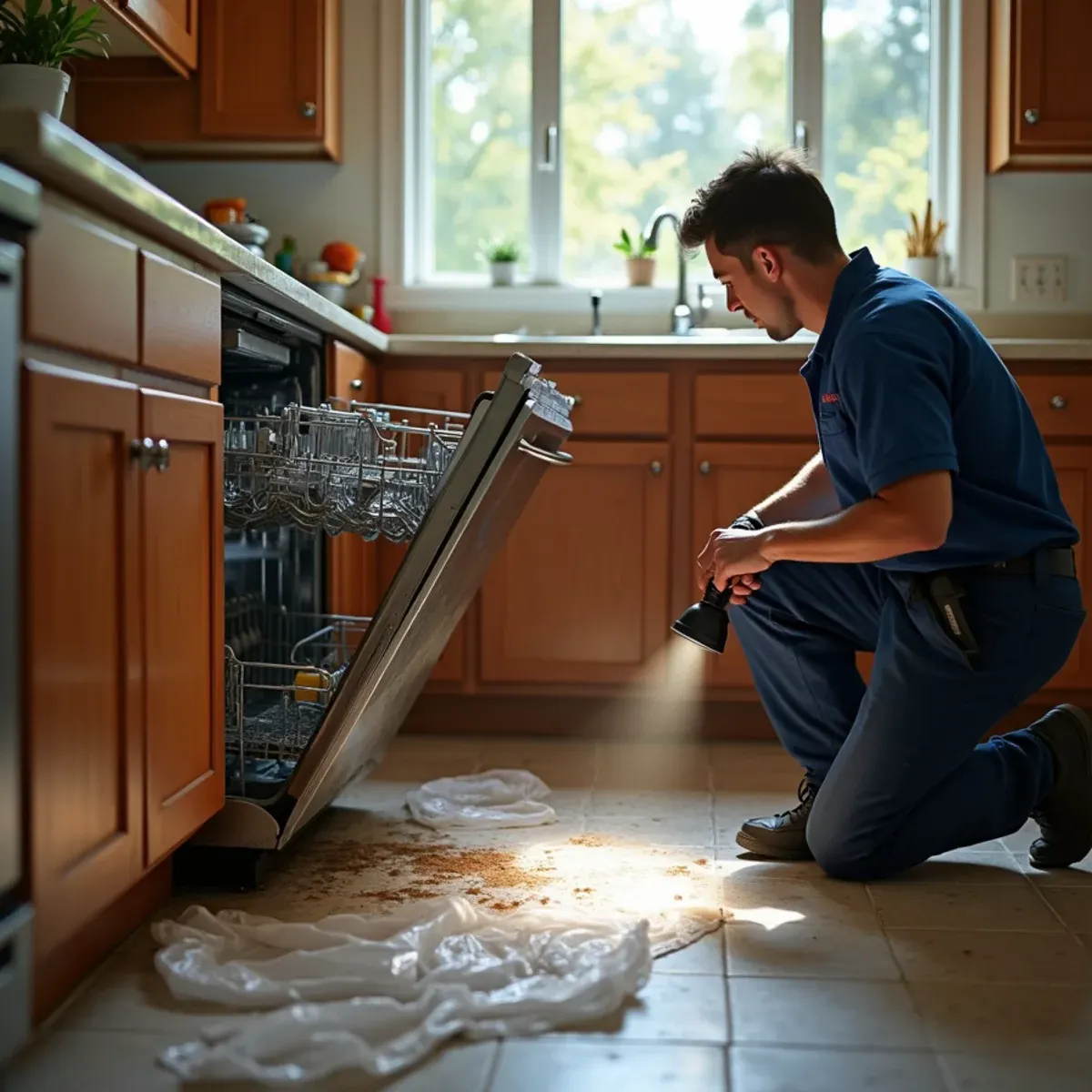
Bolsa Avenue holds one of the densest runs of independent restaurants in Southern California, most of it in buildings that went up in the 1950s and 60s and were never designed around commercial dish machines and ice makers. A leaking dish machine here doesn't stay in the kitchen. It runs under quarry tile, along the base of a block wall, and into the dining room or the neighboring tenant space. For an owner-operated kitchen near the Asian Garden Mall, every closed day comes straight out of pocket.
The ground makes it slower. Westminster sits low and flat near the Bolsa Chica channel with a shallow water table, so slabs here carry a higher baseline moisture load than slabs a few miles inland, before anything leaks at all. That matters most afterward. When a dishwasher or fridge line has soaked a slab and the flooring comes up, we won't sign off on a new floor going down until in-situ relative humidity testing says the concrete is genuinely ready. Skipping that step is how the second failure happens.
What Westminster Changes About Appliance Leaks
1Commercial dish machines in 1950s buildings
Most Bolsa Avenue restaurants operate in buildings put up long before commercial kitchens were the plan. Dish machines and ice makers sit tight against block walls with no access behind them, so a supply weep runs under quarry tile toward the dining room or the neighboring tenant for days before it's visible. We pull equipment out to find the source rather than guessing at it.
2Shallow water table raises slab moisture
Westminster sits low and flat near the Bolsa Chica channel, and the water table beneath it is shallow. Slabs here carry more baseline moisture than slabs a few miles inland before anything leaks. That changes both the readings we'll accept as dry and the number of drying days we quote, and we'd rather say so up front than extend the job halfway through.
3Test the slab before new flooring
The most common repeat failure we see in this city is a new floor installed over a slab that was never tested and is still releasing vapor. Surface meters don't answer that question. In-situ relative humidity probes do, and the wait is a few days rather than a few weeks. Skipping it costs you the floor a second time, usually out of pocket.
How the Work Runs
The method is the same one we use on every appliance leaks job, documented to the IICRC S500:2025 standard. Here it is in short — the full appliance leak water damage cleanup process explains each stage in detail.
- Isolate the supply
- Pull the appliance and read behind it
- Open cabinet bases where needed
- Extract and remove unsalvageable material
- Targeted drying of the enclosed spaces
- Rebuild and reinstall
The Westminster Background Worth Knowing
Westminster's shallow groundwater means many slabs here carry a higher baseline moisture load than slabs a few miles inland. In an undamaged home with breathable flooring that is usually a non-issue. It becomes an issue in two situations.
There is more on the housing stock, drainage and plumbing history of this city on our water damage restoration in Westminster page.
Westminster at a glance
- Dominant construction era
- 1950–1970
- Foundation type
- slab on grade
- Supply piping found here
- under-slab copper, galvanized steel
- Drain line materials
- cast iron
- Terrain and water table
- coastal-flat, shallow water table
- Most common local failure
- flooring installed over a slab that was never tested and is still releasing vapor
- Highest-value local prevention
- in-situ slab relative humidity testing before any new floor goes down
What It Costs in Westminster
We do not quote a number over the phone before seeing the property — anyone who does is guessing. The variables that actually move the price on a appliance leaks job are slow leak versus sudden failure, how much cabinetry is affected, subfloor condition, and they are broken down in full on the appliance leak water damage cleanup page. The assessment and the written estimate are free anywhere in Westminster, day or night, with no obligation.
Appliance Leaks Questions from Westminster Homeowners
Not until the slab tests dry, and in this part of the city that takes longer than inland because the ground beneath you holds moisture. We dry the assembly, then set in-situ relative humidity probes in the slab and read them against what your flooring or adhesive manufacturer requires. Laying quarry tile or sheet goods over concrete that is still releasing vapor is how kitchens end up paying for the same floor twice.
Yes. Dishwasher leaks run backward and sideways under the unit into the cabinet bases and subfloor, which is why the visible floor often looks untouched. A free moisture reading takes twenty minutes and will tell you definitively whether anything behind or beneath is wet.
Often only the affected base or toe-kick, not the whole box. Particleboard bottoms that have swollen and delaminated have to be replaced, but the cabinet frame, doors, and countertop can usually stay. We repair at the smallest reasonable scope.
Westminster has a shallow water table, so slabs here carry more baseline moisture than slabs further inland. Normally that is harmless, but it matters when installing flooring over the slab and it means drying after a loss takes longer. We test with in-situ relative humidity probes before any new floor goes down.