
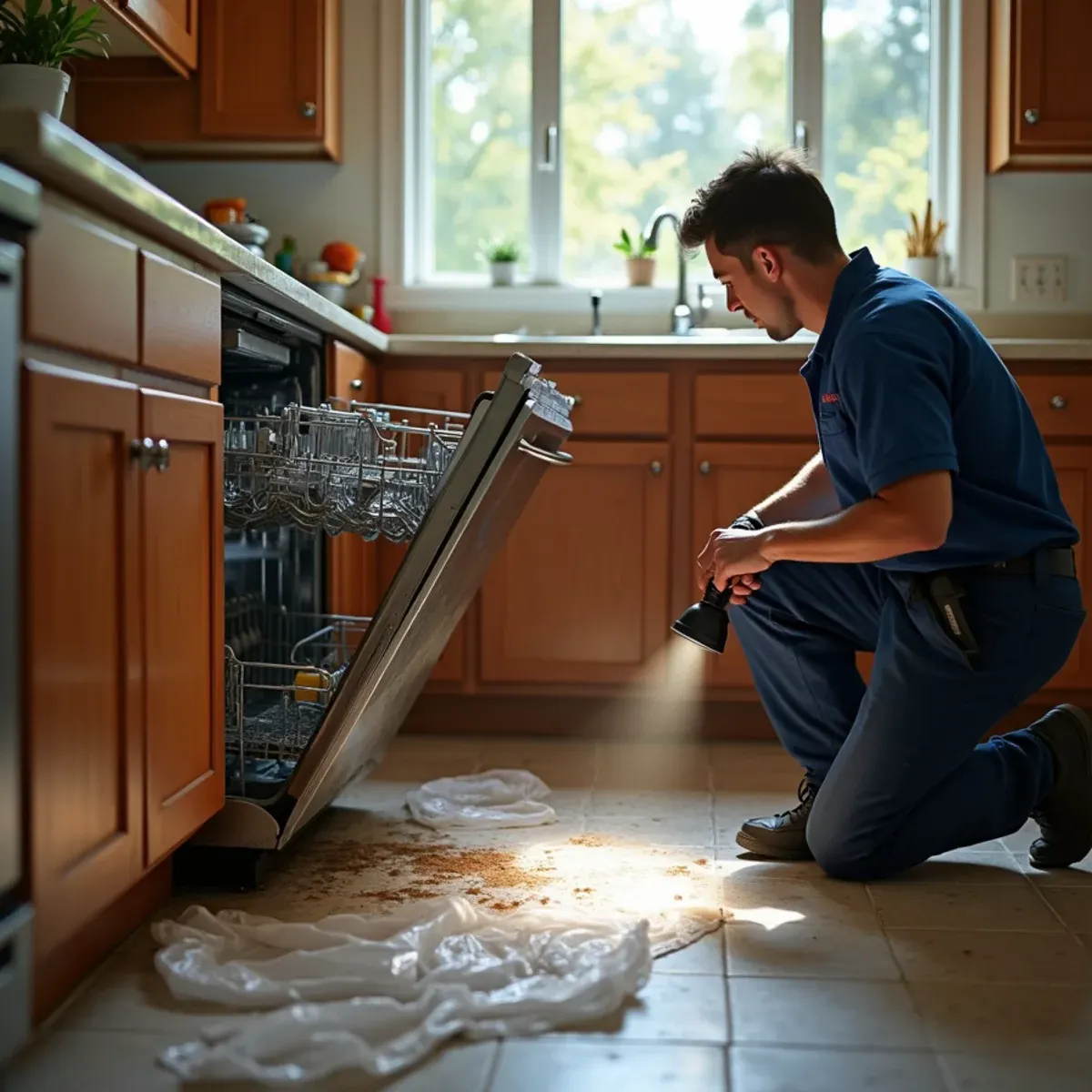
A braided hose lets go behind the washer. You reach back to close the valve and it will not turn, or the handle spins loose, or the stub snaps off in your hand. That is the Bellflower version of this call, and it comes down to age. The houses that filled the old dairy and orchard land between 1940 and 1960 still carry a great deal of original galvanized supply pipe and early copper, and the laundry stub behind a washer is the one part nobody ever exercises. Eighty-year-old valves do not close on demand.
Small houses on small lots means the water reaches everything quickly. Two hundred gallons in a thousand-square-foot slab house is not a kitchen problem, it is a house problem, taking in the hall, two bedrooms and the closet the water heater shares with the furnace. The heavy multi-family stock along Bellflower Boulevard and the Rosecrans corridor adds another layer, where a second-floor washer becomes somebody else's ceiling. Find your street-side meter shutoff before you need it. We are twelve minutes southeast of you in Cypress, running around the clock.
What Bellflower Changes About Appliance Leaks
1Original galvanized laundry stubs and valves
Corroded stops are the reason small failures become large ones in this city. When we arrive on a running leak, controlling the water comes first, at the meter if the laundry valve is seized. Afterward we will tell you which stops need replacing, but the plumbing repair belongs to a licensed plumber. Quarter-turn ball valves in a proper laundry box, plus new hoses on the five-year rule, remove most of this risk permanently.
2Small slab plans flood end to end
These houses have short hallways and no interior steps, so water crosses the whole floor plan in minutes. That means we map the far bedrooms and the closets before we assume the loss stopped at the laundry. Carpet pad, the bottom plates of interior walls and the base of the water heater closet are the three places that stay wet after the visible floor looks fine.
3Second-floor washers in multi-family buildings
The apartment stock along Bellflower Boulevard puts laundry above other units. A failure upstairs becomes a wet ceiling, wet insulation and two separate claims downstairs. We photograph and meter every affected unit before removing anything, coordinate access through the property manager, and dry the shared floor and ceiling assembly as one system rather than treating each apartment as its own job.
How the Work Runs
The method is the same one we use on every appliance leaks job, documented to the IICRC S500:2025 standard. Here it is in short — the full appliance leak water damage cleanup process explains each stage in detail.
- Isolate the supply
- Pull the appliance and read behind it
- Open cabinet bases where needed
- Extract and remove unsalvageable material
- Targeted drying of the enclosed spaces
- Rebuild and reinstall
The Bellflower Background Worth Knowing
Galvanized steel was the standard supply pipe when Bellflower was being built, and it fails from the inside out. The zinc lining wears through, the steel underneath corrodes, and scale builds on the interior wall until the pipe is a fraction of its original diameter. Narrower pipe means faster, more turbulent water, which chews at elbows and threaded fittings until one of them lets go. Hot lines corrode faster than cold, which is why hot water pressure is usually the first thing to drop. Eighty years is well past any service life anyone intended when this was installed.
There is more on the housing stock, drainage and plumbing history of this city on our water damage restoration in Bellflower page.
Bellflower at a glance
- Dominant construction era
- 1940–1960
- Foundation type
- slab on grade
- Supply piping found here
- original galvanized steel, early copper
- Drain line materials
- cast iron
- Terrain and water table
- flat, moderate water table
- Most common local failure
- original galvanized supply lines and cast-iron laterals failing together in the same decade
- Highest-value local prevention
- scoping the sewer lateral, which on a house this age has usually never been looked at
What It Costs in Bellflower
We do not quote a number over the phone before seeing the property — anyone who does is guessing. The variables that actually move the price on a appliance leaks job are slow leak versus sudden failure, how much cabinetry is affected, subfloor condition, and they are broken down in full on the appliance leak water damage cleanup page. The assessment and the written estimate are free anywhere in Bellflower, day or night, with no obligation.
Appliance Leaks Questions from Bellflower Homeowners
On a Bellflower house of this age, yes. New braided hoses bolted to a fifty-year-old galvanized stop leaves you with the same problem, which is a valve that will not close when you need it most. Have a plumber install a modern laundry box with quarter-turn stops, then change hoses every five years and write the date on them. We do the drying and rebuild rather than the plumbing, so this is a call to make before anything fails.
Yes. Dishwasher leaks run backward and sideways under the unit into the cabinet bases and subfloor, which is why the visible floor often looks untouched. A free moisture reading takes twenty minutes and will tell you definitively whether anything behind or beneath is wet.
Often only the affected base or toe-kick, not the whole box. Particleboard bottoms that have swollen and delaminated have to be replaced, but the cabinet frame, doors, and countertop can usually stay. We repair at the smallest reasonable scope.
It is the most common gap we see here. A cast iron lateral that age has corroded along the bottom, the joints have shifted, and the parkway trees on most Bellflower streets have had seventy years to find them. A camera inspection costs a small fraction of a sewage remediation, and on a line that has never been scoped it usually finds something worth knowing about before it finds you at two in the morning.