
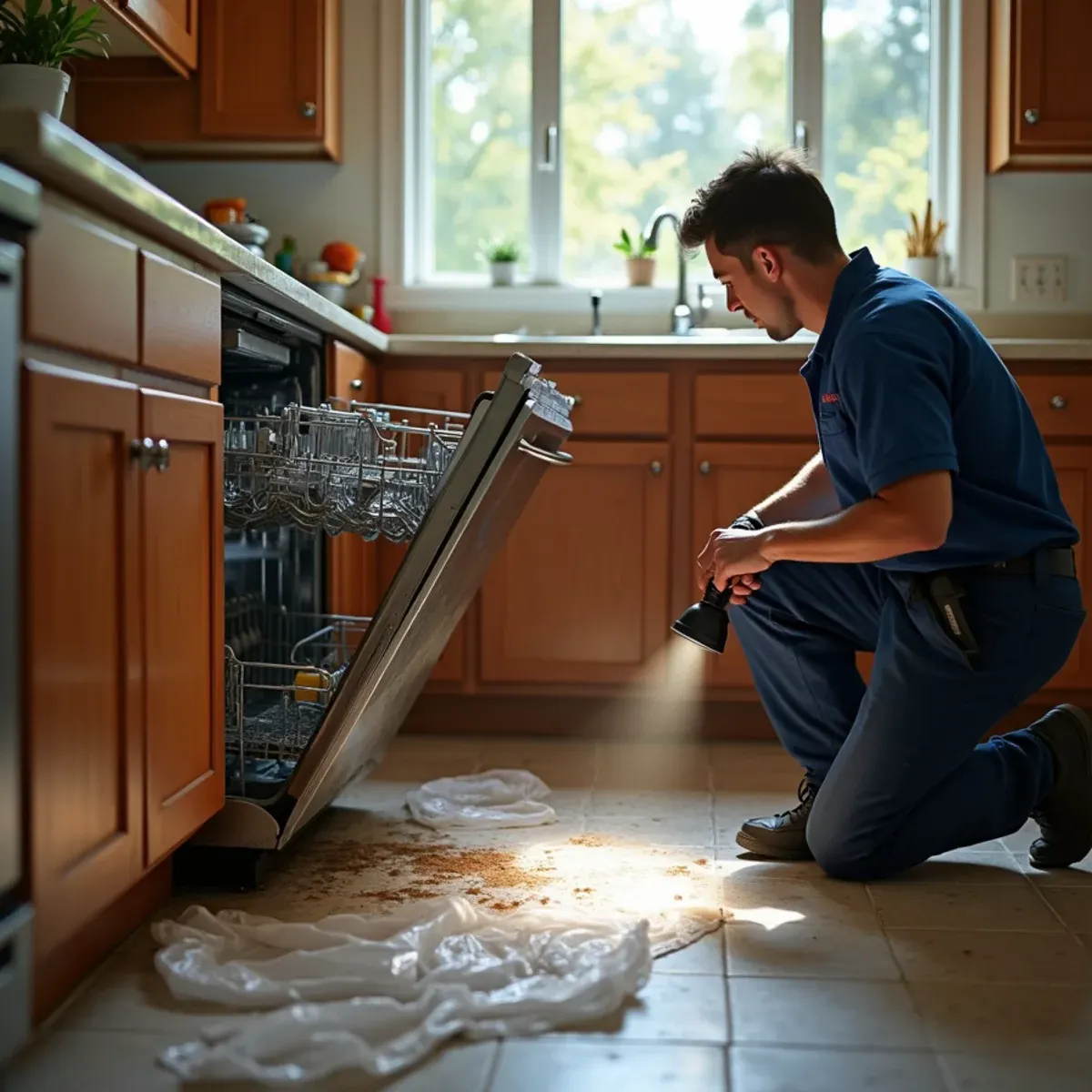
Housing in Paramount is packed tight between the commercial corridors, and that geometry drives the work. Duplexes, fourplexes and small houses on narrow lots share walls and share slabs, so a washer supply line that fails on one side of a party wall does not respect the property line. We arrive and find two households, sometimes two owners and two policies, looking at the same wet drywall. Sorting out who is drying what before equipment goes down saves everybody a week of argument later, and it is a conversation we are used to having at two in the morning.
The other half of our Paramount work is commercial. This is one of the more industrially dense cities in the area, and the break rooms, employee kitchens, ice machines and commercial water heaters inside those buildings fail exactly the way residential ones do, just onto sealed concrete with product stacked on it. In the older Hynes and Clearwater housing, the original galvanized supply lines from the 1945 to 1965 buildout are the usual culprit. Lots here have very little permeable ground either way. We are fourteen minutes east in Cypress.
What Paramount Changes About Appliance Leaks
1Shared walls and two separate policies
When water crosses a party wall in a Paramount duplex, both sides need reading and both sides need drying, because a cavity that stays wet on one side will not dry on the other. We do not decide who is responsible. We document with photographs and moisture readings before anything is removed, write a separate scope for each unit, and give each carrier the same underlying data so the technical facts are not in dispute.
2Break rooms and ice machines in plants
In the buildings along Paramount Boulevard and the Rosecrans corridor, the appliance that floods a facility is usually a break-room water heater or a commercial ice machine with a failed inlet. Water crosses a coated floor fast and gets under equipment pads and racking. We extract, protect what is stacked on the floor, and check whether it traveled under any coating, which is where it hides on a commercial slab.
3Original galvanized in Hynes and Clearwater homes
The postwar houses in the older parts of the city still run galvanized supply pipe to the laundry and the kitchen. Corrosion narrows those lines and weakens the threads at the stub, so failures happen at the connection rather than the hose. If your water pressure has dropped over the years or the hot side runs rusty, treat that as a warning about the pipe, not just the fixture.
How the Work Runs
The method is the same one we use on every appliance leaks job, documented to the IICRC S500:2025 standard. Here it is in short — the full appliance leak water damage cleanup process explains each stage in detail.
- Isolate the supply
- Pull the appliance and read behind it
- Open cabinet bases where needed
- Extract and remove unsalvageable material
- Targeted drying of the enclosed spaces
- Rebuild and reinstall
The Paramount Background Worth Knowing
On a typical Paramount lot, the house, the driveway, the walkways and the rear slab cover most of the parcel. What is left is a narrow side yard, and everything that lands on the roof and the paving is supposed to leave through a couple of small area drains. That system has no margin. When a grate silts up, when a downspout dumps straight onto paving, or when the outlet at the curb has been crushed by a parked truck, the water has no soil to soak into and nowhere else to be. It ponds against the slab edge and comes in at the lowest threshold, which is usually a garage or a side door.
There is more on the housing stock, drainage and plumbing history of this city on our water damage restoration in Paramount page.
Paramount at a glance
- Dominant construction era
- 1945–1965
- Foundation type
- slab on grade
- Supply piping found here
- original galvanized steel, copper
- Drain line materials
- cast iron
- Terrain and water table
- flat, moderate water table
- Most common local failure
- residential and commercial losses on the same block, needing very different handling
- Highest-value local prevention
- clearing area drains before the season on lots with very little permeable ground
What It Costs in Paramount
We do not quote a number over the phone before seeing the property — anyone who does is guessing. The variables that actually move the price on a appliance leaks job are slow leak versus sudden failure, how much cabinetry is affected, subfloor condition, and they are broken down in full on the appliance leak water damage cleanup page. The assessment and the written estimate are free anywhere in Paramount, day or night, with no obligation.
Appliance Leaks Questions from Paramount Homeowners
That is between the two carriers, and we are not the ones who decide it. What we can do is make the facts clear. We meter both sides, photograph the wall and the source before anything is opened, and write separate scopes so each policy is looking at its own property. Then we dry the shared assembly as one system, because leaving half a wall cavity wet guarantees a mold problem for both households later.
Yes. Dishwasher leaks run backward and sideways under the unit into the cabinet bases and subfloor, which is why the visible floor often looks untouched. A free moisture reading takes twenty minutes and will tell you definitively whether anything behind or beneath is wet.
Often only the affected base or toe-kick, not the whole box. Particleboard bottoms that have swollen and delaminated have to be replaced, but the cabinet frame, doors, and countertop can usually stay. We repair at the smallest reasonable scope.
Almost certainly your area drains. Paramount lots have very little permeable ground, so everything that falls on the roof and the paving has to leave through a couple of small drains. If a grate silts up or the outlet is crushed, the water ponds against the slab and enters at the lowest threshold, which is usually the garage. Rodding the drains and checking the outlet before the season costs far less than drying the garage wall afterward.