
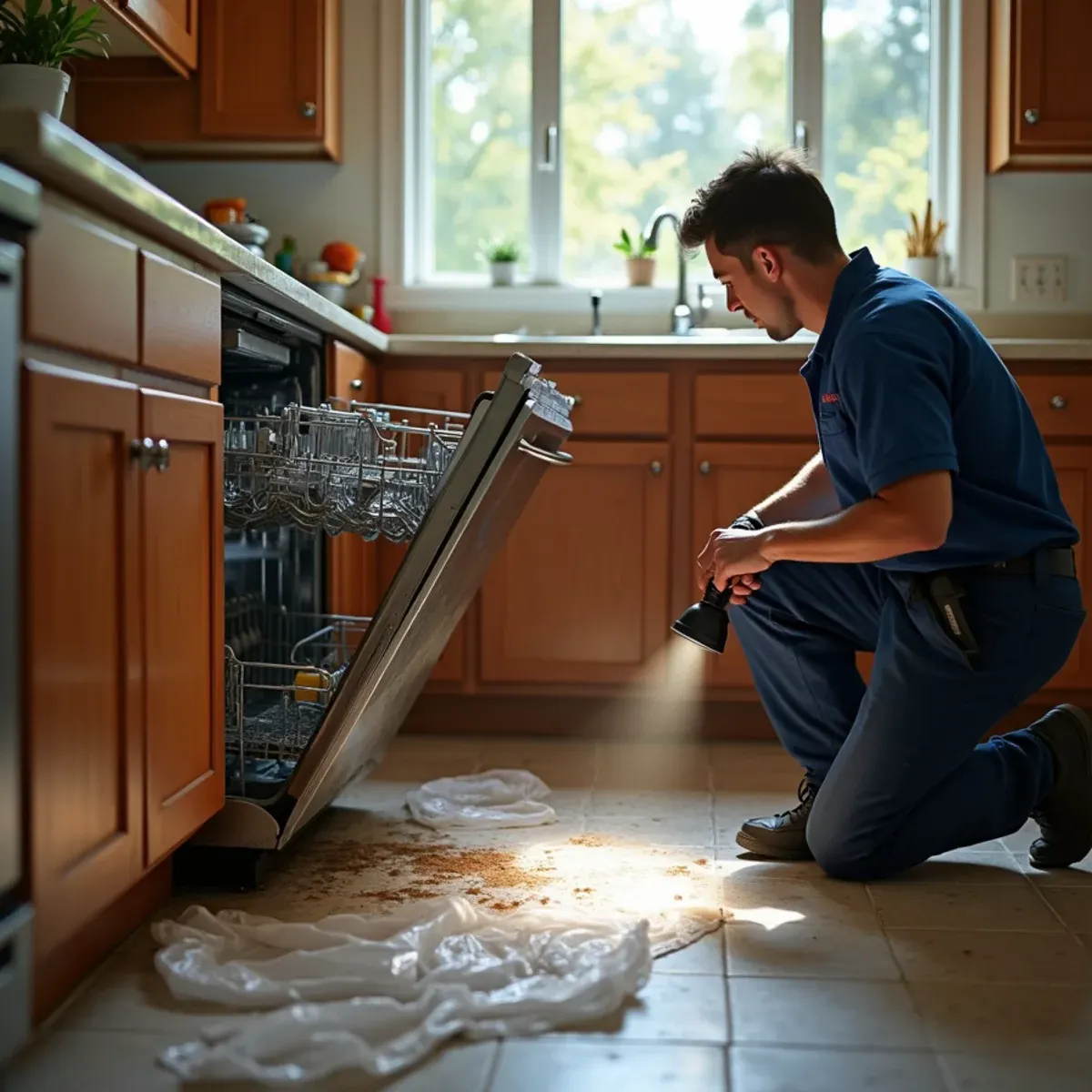
The kitchen in a Floral Park or French Park house was never built around a dishwasher. Somebody fit one in decades later, tight against a lath-and-plaster wall and over flooring milled from old-growth stock nobody can buy today. When the supply line or the door gasket starts to weep, plaster takes on several times the water drywall would and holds onto it. Left alone, the keys locking that plaster to the wood lath soften and release, and a wall that survived a century comes down over a slow leak.
Speed matters more here than almost anywhere else we work, and the equipment is different. Plaster wants desiccant dehumidification, not a couple of box fans and optimism. IICRC S500:2025 sets how drying gets documented, and on a historic loss we lean on it hard, because in Santa Ana's review districts the wall you save is worth far more than the wall you replace. Elsewhere in the city, in the dense postwar apartments around the civic core, that same washer failure is a straightforward drywall and slab job.
What Santa Ana Changes About Appliance Leaks
1Plaster holds water drywall never would
Lath and plaster in the historic districts takes on several times the moisture of drywall and gives it back slowly, so a slow dishwasher leak keeps a wall saturated long after the source is fixed. Desiccant dehumidification is the right tool. We document drying under IICRC S500:2025 because on a historic wall, the case for saving rather than replacing has to be evidenced.
2Old-growth hardwood has no replacement
The oak and fir floors in Floral Park and Washington Square homes were milled from timber that simply isn't available now. Cupping starts before staining does. Where we can get airflow beneath the boards and pull moisture from below, those floors usually come back, but the window is short, and sanding a floor that was never fully dried only moves the problem.
3Preservation review shapes the repair
Santa Ana's historic districts carry review requirements on exterior and some interior work, which means the repair after an appliance leak isn't just a matter of matching a paint color. Saving original material is both cheaper and simpler than replacing it. Our drying decisions get made with that in mind rather than defaulting to cut, dry and rebuild.
How the Work Runs
The method is the same one we use on every appliance leaks job, documented to the IICRC S500:2025 standard. Here it is in short — the full appliance leak water damage cleanup process explains each stage in detail.
- Isolate the supply
- Pull the appliance and read behind it
- Open cabinet bases where needed
- Extract and remove unsalvageable material
- Targeted drying of the enclosed spaces
- Rebuild and reinstall
The Santa Ana Background Worth Knowing
Lath and plaster is wood strips nailed across the studs with several coats of plaster troweled over them. The plaster that squeezes through the gaps between lath forms keys that hook over the wood and hold the whole wall in place. That construction is why plaster walls last a century — and why they behave so differently from drywall when wet.
There is more on the housing stock, drainage and plumbing history of this city on our water damage restoration in Santa Ana page.
Santa Ana at a glance
- Dominant construction era
- 1900–1970
- Foundation type
- mixed on grade
- Supply piping found here
- original early-century piping, galvanized steel, copper
- Drain line materials
- cast iron, clay
- Terrain and water table
- flat, moderate water table
- Most common local failure
- plaster key failure, where wet plaster softens and releases from the wood lath holding it to the wall
- Highest-value local prevention
- starting aggressive drying within hours on any plaster loss — waiting is the one thing that costs you the wall
What It Costs in Santa Ana
We do not quote a number over the phone before seeing the property — anyone who does is guessing. The variables that actually move the price on a appliance leaks job are slow leak versus sudden failure, how much cabinetry is affected, subfloor condition, and they are broken down in full on the appliance leak water damage cleanup page. The assessment and the written estimate are free anywhere in Santa Ana, day or night, with no obligation.
Appliance Leaks Questions from Santa Ana Homeowners
Not automatically. We'd rather dry the assembly in place, using desiccant equipment and small access points behind the base cabinets where nothing shows afterward. Cutting becomes necessary when the plaster keys have already released from the lath, and tapping plus gentle pressure tells us that. If we do cut, we keep it below the cabinet line so the original wall surface above stays exactly as it is.
Yes. Dishwasher leaks run backward and sideways under the unit into the cabinet bases and subfloor, which is why the visible floor often looks untouched. A free moisture reading takes twenty minutes and will tell you definitively whether anything behind or beneath is wet.
Often only the affected base or toe-kick, not the whole box. Particleboard bottoms that have swollen and delaminated have to be replaced, but the cabinet frame, doors, and countertop can usually stay. We repair at the smallest reasonable scope.
Usually, if drying starts quickly. Plaster holds much more water than drywall and dries far more slowly, so it needs more equipment and often desiccant dehumidification. The risk is the plaster keys softening and releasing from the lath, which is why waiting is the one thing that genuinely costs you the wall.