
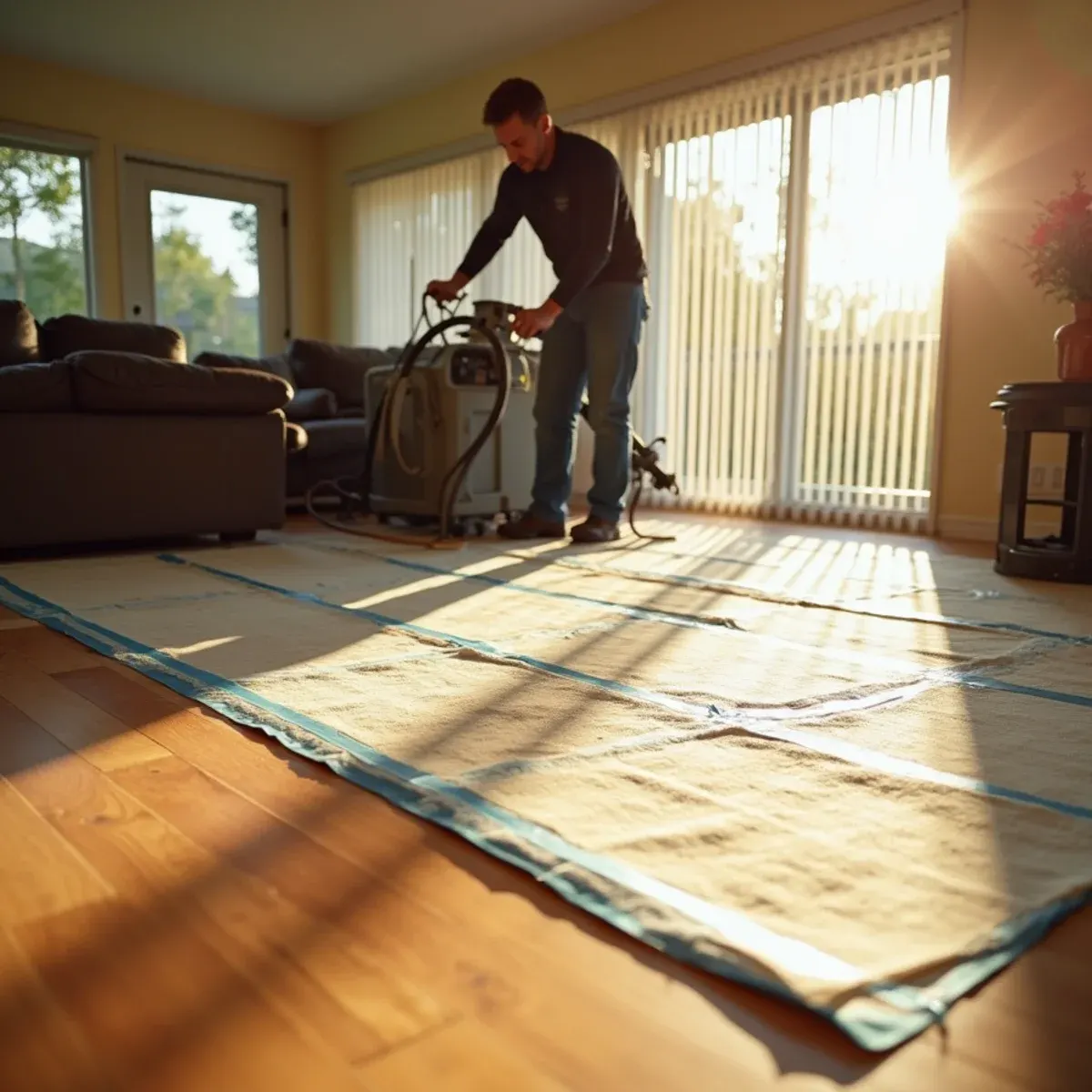
Fountain Valley was wetland before it was a city. Gospel Swamp on the old maps, drained and filled before the tracts went in. The water table underneath is among the shallowest in Orange County, and that is not trivia when there is a wood floor involved. Slab vapor emission here is a background condition, not an anomaly. Floors laid over untested slabs cup and gap on their own schedule, and homeowners spend months hunting a leak that never existed. Before we call anything a water loss, we find out what the slab is doing.
Real losses here have a shape to them. The ground is dead flat, with effectively no fall on these lots at all, so when a yard drain blocks up storm water does not run off. It stands against the house and works in at the slab edge. The cupping starts along the exterior wall and grades inward, which is the opposite signature from a fixture leak, and it tells us where to look and where the mats belong. Homes around Mile Square and off the Brookhurst corridor show that pattern most winters.
What Fountain Valley Changes About Hardwood Floor Drying
1Slab probes before a floor goes back
In-situ relative humidity probes in the slab are not optional here. Fountain Valley sits on drained wetland with one of the shallowest water tables in the county, and vapor emission through concrete is normal background rather than a defect. A surface meter will not see it. Probes will, and they decide whether your floor can be reinstalled as-is or needs a different assembly beneath it.
2A dried floor can cup a second time
We have been called back to floors somebody else dried perfectly well, because nothing changed underneath them. If the slab is still driving vapor and the replacement goes down without a proper vapor retarder, the new floor cups on the same schedule the old one did. Drying is half the job here. Choosing what goes back down over that slab is the other half.
3Blocked drains on ground with no fall
There is effectively no slope on these lots. When a yard or area drain silts up, storm water does not run anywhere. It stands against the house and works in at the slab edge. The floor cupping that follows starts along an exterior wall and grades inward, a very different signature from a fixture leak, and it tells us exactly where to start looking.
How the Work Runs
The method is the same one we use on every hardwood floor drying job, documented to the IICRC S500:2025 standard. Here it is in short — the full hardwood floor water damage drying process explains each stage in detail.
- Measure before deciding anything
- Extract from below the surface
- Control the drying rate deliberately
- Dry the subfloor and any cavity below
- Let it acclimate before judging it
- Sand and refinish only if needed
The Fountain Valley Background Worth Knowing
Groundwater beneath Fountain Valley sits close enough to the surface that moisture vapor migration up through concrete slabs is a routine background condition rather than an anomaly. Homeowners here regularly describe a slab that feels cool and damp, or a closet on an exterior wall that never quite feels dry, without any leak at all.
There is more on the housing stock, drainage and plumbing history of this city on our water damage restoration in Fountain Valley page.
Fountain Valley at a glance
- Dominant construction era
- 1960–1980
- Foundation type
- slab on grade
- Supply piping found here
- under-slab copper
- Drain line materials
- cast iron
- Terrain and water table
- flat, shallow water table
- Most common local failure
- slab vapor emission mistaken for a leak, and flooring failures caused by installing over an untested slab
- Highest-value local prevention
- clearing the yard and area drains before the season, because a blocked drain on dead-flat ground ponds water against the house
What It Costs in Fountain Valley
We do not quote a number over the phone before seeing the property — anyone who does is guessing. The variables that actually move the price on a hardwood floor drying job are square footage under the mat system, solid versus engineered wood, what is underneath, and they are broken down in full on the hardwood floor water damage drying page. The assessment and the written estimate are free anywhere in Fountain Valley, day or night, with no obligation.
Hardwood Floor Drying Questions from Fountain Valley Homeowners
Not necessarily. If the slab was never tested and the replacement floor went down without an adequate vapor retarder, moisture from below will cup it again no matter how well the original drying was done. That is common on the old Gospel Swamp ground. The fix is measurement first, probes set into the slab, then choosing a floor and underlayment that can live with whatever number comes back.
Frequently, yes. Cupping is caused by uneven moisture between the top and bottom of each board, and when the moisture equalizes during controlled drying, much of the deformation reverses. Full flattening can take two to four weeks of acclimation after the equipment comes out, which is why we do not recommend sanding immediately.
Five to ten days under the mat system is typical, which is longer than drywall because wood gives up moisture slowly and has to be dried at a controlled rate. Rushing it causes splitting and permanent gapping, so the extra days are doing real work.
The city sits on former wetland with one of the shallowest water tables in Orange County, so moisture vapor migrating up through slabs is a normal background condition here rather than a defect. It matters most when installing flooring over the slab, which is why we test with in-situ RH probes before anything goes back down.