
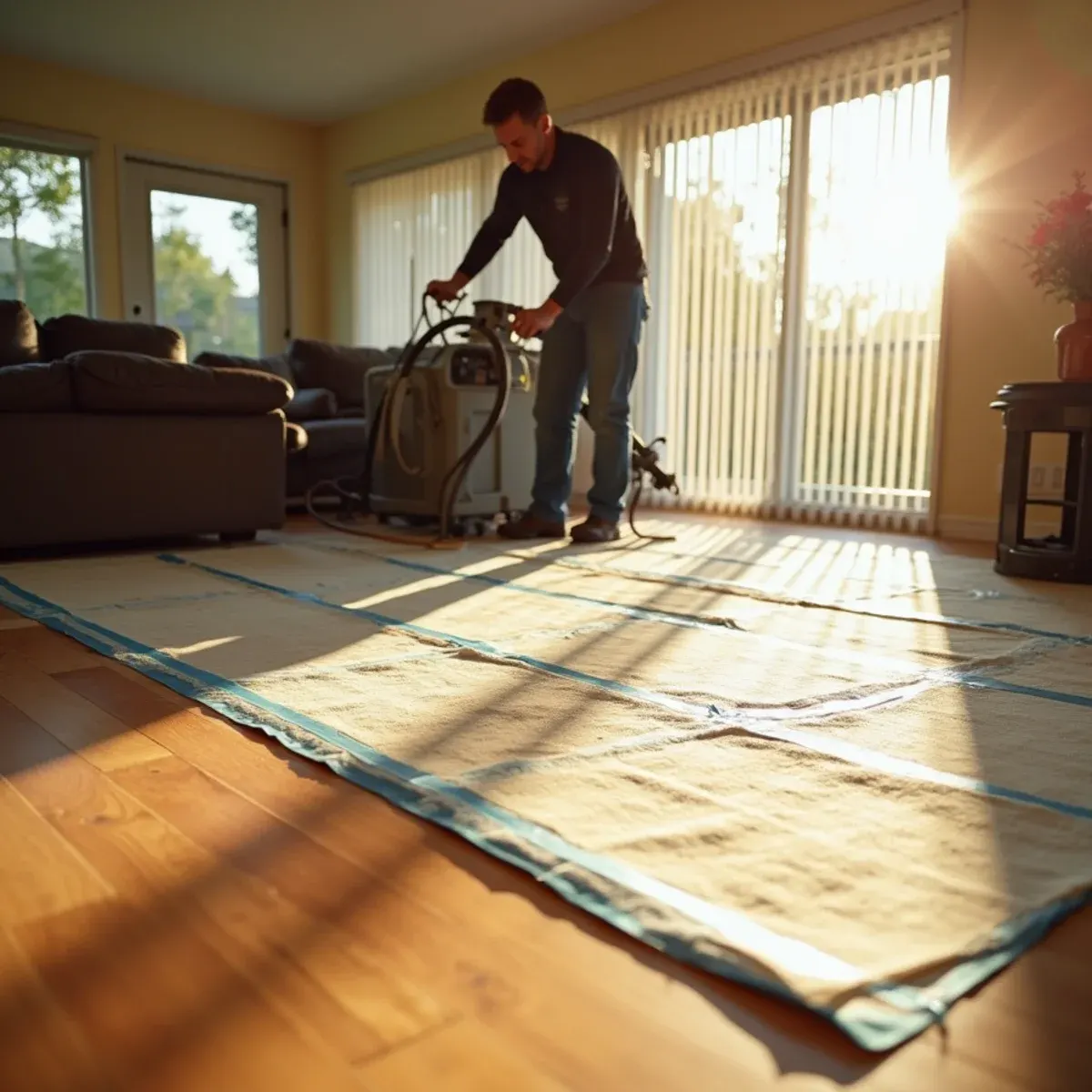
Here is something that catches people out in Westminster: not every cupped floor has a leak behind it. The city sits low and flat near the Bolsa Chica channel, the water table is shallow, and a slab here carries a higher baseline moisture load than a slab a few miles inland. Put engineered plank or laminate over one of those slabs without testing it first and the floor will cup on its own, slowly, with no burst pipe anywhere in the house. We meter before we diagnose, because drying a floor that is being fed vapor from below is a losing game.
When there is a real leak, that same shallow water table works against the drying. Ambient moisture is higher, the slab gives back what it absorbed, and mats run longer than textbook numbers suggest. We plan for that instead of pretending it away. A good share of our work here is commercial too. The restaurants and shops along Bolsa Avenue and around the Asian Garden Mall sit in older buildings with wood floors in dining rooms and back offices, and those owners need the room open, not sealed off for two weeks.
What Westminster Changes About Hardwood Floor Drying
1In-situ slab testing before anything returns
Before a dried floor goes back down, or a new one goes in, the slab needs relative humidity probes set into it rather than a surface reading. Westminster slabs sit over a shallow water table and routinely carry more moisture than a chart would predict. Skipping that test is how a brand-new floor cups within a year and everybody blames the installer.
2Higher baseline moisture stretches the timeline
Drying works on a gradient, and near the Bolsa Chica channel that gradient is shallower. The slab gives back what it absorbed and the ambient air already carries more moisture, so mat runs here go longer than the same loss inland. We plan for it up front rather than discovering it on day four and asking you for more time.
3Little Saigon storefronts dried while open
The independent restaurants and shops along Bolsa Avenue sit in older buildings, and closing for two weeks is not survivable for most of them. Wood floors in dining rooms and back offices can be dried in sections with equipment staged out of customer paths. It is a slower schedule on paper and the only one that leaves the business standing afterward.
How the Work Runs
The method is the same one we use on every hardwood floor drying job, documented to the IICRC S500:2025 standard. Here it is in short — the full hardwood floor water damage drying process explains each stage in detail.
- Measure before deciding anything
- Extract from below the surface
- Control the drying rate deliberately
- Dry the subfloor and any cavity below
- Let it acclimate before judging it
- Sand and refinish only if needed
The Westminster Background Worth Knowing
Westminster's shallow groundwater means many slabs here carry a higher baseline moisture load than slabs a few miles inland. In an undamaged home with breathable flooring that is usually a non-issue. It becomes an issue in two situations.
There is more on the housing stock, drainage and plumbing history of this city on our water damage restoration in Westminster page.
Westminster at a glance
- Dominant construction era
- 1950–1970
- Foundation type
- slab on grade
- Supply piping found here
- under-slab copper, galvanized steel
- Drain line materials
- cast iron
- Terrain and water table
- coastal-flat, shallow water table
- Most common local failure
- flooring installed over a slab that was never tested and is still releasing vapor
- Highest-value local prevention
- in-situ slab relative humidity testing before any new floor goes down
What It Costs in Westminster
We do not quote a number over the phone before seeing the property — anyone who does is guessing. The variables that actually move the price on a hardwood floor drying job are square footage under the mat system, solid versus engineered wood, what is underneath, and they are broken down in full on the hardwood floor water damage drying page. The assessment and the written estimate are free anywhere in Westminster, day or night, with no obligation.
Hardwood Floor Drying Questions from Westminster Homeowners
Often it is the slab. Ground moisture moves upward through concrete as vapor, and with the water table as shallow as it is here, a slab that was never tested before flooring went over it can push enough moisture to cup a floor on its own. It tends to be slow and worst in the middle of a room rather than near a fixture. Relative humidity probes set into the slab will settle it.
Frequently, yes. Cupping is caused by uneven moisture between the top and bottom of each board, and when the moisture equalizes during controlled drying, much of the deformation reverses. Full flattening can take two to four weeks of acclimation after the equipment comes out, which is why we do not recommend sanding immediately.
Five to ten days under the mat system is typical, which is longer than drywall because wood gives up moisture slowly and has to be dried at a controlled rate. Rushing it causes splitting and permanent gapping, so the extra days are doing real work.
Westminster has a shallow water table, so slabs here carry more baseline moisture than slabs further inland. Normally that is harmless, but it matters when installing flooring over the slab and it means drying after a loss takes longer. We test with in-situ relative humidity probes before any new floor goes down.