
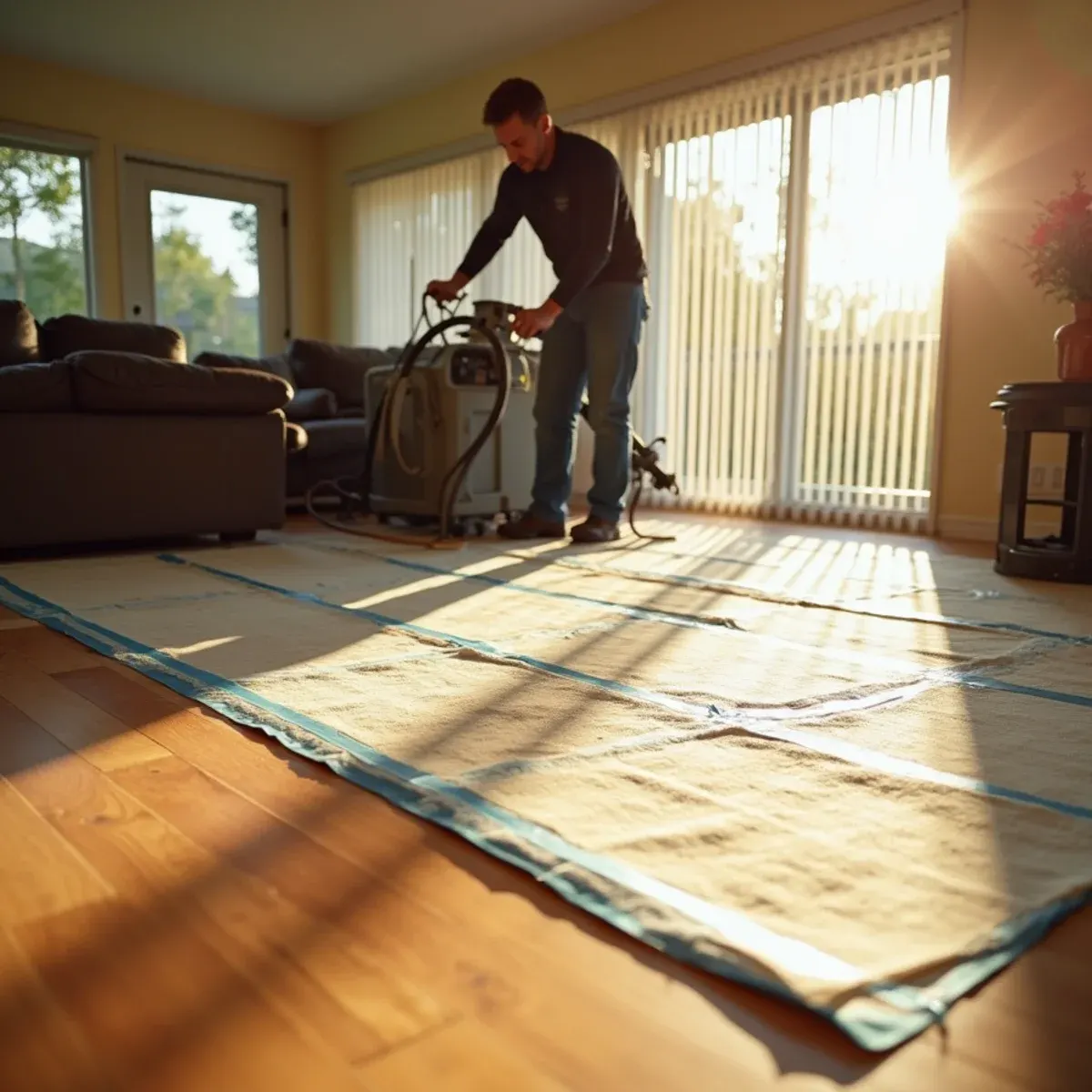
A wet oak floor in the Colony District and a wet oak floor in Anaheim Hills are not the same job. Downtown, near the Packing District, you are looking at early-century homes on raised foundations with lath-and-plaster walls and flooring laid before anyone was mass-producing three-quarter-inch strip. Thick, dense, worth real effort. Up in the hills you have homes from the seventies onward on two and three levels, where a failure on the top floor works down through the structure and surfaces on wood two rooms away from where it started.
In between sits West Anaheim, miles of postwar tract on slab, where the mat system is the only way moisture leaves a wood floor. The plaster matters more than people expect. A lath-and-plaster wall holds several times what drywall does and gives it up slowly, so it keeps feeding humidity into the room and the floor edge beside it stays wet long after the middle of the room has dried. We dry the plaster and the floor as one system, or the floor readings stall and everyone gets frustrated waiting for numbers that are never going to move.
What Anaheim Changes About Hardwood Floor Drying
1Colony crawl spaces let us dry both faces
Downtown and around the Packing District, the older homes sit on raised foundations. That access underneath is worth more than any single piece of equipment. Mats pull moisture up through the seams while air moves along the joists below, so the floor dries from two directions instead of one. Original plank in these houses is dense and slow, but it does come back.
2Hillside homes move water between levels
Anaheim Hills houses run two and three levels, and a failure on the top floor rarely announces itself where it started. Water follows the framing down and surfaces on a floor a level or two below, often at the far end of the house. We meter every level before placing equipment, because the room that looks worst is frequently not the room that is wettest.
3West Anaheim slabs dry one way only
The postwar tracts across West Anaheim are slab-on-grade, so there is no underside to work with. Everything has to come up through the board seams under negative pressure, and that takes the time it takes. Add lath-and-plaster walls in the older sections, which hold several times what drywall does, and the room needs far more dehumidification than people expect.
How the Work Runs
The method is the same one we use on every hardwood floor drying job, documented to the IICRC S500:2025 standard. Here it is in short — the full hardwood floor water damage drying process explains each stage in detail.
- Measure before deciding anything
- Extract from below the surface
- Control the drying rate deliberately
- Dry the subfloor and any cavity below
- Let it acclimate before judging it
- Sand and refinish only if needed
The Anaheim Background Worth Knowing
The Anaheim Colony Historic District and the older streets around downtown contain homes built from the early 1900s through the 1930s, and they are constructed differently in ways that matter enormously during a water loss.
There is more on the housing stock, drainage and plumbing history of this city on our water damage restoration in Anaheim page.
Anaheim at a glance
- Dominant construction era
- 1900–2000
- Foundation type
- mixed on grade
- Supply piping found here
- galvanized steel, under-slab copper, original early-century piping in the Colony
- Drain line materials
- cast iron, clay
- Terrain and water table
- hillside-mixed, moderate water table
- Most common local failure
- lath-and-plaster assemblies that hold several times the water drywall does and release it far more slowly
- Highest-value local prevention
- acting immediately on any plaster-wall loss, because wet plaster keys soften and release from the lath
What It Costs in Anaheim
We do not quote a number over the phone before seeing the property — anyone who does is guessing. The variables that actually move the price on a hardwood floor drying job are square footage under the mat system, solid versus engineered wood, what is underneath, and they are broken down in full on the hardwood floor water damage drying page. The assessment and the written estimate are free anywhere in Anaheim, day or night, with no obligation.
Hardwood Floor Drying Questions from Anaheim Homeowners
Because water travels the structure, not the floor plan. In a multi-level home it runs along framing and down wall cavities, then surfaces wherever it meets a horizontal surface it cannot pass. That is often a level or two below the source and some distance sideways from it. It is why we meter every level before setting equipment. Placing mats only where the stain shows leaves the real wet path drying on its own.
Frequently, yes. Cupping is caused by uneven moisture between the top and bottom of each board, and when the moisture equalizes during controlled drying, much of the deformation reverses. Full flattening can take two to four weeks of acclimation after the equipment comes out, which is why we do not recommend sanding immediately.
Five to ten days under the mat system is typical, which is longer than drywall because wood gives up moisture slowly and has to be dried at a controlled rate. Rushing it causes splitting and permanent gapping, so the extra days are doing real work.
Yes, and we approach them differently. Lath and plaster holds much more water than drywall and dries far more slowly, so it needs more equipment and considerably more patience — but it can usually be saved in place, and original plaster is not something a repair can replace.