
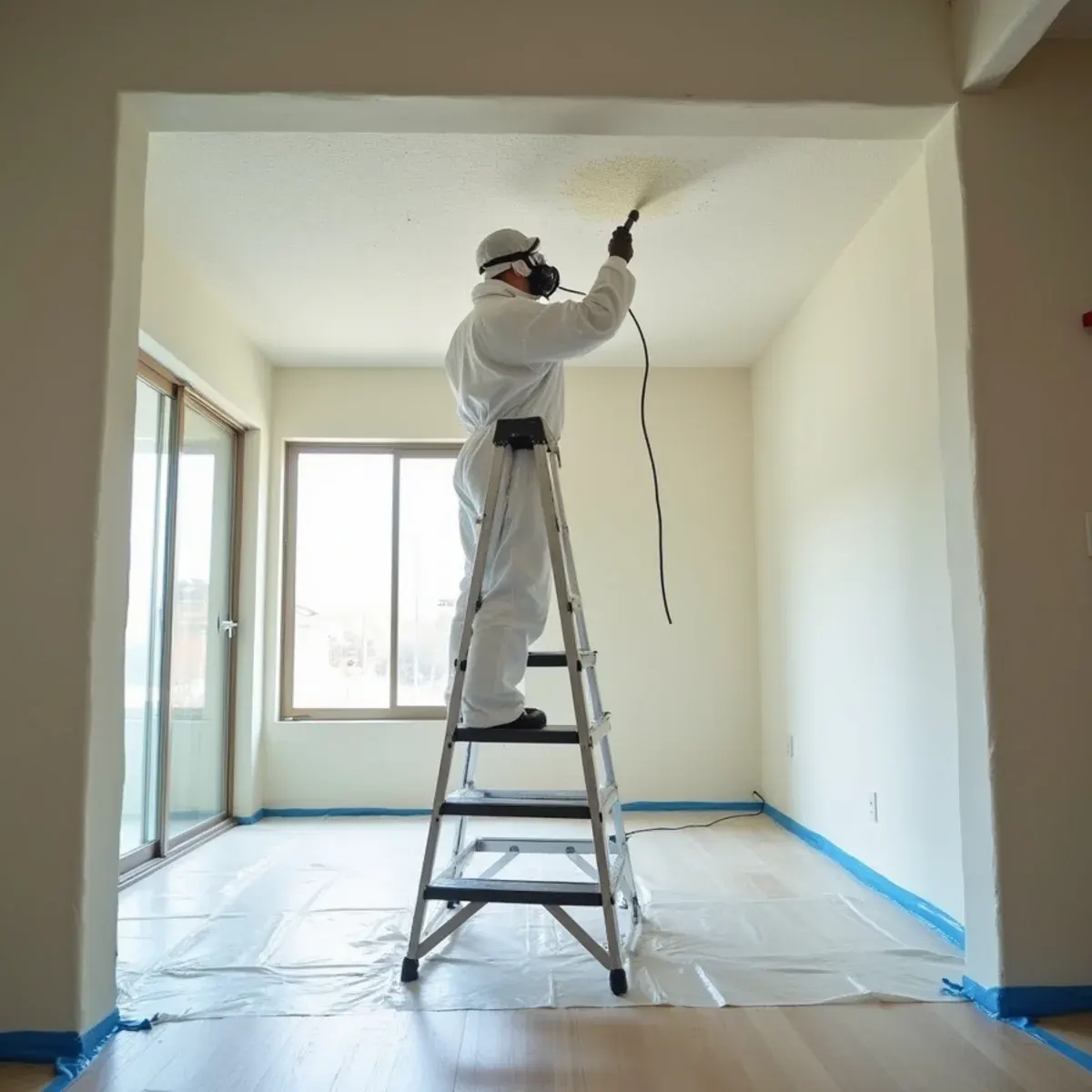
Worth saying before you pay for anything: a good portion of Huntington Beach was built after lead-based paint left the market. Tracts from the 1980s and the later 1970s make the lead question a short one, and we will tell you that rather than adding it to an invoice. What does not go away with build year is asbestos in ceiling texture and joint compound, which kept going into the early 1980s, and old resilient flooring in the earlier 1960s tracts. That is where the survey concentrates in most of this city.
The older pockets are a different matter. Downtown's narrow lots hold houses that predate 1978 comfortably, and those are the ones where the salt does damage worth talking about. Marine air eats exterior flashings and sealants, wind-driven rain finds its way past corroded window flashing, and the repair means pulling trim and scraping paint on a coastal house old enough to be a lead concern. Add Huntington Harbour's waterfront and canal-front homes, where tidal groundwater keeps slabs and lower assemblies damp, and floors come up more often than they should.
What Huntington Beach Changes About Asbestos & Lead Testing
1Build year does most of the sorting
The single most useful piece of information on a Huntington Beach job is the year the tract went in. Post-1978 and the lead conversation is essentially over unless there is an older structure on the lot. Pre-1978, especially downtown and in the first 1960s tracts, and it is live on every painted surface the repair will disturb. We check that first and scope from it.
2Salt-corroded window flashing starts the job
The classic local failure is wind-driven rain getting past flashing and sealant that salt air has been working on for decades. Fixing it properly means opening the exterior around the window, pulling trim and prepping painted surfaces. On an older downtown or Harbour house that is exactly the activity that generates lead-bearing dust, so the paint gets tested before anyone puts a scraper or sander to it.
3Downtown lots leave nowhere to stage
Narrow downtown lots with no driveway already force long hose runs on a water loss. For abatement they also force hard choices about where the decontamination unit, waste staging and negative air exhaust go. That usually means street permitting and a route through the front of the house. Planning it before the first day, rather than improvising on a Monday morning, keeps the neighbors and the city out of the job.
How the Work Runs
The method is the same one we use on every asbestos & lead testing job, documented to the IICRC S500:2025 standard. Here it is in short — the full asbestos & lead paint testing process explains each stage in detail.
- Emergency stabilization without cutting
- Define exactly what gets disturbed
- A certified inspector takes the samples
- Independent laboratory analysis
- Lead assessment on painted surfaces
- Abatement, clearance, then restoration
The Huntington Beach Background Worth Knowing
Salt does not damage buildings directly. It damages the details that keep water out, and then water does the rest.
There is more on the housing stock, drainage and plumbing history of this city on our water damage restoration in Huntington Beach page.
Huntington Beach at a glance
- Dominant construction era
- 1960–1990
- Foundation type
- slab on grade
- Supply piping found here
- under-slab copper
- Drain line materials
- cast iron, ABS
- Terrain and water table
- coastal-flat, shallow water table
- Most common local failure
- wind-driven rain entering through salt-corroded window flashing and failed exterior sealant
- Highest-value local prevention
- renewing exterior caulking and flashing on a far shorter cycle than inland guidance suggests
What It Costs in Huntington Beach
We do not quote a number over the phone before seeing the property — anyone who does is guessing. The variables that actually move the price on a asbestos & lead testing job are the number of distinct materials, how many samples each needs, how fast you need results, and they are broken down in full on the asbestos & lead paint testing page. The assessment and the written estimate are free anywhere in Huntington Beach, day or night, with no obligation.
Asbestos & Lead Testing Questions from Huntington Beach Homeowners
Lead, no. That build year is well clear of it. Asbestos is a narrower but not zero question, because asbestos-containing joint compound and texture were still being installed into the early 1980s and leftover stock got used after production stopped. For a mid-1980s house we would normally take one or two samples of the ceiling material rather than survey the whole house, get the lab answer, and let the repair proceed. Most come back clean.
No, and that's the whole point of testing. Plenty of ceilings from that decade come back clean — the manufacturers were mixed, the formulas changed year to year, and two houses on the same street can give different results. What we can't do is assume either way. A 1974 ceiling is a suspect material, which means one sample and a lab report separates a routine repair from a regulated one. Guessing in either direction is the expensive choice.
Usually less than people fear, and we design around it. Extraction, containment and dehumidification all start on the first visit, because none of that disturbs a suspect material. Sampling happens the same day where we can get an inspector out, and rush lab analysis is available when the clock matters. What genuinely adds time is a positive result, since abatement, containment and clearance testing have to finish before we cut. We'll give you a realistic date rather than an optimistic one.
Ambient humidity near the coast stays high enough for long enough that materials dry slowly on their own, which widens the window in which growth can establish after any moisture event. Combined with salt-accelerated failures of exterior sealants and flashings, coastal homes simply get more moisture intrusion and dry from it more slowly.