
Seal Beach is three places sharing one name, and an inspection means something different in each. In Leisure World, roughly nine thousand attached units in mutuals built in the early sixties, a single supply failure crosses a shared wall and becomes several people's problem at once — multiple units, multiple policies, a mutual and a management company, all needing their own paperwork. In Old Town, dense lots near Main Street and the pier with mixed foundations and salt in the air. Out in College Park, inland tracts that behave much more like the rest of north Orange County.
What all three share is marine influence, and it changes the numbers. The layer holds ambient humidity high for long stretches, which means materials here give up water more slowly than they would inland and drying needs more dehumidification capacity to get to the same place. On an inspection that matters because a reading has to be judged against local conditions, not a generic dry standard. We take reference readings in unaffected areas of your own building so the report compares your house to itself, which is what IICRC S500:2025 asks for anyway.
What Seal Beach Changes About Inspection & Leak Detection
1Shared-wall units documented separately
When water crosses from one Leisure World unit into the next, each affected unit needs its own readings, its own images and its own written findings from the first hour. Bundling them into one report creates problems later when the mutual, the management company and two or three carriers each want to know what happened inside a specific unit. We separate the documentation at the inspection stage, not afterward.
2Marine humidity changes what a reading means
Ambient relative humidity near the pier runs high for days at a time. Wood and plaster in that air hold more moisture at equilibrium than the same materials inland, so a number that looks elevated may be normal for this address. We record ambient conditions alongside every material reading and compare against a dry standard taken in your own building. Without that context the numbers mislead.
3Salt at flashings within a mile of the water
Within about a mile of the water, salt attacks exterior fasteners, flashings and sealant joints faster than anything inland. Plenty of what looks like a plumbing leak in Old Town and Surfside is wind-driven rain through a corroded window head or a failed roof-to-wall flashing. We scan the envelope from outside as part of the inspection, because chasing the wrong system wastes your time and ours.
How the Work Runs
The method is the same one we use on every inspection & leak detection job, documented to the IICRC S500:2025 standard. Here it is in short — the full water damage inspection & leak detection process explains each stage in detail.
- Talk through the history
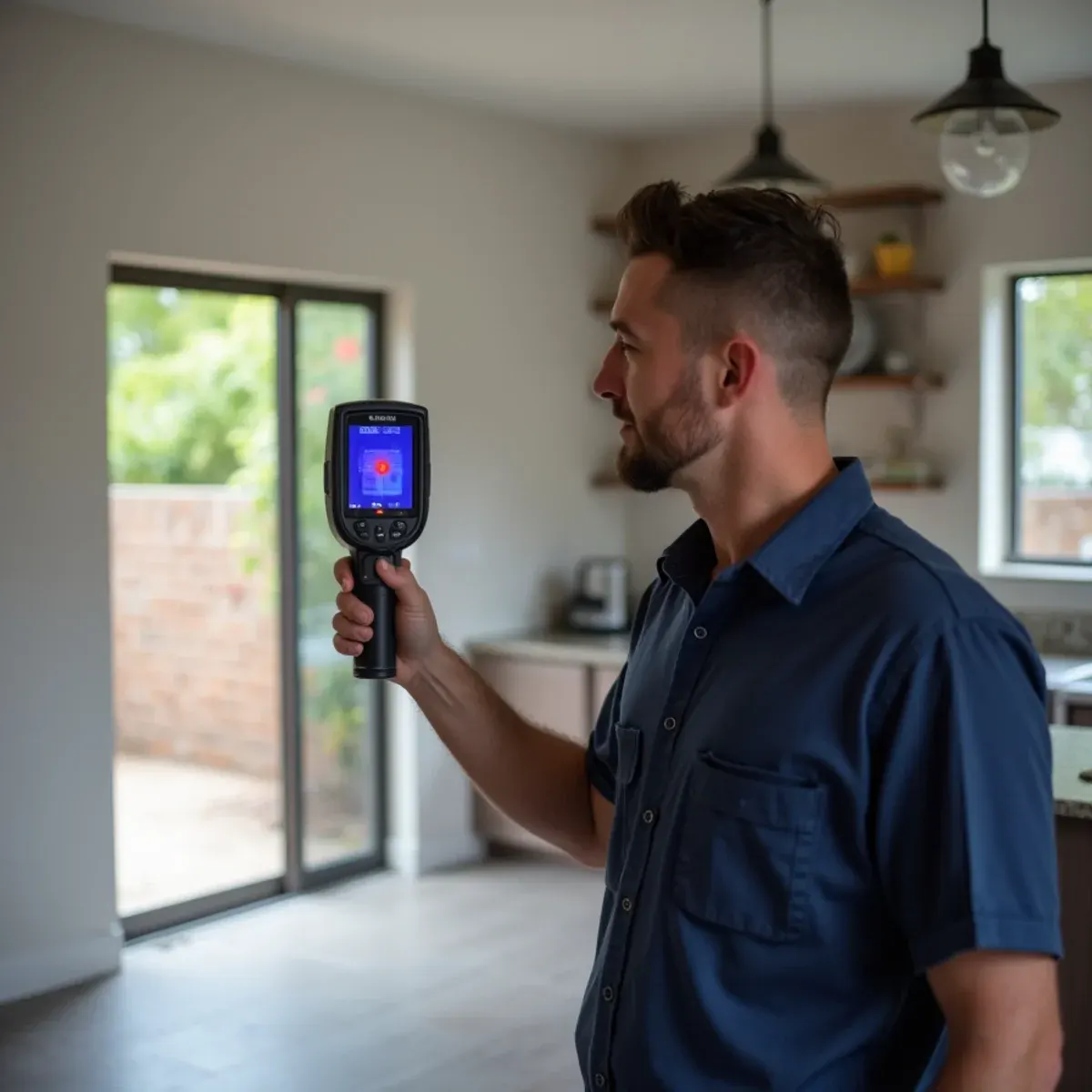
- Thermal imaging survey
- Confirm with moisture meters
- Supply-side isolation testing
- Written findings with images
- Options, not a sales pitch
The Seal Beach Background Worth Knowing
Structural drying works by creating a vapor pressure differential — dry air pulls moisture out of wet materials. When the surrounding air is already carrying a heavy moisture load, that differential shrinks and everything slows down.
There is more on the housing stock, drainage and plumbing history of this city on our water damage restoration in Seal Beach page.
Seal Beach at a glance
- Dominant construction era
- 1920–1965
- Foundation type
- mixed on grade
- Supply piping found here
- galvanized steel, copper, shared community mains
- Drain line materials
- cast iron, clay
- Terrain and water table
- coastal-flat, shallow water table
- Most common local failure
- losses that cross shared walls between attached units, involving several policies and a mutual at once
- Highest-value local prevention
- documenting each affected unit separately from the first hour
What It Costs in Seal Beach
We do not quote a number over the phone before seeing the property — anyone who does is guessing. The variables that actually move the price on a inspection & leak detection job are standard moisture inspection — no charge, electronic slab leak location, pre-purchase moisture survey, and they are broken down in full on the water damage inspection & leak detection page. The assessment and the written estimate are free anywhere in Seal Beach, day or night, with no obligation.
Inspection & Leak Detection Questions from Seal Beach Homeowners
Yes, and you should have one. Water that crosses a shared wall affects each unit differently, and the only way to protect your position with the mutual and your carrier is documentation specific to your unit — your readings, your images, your findings. We inspect your unit on its own terms, note ambient conditions, and issue findings in your name. Access to the neighboring unit needs their permission or the mutual's, not ours.
The standard moisture inspection is — thermal imaging, moisture mapping, and written findings, with no obligation. Specialized services like electronic slab leak location, a full pre-purchase survey, or lab sampling carry a fee, and we tell you the number before we start.
Twenty to forty minutes for a targeted check of a specific concern. A comprehensive whole-home survey for a real estate transaction runs about ninety minutes to two hours.
Coastal marine layer conditions keep ambient humidity high for extended periods, which reduces the vapor pressure differential that drives drying. Jobs near the water need sealed chambers and more dehumidification capacity than an equivalent loss inland, and the equipment stays on longer.