
A three-week closure ends an independent restaurant. There's no corporate reserve to ride it out, no other location carrying the payroll, and the lease payment doesn't pause. That's the real stake on Pioneer Boulevard, where Little India packs one of the densest concentrations of independent restaurants and retail in the region into buildings put up in the fifties for entirely different tenants. Those buildings have cast-iron waste lines that were never sized or specified for commercial kitchen output, and a kitchen backing up through a floor drain on a Saturday night is not a plumbing inconvenience. It's a closure.
The mechanism is slow and completely predictable. Grease goes down warm and solidifies on the rough, corroded interior of aging cast iron. Each layer catches the next. The bore narrows over years until the line can't carry a busy night, and then it can't carry anything. A camera run down that line shows exactly how much bore is left — you can see it, and so can the owner. Away from the boulevard, Artesia's postwar houses and older multi-family buildings run the same generation of cast iron with the same corrosion, just without the grease loading it.
What Artesia Changes About Inspection & Leak Detection
1Camera inspection of grease-loaded waste lines
Snaking punches a hole through a grease plug and buys a few weeks. It doesn't clean the pipe wall, and the restriction rebuilds fast. A camera run tells you the real condition — remaining bore, where the buildup sits, whether the cast iron underneath is still sound. Hydro-jetting is what actually scours the wall back. The inspection is what tells you which one your line needs.
2A closure costs more than the repair
For an independent operator the arithmetic is brutal: a week dark usually costs several times what a proactive jetting and inspection would have. We schedule kitchen inspections between services or after close so nothing comes out of your operating hours, and the written findings with camera stills are specific enough to hand a landlord when the line is a building responsibility rather than a tenant one.
3Homes running the same 1950s cast iron
Artesia's residential stock is modest postwar single-family on slab with cast-iron drains of the same era as the commercial buildings. No grease, but the same interior corrosion and the same root intrusion under a mature canopy. On the supply side it's a mix of galvanized and copper. A camera run on a house here is quick and it's the only way to know what shape the lateral is in.
How the Work Runs
The method is the same one we use on every inspection & leak detection job, documented to the IICRC S500:2025 standard. Here it is in short — the full water damage inspection & leak detection process explains each stage in detail.
- Talk through the history
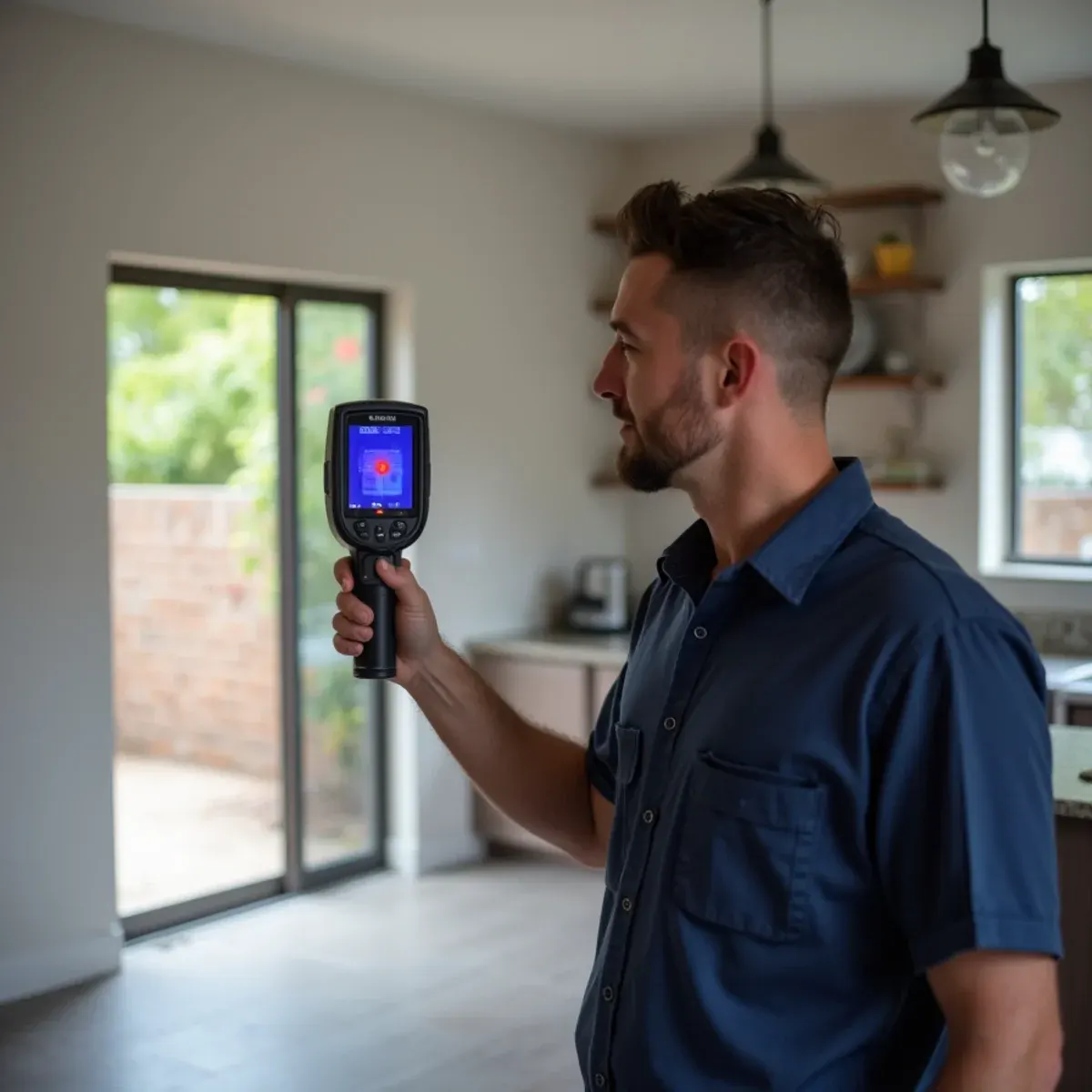
- Thermal imaging survey
- Confirm with moisture meters
- Supply-side isolation testing
- Written findings with images
- Options, not a sales pitch
The Artesia Background Worth Knowing
A commercial kitchen is one of the hardest things you can ask a building to accommodate. High water use, continuous drainage, grease loading, floor drains, and equipment connections that get added and modified over the years. When that kitchen is in a building from the 1950s with original cast-iron waste lines, the failure is a matter of time.
There is more on the housing stock, drainage and plumbing history of this city on our water damage restoration in Artesia page.
Artesia at a glance
- Dominant construction era
- 1950–1970
- Foundation type
- slab on grade
- Supply piping found here
- galvanized steel, copper
- Drain line materials
- cast iron
- Terrain and water table
- flat, moderate water table
- Most common local failure
- grease-loaded cast-iron waste lines restricting until a commercial kitchen backs up
- Highest-value local prevention
- hydro-jetting the waste line rather than snaking it, so the pipe wall actually gets cleaned
What It Costs in Artesia
We do not quote a number over the phone before seeing the property — anyone who does is guessing. The variables that actually move the price on a inspection & leak detection job are standard moisture inspection — no charge, electronic slab leak location, pre-purchase moisture survey, and they are broken down in full on the water damage inspection & leak detection page. The assessment and the written estimate are free anywhere in Artesia, day or night, with no obligation.
Inspection & Leak Detection Questions from Artesia Homeowners
Yes, and the difference decides what you spend. We run a camera down the waste line and look at it directly. Grease buildup has a distinct appearance and sits in predictable places — long runs, low-slope sections, downstream of the sinks. Failing cast iron looks different: scaled, channeled, sometimes with the bottom of the pipe eaten away. Grease is a jetting job. A failed line is replacement, and knowing which is which before you close is the point.
The standard moisture inspection is — thermal imaging, moisture mapping, and written findings, with no obligation. Specialized services like electronic slab leak location, a full pre-purchase survey, or lab sampling carry a fee, and we tell you the number before we start.
Twenty to forty minutes for a targeted check of a specific concern. A comprehensive whole-home survey for a real estate transaction runs about ninety minutes to two hours.
Yes, and on Pioneer Boulevard that is usually how we schedule it. Overnight crews cost somewhat more in labor and almost always cost dramatically less than lost revenue from closing during operating hours.