
Water in a stacked apartment building doesn't spread sideways first. It goes down. A large share of the 1960s and 70s multi-family stock here was built around shared vertical plumbing stacks, and when something fails at that stack, water follows the chase straight through every unit below it. The tenant who notices is frequently three floors from the tenant who has the problem, and every extra hour of delay costs roughly another unit. This is the smallest city in Los Angeles County by area and one of the most densely populated per acre, so there is very little in this city that only affects one household.
That geometry is what our inspection is designed around. We don't start where the ceiling is wet and stop there. We trace the stack upward, scanning and metering unit by unit until readings stop climbing, which is the only way to name a source instead of guessing at one. Most residents here rent, so the person who calls us usually can't authorize access to the unit above — that has to come from management or the owner. We work with whatever access exists, document what we can reach, and put in writing what remains unchecked and why.
What Hawaiian Gardens Changes About Inspection & Leak Detection
1Tracing a stack up, not across
A wet ceiling marks where water exited the chase, not where it entered. We scan the chase wall from the reported unit upward, take readings at each level, and follow the gradient. When the numbers stop rising we're at or above the source. Without that sequence, a building ends up opening three ceilings and finding nothing, which is expensive and tells you nothing new.
2Renters need documentation too
If you rent, your belongings are your policy's problem and the building is the owner's, and those are two different claims from the same event. Written findings with dated images of your unit — readings, affected materials, what was already wet when we arrived — protect you in both. We issue findings to the person who called us, whether that's a tenant, an owner or a manager.
3Delay costs about a unit an hour
In a stacked building the damage curve is driven by time more than volume. Water keeps traveling down as long as the source runs. Written notice to management the moment you see anything is the single most effective thing a tenant can do, more effective than mopping. Text or email, so there's a timestamp. That record also matters later when the timeline gets argued over.
How the Work Runs
The method is the same one we use on every inspection & leak detection job, documented to the IICRC S500:2025 standard. Here it is in short — the full water damage inspection & leak detection process explains each stage in detail.
- Talk through the history
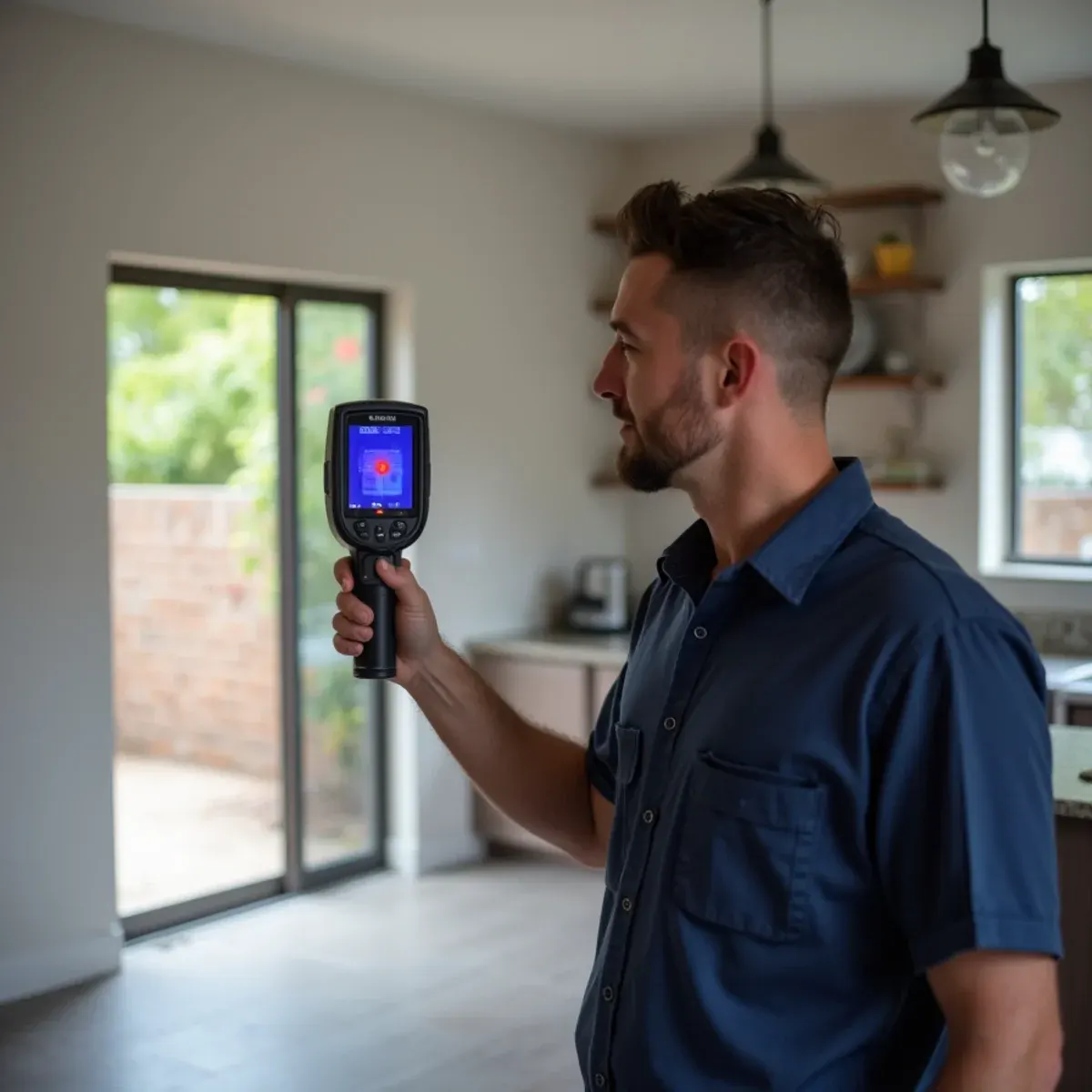
- Thermal imaging survey
- Confirm with moisture meters
- Supply-side isolation testing
- Written findings with images
- Options, not a sales pitch
The Hawaiian Gardens Background Worth Knowing
In a multi-story apartment building, plumbing runs vertically through shared chases connecting stacked units. When a supply line or drain fails in that chase, water follows it downward through every unit below — and it does not stop politely at unit boundaries.
There is more on the housing stock, drainage and plumbing history of this city on our water damage restoration in Hawaiian Gardens page.
Hawaiian Gardens at a glance
- Dominant construction era
- 1950–1975
- Foundation type
- slab on grade
- Supply piping found here
- galvanized steel, copper, shared vertical stacks
- Drain line materials
- cast iron
- Terrain and water table
- flat, moderate water table
- Most common local failure
- stack failures that travel down through every unit below, expanding by one unit for roughly every extra hour of delay
- Highest-value local prevention
- immediate written notice to management, because in a stacked building the clock does more damage than the water
What It Costs in Hawaiian Gardens
We do not quote a number over the phone before seeing the property — anyone who does is guessing. The variables that actually move the price on a inspection & leak detection job are standard moisture inspection — no charge, electronic slab leak location, pre-purchase moisture survey, and they are broken down in full on the water damage inspection & leak detection page. The assessment and the written estimate are free anywhere in Hawaiian Gardens, day or night, with no obligation.
Inspection & Leak Detection Questions from Hawaiian Gardens Homeowners
Plenty, and we don't need to enter their unit to start. From your side we can thermal scan and meter the ceiling and the chase wall to map the wet area and see whether it's still active. A shared stack often runs several units up, so the source may not be your immediate neighbor at all. To scan units above yours we need management's or the owner's permission. We document what we reach and note in writing what we couldn't access.
The standard moisture inspection is — thermal imaging, moisture mapping, and written findings, with no obligation. Specialized services like electronic slab leak location, a full pre-purchase survey, or lab sampling carry a fee, and we tell you the number before we start.
Twenty to forty minutes for a targeted check of a specific concern. A comprehensive whole-home survey for a real estate transaction runs about ninety minutes to two hours.
Photograph and video everything before moving anything, notify your property manager in writing immediately, and move belongings out of the affected area if it is safe to do so. Do not wait for the neighbor upstairs to act — the damage compounds every hour and the written timeline protects you.