
Downey has trim you can't buy anymore. Jean Vandruff's Cinderella Homes put turrets, scalloped bargeboards, arched doorways and diamond-pane windows on ordinary tract houses, and the millwork on those homes was cut for a specific run in the 1950s. When water gets into one, the temptation is to cut generously and rebuild. We'd rather not. The point of a careful inspection here is to draw the smallest honest line around the wet material, so the detailing that makes the house what it is stays where it is.
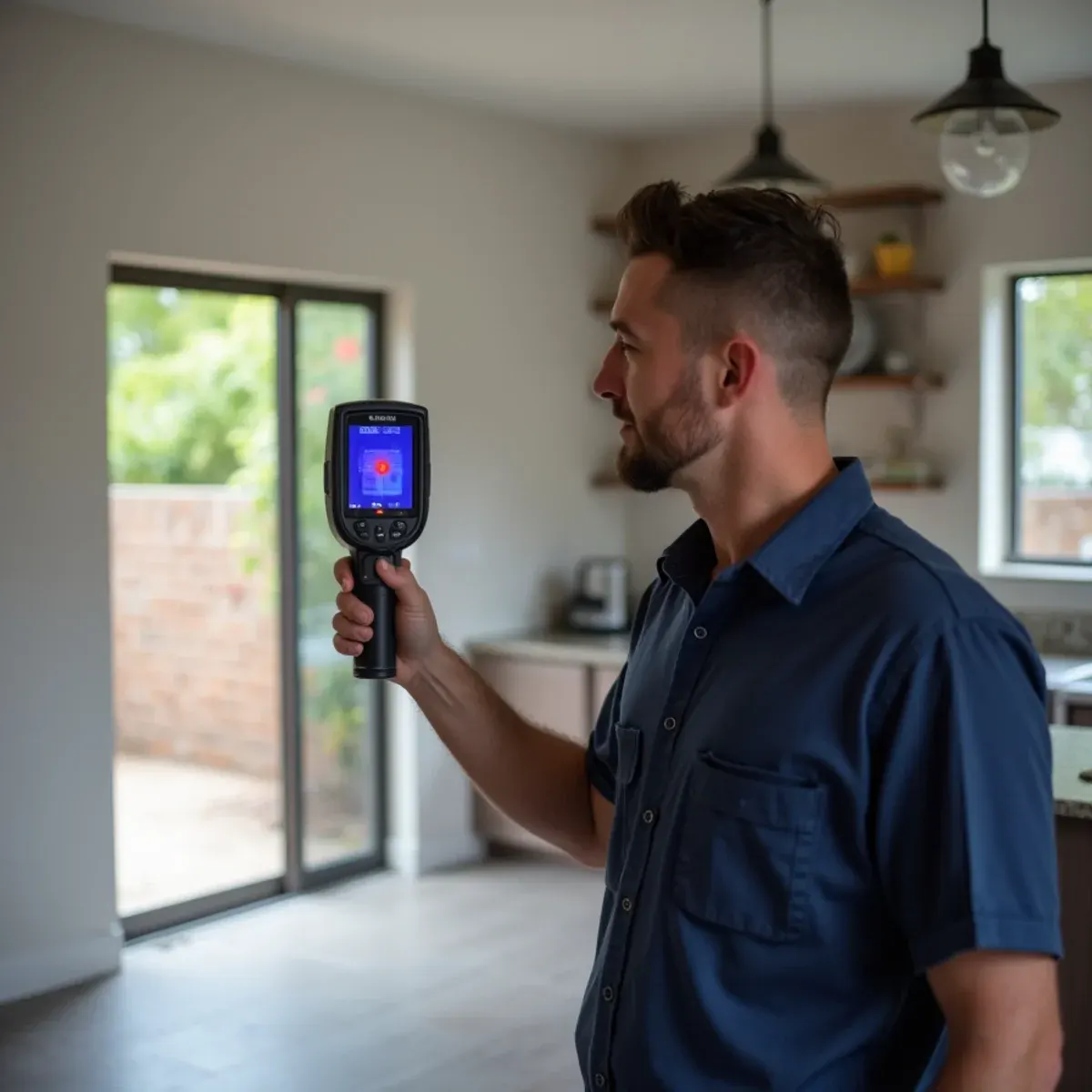
Underneath the decoration it's straightforward 1950s construction — a slab, galvanized supply lines with copper repairs layered in, cast-iron drains — and it fails in predictable ways. We run a meter isolation test, thermal-scan the slab, and take moisture readings on a grid rather than spot-checking, because a grid is what lets us say with confidence that this baseboard is wet and the one four feet over is dry. Written findings with those readings mapped are what keep a drying plan from turning into a demolition plan.
What Downey Changes About Inspection & Leak Detection
1Detailed millwork is worth mapping carefully
On a Cinderella Home, the difference between a two-foot flood cut and losing a whole wall of original trim is a matter of how carefully somebody measured. S500 asks for the least aggressive method that still restores the structure to a dry standard. On these houses that guidance stops being a technicality and becomes the reason the house keeps its character.
2Galvanized under decorative surfaces
The plumbing in these houses is ordinary for its era: galvanized supply that corrodes from the inside and weeps at threads, often behind plaster and inside walls carrying the good woodwork. Low pressure, rust-colored water at first draw, and a warm patch on the floor are all worth a call. We check pressure and thermal signature together before touching anything.
3Uniform tracts, predictable failure locations
Downey's high stock uniformity means we usually know where to look. The original wet walls, the water heater location and the slab penetrations sit in the same relative spots house to house across a tract. That shortens the search considerably, and it means an inspection here is often a matter of confirming or ruling out a known pattern rather than starting cold.
How the Work Runs
The method is the same one we use on every inspection & leak detection job, documented to the IICRC S500:2025 standard. Here it is in short — the full water damage inspection & leak detection process explains each stage in detail.
- Talk through the history
- Thermal imaging survey
- Confirm with moisture meters
- Supply-side isolation testing
- Written findings with images
- Options, not a sales pitch
The Downey Background Worth Knowing
The instinct on a wet wall is to open it, and sometimes that is correct. But IICRC S500:2025 is built around restoring rather than replacing wherever the drying goals can genuinely be met, and on a house with original arched casings and applied gingerbread, meeting those goals is worth some patience. We would rather spend three extra days with equipment running than pull a run of trim that would have to be milled from scratch to come back. The standard supports that choice and so does the arithmetic on the estimate, because custom millwork is not cheap and matching a fifties profile is not quick.
There is more on the housing stock, drainage and plumbing history of this city on our water damage restoration in Downey page.
Downey at a glance
- Dominant construction era
- 1950–1965
- Foundation type
- slab on grade
- Supply piping found here
- galvanized steel, under-slab copper
- Drain line materials
- cast iron
- Terrain and water table
- flat, moderate water table
- Most common local failure
- 1950s slab and galvanized failures in houses whose decorative woodwork makes careful, low-demolition drying worth paying for
- Highest-value local prevention
- drying in place wherever readings allow, because the trim and detailing on these houses cannot be bought
What It Costs in Downey
We do not quote a number over the phone before seeing the property — anyone who does is guessing. The variables that actually move the price on a inspection & leak detection job are standard moisture inspection — no charge, electronic slab leak location, pre-purchase moisture survey, and they are broken down in full on the water damage inspection & leak detection page. The assessment and the written estimate are free anywhere in Downey, day or night, with no obligation.
Inspection & Leak Detection Questions from Downey Homeowners
Usually not, and we treat it as a last resort. We take readings behind and around the trim first, and where the framing can be dried through cavity access — small holes in an inconspicuous spot, or from the back side of the wall — we do that instead. If a piece genuinely has to come off, it comes off carefully, labeled, and goes back. We'll show you the readings that justify it before anything moves.
The standard moisture inspection is — thermal imaging, moisture mapping, and written findings, with no obligation. Specialized services like electronic slab leak location, a full pre-purchase survey, or lab sampling carry a fee, and we tell you the number before we start.
Twenty to forty minutes for a targeted check of a specific concern. A comprehensive whole-home survey for a real estate transaction runs about ninety minutes to two hours.
Usually, yes. We go into the wall cavity through small ports low on the wall, hidden behind shoe molding or inside a closet, and dry from the inside out rather than taking the finished face off. That takes longer and needs more equipment than gutting the wall would, which is exactly the trade we think is worth making on a house with millwork that cannot be bought. Where it will not work, we tell you early.