
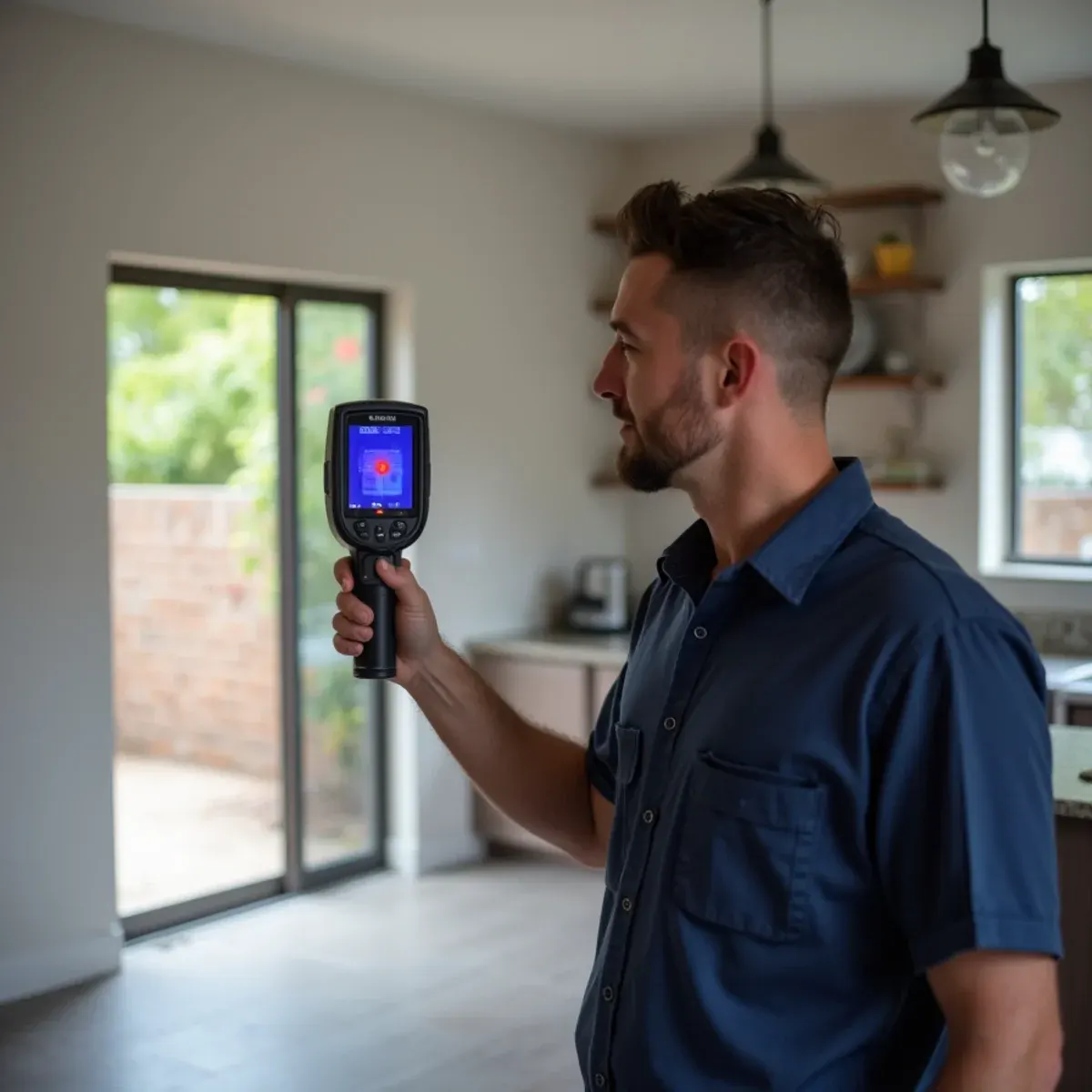
Paramount packs housing tightly between industrial corridors, and a single block can hold a 1950s slab house, a fourplex and a metal building with a concrete apron. Those three take different inspections. The house gets a meter isolation test and a thermal sweep of the floor. The fourplex needs the units above the complaint checked, not just the one that called. The industrial building needs its roof drains, loading apron and fire sprinkler lines looked at, because that's where its water usually comes from.
What they share is ground that can't absorb anything. Between the paving, the aprons and the small lots, there's very little permeable soil left in most of Paramount, and the Los Angeles River channel along the western edge is a concrete corridor, not a sponge. When a storm dumps hard, water goes wherever the area drains send it, and if those drains are packed with debris it goes into buildings. We check them as part of the inspection, because on this ground they matter as much as the piping does.
What Paramount Changes About Inspection & Leak Detection
1Almost no permeable ground on most lots
Paving, driveways and building footprint cover most of a typical Paramount lot, so rainfall has nowhere to go but the drains somebody installed decades ago. One clogged area drain in a side yard or a rear apron can put standing water against a slab edge within an hour. We inspect the drains and the grade, not only the interior readings.
2Original galvanized in Hynes and Clearwater
The older housing from the postwar buildout still runs a lot of original galvanized supply with copper patched in over the decades. Mixed metals at those joints corrode faster than either metal alone. We check static pressure, look for the temperature signature of a hot-side leak, and note where past repairs created new dissimilar-metal connections that will fail next.
3Commercial neighbors change the water category
When a loss travels from an industrial or commercial space into an adjoining unit, what's in the water matters. Under S500, water that has contacted process residue, floor drains or contaminated surfaces is not Category 1 no matter how clean it looks. We assess that on site and write the category into the findings, because it determines what can be dried and what has to go.
How the Work Runs
The method is the same one we use on every inspection & leak detection job, documented to the IICRC S500:2025 standard. Here it is in short — the full water damage inspection & leak detection process explains each stage in detail.
- Talk through the history
- Thermal imaging survey
- Confirm with moisture meters
- Supply-side isolation testing
- Written findings with images
- Options, not a sales pitch
The Paramount Background Worth Knowing
On a typical Paramount lot, the house, the driveway, the walkways and the rear slab cover most of the parcel. What is left is a narrow side yard, and everything that lands on the roof and the paving is supposed to leave through a couple of small area drains. That system has no margin. When a grate silts up, when a downspout dumps straight onto paving, or when the outlet at the curb has been crushed by a parked truck, the water has no soil to soak into and nowhere else to be. It ponds against the slab edge and comes in at the lowest threshold, which is usually a garage or a side door.
There is more on the housing stock, drainage and plumbing history of this city on our water damage restoration in Paramount page.
Paramount at a glance
- Dominant construction era
- 1945–1965
- Foundation type
- slab on grade
- Supply piping found here
- original galvanized steel, copper
- Drain line materials
- cast iron
- Terrain and water table
- flat, moderate water table
- Most common local failure
- residential and commercial losses on the same block, needing very different handling
- Highest-value local prevention
- clearing area drains before the season on lots with very little permeable ground
What It Costs in Paramount
We do not quote a number over the phone before seeing the property — anyone who does is guessing. The variables that actually move the price on a inspection & leak detection job are standard moisture inspection — no charge, electronic slab leak location, pre-purchase moisture survey, and they are broken down in full on the water damage inspection & leak detection page. The assessment and the written estimate are free anywhere in Paramount, day or night, with no obligation.
Inspection & Leak Detection Questions from Paramount Homeowners
In Paramount that's usually a drainage question. With so little permeable ground, a single blocked area drain or a settled slab edge changes where storm water pools, and a garage on the low side of a lot takes it first. We meter the slab and the bottom of the walls to see how far the water traveled, then look at the drains and the apron grade outside. If the readings point to a supply line instead, the pattern will show it.
The standard moisture inspection is — thermal imaging, moisture mapping, and written findings, with no obligation. Specialized services like electronic slab leak location, a full pre-purchase survey, or lab sampling carry a fee, and we tell you the number before we start.
Twenty to forty minutes for a targeted check of a specific concern. A comprehensive whole-home survey for a real estate transaction runs about ninety minutes to two hours.
Almost certainly your area drains. Paramount lots have very little permeable ground, so everything that falls on the roof and the paving has to leave through a couple of small drains. If a grate silts up or the outlet is crushed, the water ponds against the slab and enters at the lowest threshold, which is usually the garage. Rodding the drains and checking the outlet before the season costs far less than drying the garage wall afterward.