
Plumbing has a duty cycle, and Garden Grove runs a heavy one. These houses went up between about 1950 and 1970, when the design assumption was a family of four with one washing machine and one bathroom in regular use. A lot of homes here now hold two or three generations, sometimes two families, with the showers, toilets, and laundry running all day. The pipe in the wall doesn't care, but every moving part does. Angle stops, supply risers, fill valves, washing machine hoses — they wear by cycle count, not by calendar year, and here they burn through their life early.
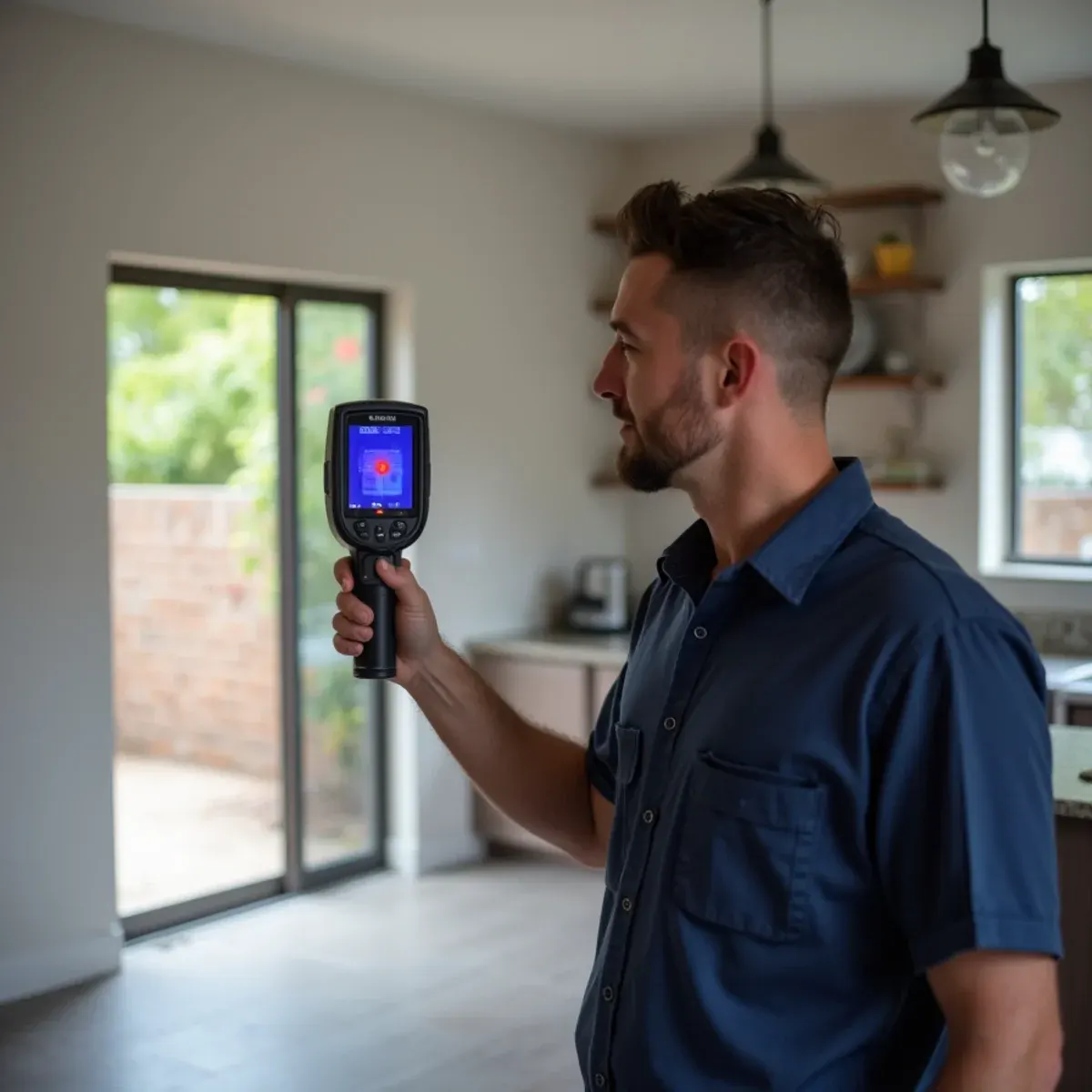
So an inspection in Garden Grove looks at wear items harder than it would in a quieter city. We check every angle stop we can reach, look at the age and condition of the braided hoses behind the washer, and thermal scan the wet walls that serve the busiest fixtures. Around the older streets near Historic Main Street and Garden Grove Park, the drain side matters too: clay and cast iron under a mature canopy, with root intrusion that a camera finds in a few minutes. We can walk through findings in Vietnamese or Korean if that's easier for the household.
What Garden Grove Changes About Inspection & Leak Detection
1Fixture cycle counts drive the inspection list
A shower used eight times a day ages its valve and its supply connection roughly twice as fast as one used four times. We ask how the house is actually lived in — how many people, which bathrooms carry the load, how often the laundry runs — and weight the scan toward those fixtures. That question changes where we look more than the year the house was built does.
2Angle stops, risers and washer hoses
These are the cheapest parts in the house and they cause a disproportionate share of the losses we see here. Braided hoses should be replaced at five years in a high-use household, without exception. Angle stops that have been turned a few times and won't seat again are a repair, not a maintenance item. We photograph every one we find in poor condition and put it in the written findings.
3Clay and cast-iron drains under mature trees
The older tracts still have clay laterals, and the tree canopy that makes these streets pleasant has been growing into the joints for sixty years. In a high-occupancy home the line is carrying far more volume than it was designed for, so a partial restriction that another house would tolerate becomes a backup here. A camera run tells you which it is.
How the Work Runs
The method is the same one we use on every inspection & leak detection job, documented to the IICRC S500:2025 standard. Here it is in short — the full water damage inspection & leak detection process explains each stage in detail.
- Talk through the history
- Thermal imaging survey
- Confirm with moisture meters
- Supply-side isolation testing
- Written findings with images
- Options, not a sales pitch
The Garden Grove Background Worth Knowing
A 1958 tract home was plumbed for a family of four with one bathroom in regular use, one washing machine, and a single water heater sized to match. Many Garden Grove homes today support considerably more than that, and the plumbing feels it.
There is more on the housing stock, drainage and plumbing history of this city on our water damage restoration in Garden Grove page.
Garden Grove at a glance
- Dominant construction era
- 1950–1970
- Foundation type
- slab on grade
- Supply piping found here
- galvanized steel, under-slab copper
- Drain line materials
- cast iron, clay
- Terrain and water table
- flat, moderate water table
- Most common local failure
- accelerated wear on angle stops, supply risers and washing machine hoses from far higher fixture cycle counts
- Highest-value local prevention
- shorter replacement intervals on every wear item — hoses at five years without exception
What It Costs in Garden Grove
We do not quote a number over the phone before seeing the property — anyone who does is guessing. The variables that actually move the price on a inspection & leak detection job are standard moisture inspection — no charge, electronic slab leak location, pre-purchase moisture survey, and they are broken down in full on the water damage inspection & leak detection page. The assessment and the written estimate are free anywhere in Garden Grove, day or night, with no obligation.
Inspection & Leak Detection Questions from Garden Grove Homeowners
On the wear items, yes. The pipe inside the wall ages by time, but valves, stops, hoses and fill assemblies age by use, and a household running three times the fixture cycles wears them out in roughly a third of the time. We don't think the whole house needs scanning every year. We do think the hoses, stops and the busiest bathroom deserve a look annually, and that inspection is free.
The standard moisture inspection is — thermal imaging, moisture mapping, and written findings, with no obligation. Specialized services like electronic slab leak location, a full pre-purchase survey, or lab sampling carry a fee, and we tell you the number before we start.
Twenty to forty minutes for a targeted check of a specific concern. A comprehensive whole-home survey for a real estate transaction runs about ninety minutes to two hours.
Yes, all five ZIP codes — 92840, 92841, 92843, 92844, and 92845 — for both residential and commercial properties. Response time runs about twenty-five to thirty-five minutes depending on where in the city.