
Nobody thinks of La Habra as hilly until they watch a storm run through it. The ground rolls just enough that water picks a lane, and seventy years of added patios, driveway extensions and raised planter beds have quietly changed where that lane goes. We see the result on the Vista Grande and Westridge side especially: a house that never took water for decades starts getting a damp interior wall, and the plumbing turns out to be fine. What changed was the grade twenty feet from the foundation.
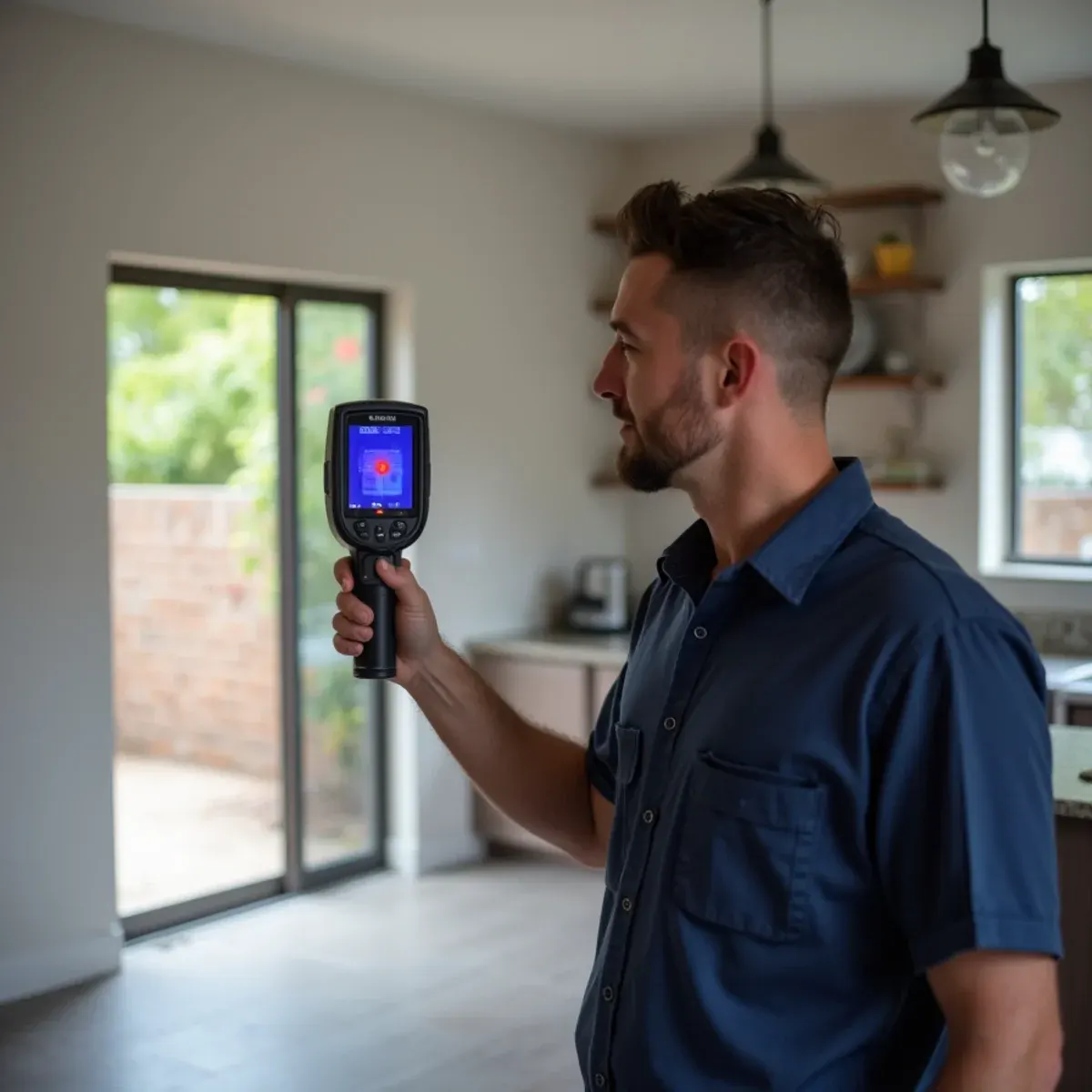
The other half of the work here is under the slab. La Habra built out between 1950 and 1980 with copper below the concrete and galvanized on some of the earlier houses, and that copper is now old enough to pinhole. Our inspection covers both: a meter isolation test to see whether the house is losing pressure with everything closed, thermal imaging of the floor, and a walk of the exterior grade. You get written findings either way, including when the honest answer is that nothing is wrong.
What La Habra Changes About Inspection & Leak Detection
1Added hardscape redirected the old drainage
The single most common thing we find on the sloped side of La Habra is water arriving where the original builder never planned for it. A patio poured tight against the stucco, a driveway widened to the property line, a planter built up above the weep screed. None of that is plumbing, and none of it shows on a thermal scan of the interior alone.
2Coyote Creek watershed sits upstream of us
La Habra sits at the head of the same Coyote Creek drainage that runs past our Cypress shop, so we know how this water behaves on its way down. During sustained storms the ground here holds more than people expect, and a below-grade garage or a stepped-down family room is where it shows first. Those are the rooms we meter first after a wet week.
3The county line changes the paperwork
La Habra is Orange County; La Habra Heights, right over the ridge, is Los Angeles County. That matters less for finding water than for what happens next — permits, contractor requirements and how a claim gets handled can differ. Our written findings are formatted so they work for either, with photos, moisture readings by location, and the S500 category and class documented.
How the Work Runs
The method is the same one we use on every inspection & leak detection job, documented to the IICRC S500:2025 standard. Here it is in short — the full water damage inspection & leak detection process explains each stage in detail.
- Talk through the history
- Thermal imaging survey
- Confirm with moisture meters
- Supply-side isolation testing
- Written findings with images
- Options, not a sales pitch
The La Habra Background Worth Knowing
Copper is good pipe. What it is not is immortal, and the way it went in during this era shortened its life. Soft copper tubing was laid in the sand under the slab before the pour, sometimes in direct contact with aggregate, often with tight bends that thinned the wall on the outside of the curve. Add fifty to seventy years of water moving through the inside and soil chemistry working on the outside, and it develops pinholes. The hot line almost always goes first, because heat accelerates every part of that process.
There is more on the housing stock, drainage and plumbing history of this city on our water damage restoration in La Habra page.
La Habra at a glance
- Dominant construction era
- 1950–1980
- Foundation type
- slab on grade
- Supply piping found here
- under-slab copper, galvanized steel
- Drain line materials
- cast iron
- Terrain and water table
- rolling, moderate water table
- Most common local failure
- under-slab copper failures in 1960s tract housing, plus drainage that decades of added hardscape has redirected
- Highest-value local prevention
- watching where water actually runs during the first storm, because the ground here is not flat
What It Costs in La Habra
We do not quote a number over the phone before seeing the property — anyone who does is guessing. The variables that actually move the price on a inspection & leak detection job are standard moisture inspection — no charge, electronic slab leak location, pre-purchase moisture survey, and they are broken down in full on the water damage inspection & leak detection page. The assessment and the written estimate are free anywhere in La Habra, day or night, with no obligation.
Inspection & Leak Detection Questions from La Habra Homeowners
More often than you'd guess, from outside. On La Habra's rolling lots, water that soaks the soil against a foundation can wick through the slab edge and travel several feet inland along the bottom plate before it shows on a finish. The tell is the moisture pattern: exterior sources read highest low on the wall and spread wide, while supply leaks read hottest at a point and climb. We map it with the meter before naming a cause.
The standard moisture inspection is — thermal imaging, moisture mapping, and written findings, with no obligation. Specialized services like electronic slab leak location, a full pre-purchase survey, or lab sampling carry a fee, and we tell you the number before we start.
Twenty to forty minutes for a targeted check of a specific concern. A comprehensive whole-home survey for a real estate transaction runs about ninety minutes to two hours.
Do a meter test. Shut off every fixture and the irrigation, note the leak indicator, and check it again a few hours later with nobody using water. If it moved, something is losing water. In 1960s La Habra tract homes that is most often the hot line under the slab, and the giveaway is a warm patch of floor or the sound of water running behind a closed system.