
The most common thing we find in an Uptown Whittier house isn't a burst pipe. It's a drip that has been going since before the current owner bought the place. These are late-Victorian and Craftsman houses off Greenleaf Avenue and Philadelphia Street, nearly all on raised foundations, and a leak under one of them falls into dirt, not onto a floor. Nothing stains. Nothing pools. The subfloor slowly takes on moisture, the joists follow, and the first real symptom is a soft spot or a smell years into it.
Up in College Hills, subdivided in 1923 as the city's first planned hillside tract, the problem runs the opposite direction. Steep grades and curving streets mean surface water arrives with momentum, and the older retaining and drainage work up there has had a century to silt up or fail. East Whittier, by contrast, is straightforward postwar slab where an under-slab copper pinhole is the likeliest cause. When you call, the first thing we ask is which of those three you live in, because it decides where we start.
What Whittier Changes About Inspection & Leak Detection
1Century-old crawl spaces need direct access
An Uptown inspection is not something we can do entirely from inside the house. We need to get under it, take readings on the subfloor and mudsill, and look at the framing around later-added bathrooms and kitchens. Access hatches on these houses are often small, blocked by storage, or sealed shut by a previous remodel. Tell us up front and we'll bring what we need.
2College Hills grades move water fast
On a 1923-planned hillside, the drainage was designed for the runoff of a much less paved neighborhood. A hundred years later there's more hardscape uphill and more water arriving faster. We look at where it enters your lot and how far it travels before we interpret any interior reading, because a wet lower wall on those streets is a drainage story more often than a plumbing one.
3Clay drain laterals under old Uptown
Many Uptown properties still have vitrified clay sewer laterals with root intrusion at the joints — mature street trees and a hundred years is a lot of opportunity. Those leaks saturate soil under a raised foundation without ever backing up a fixture. If the crawl space reads wet and the supply side tests tight, the lateral is the next place we look.
How the Work Runs
The method is the same one we use on every inspection & leak detection job, documented to the IICRC S500:2025 standard. Here it is in short — the full water damage inspection & leak detection process explains each stage in detail.
- Talk through the history
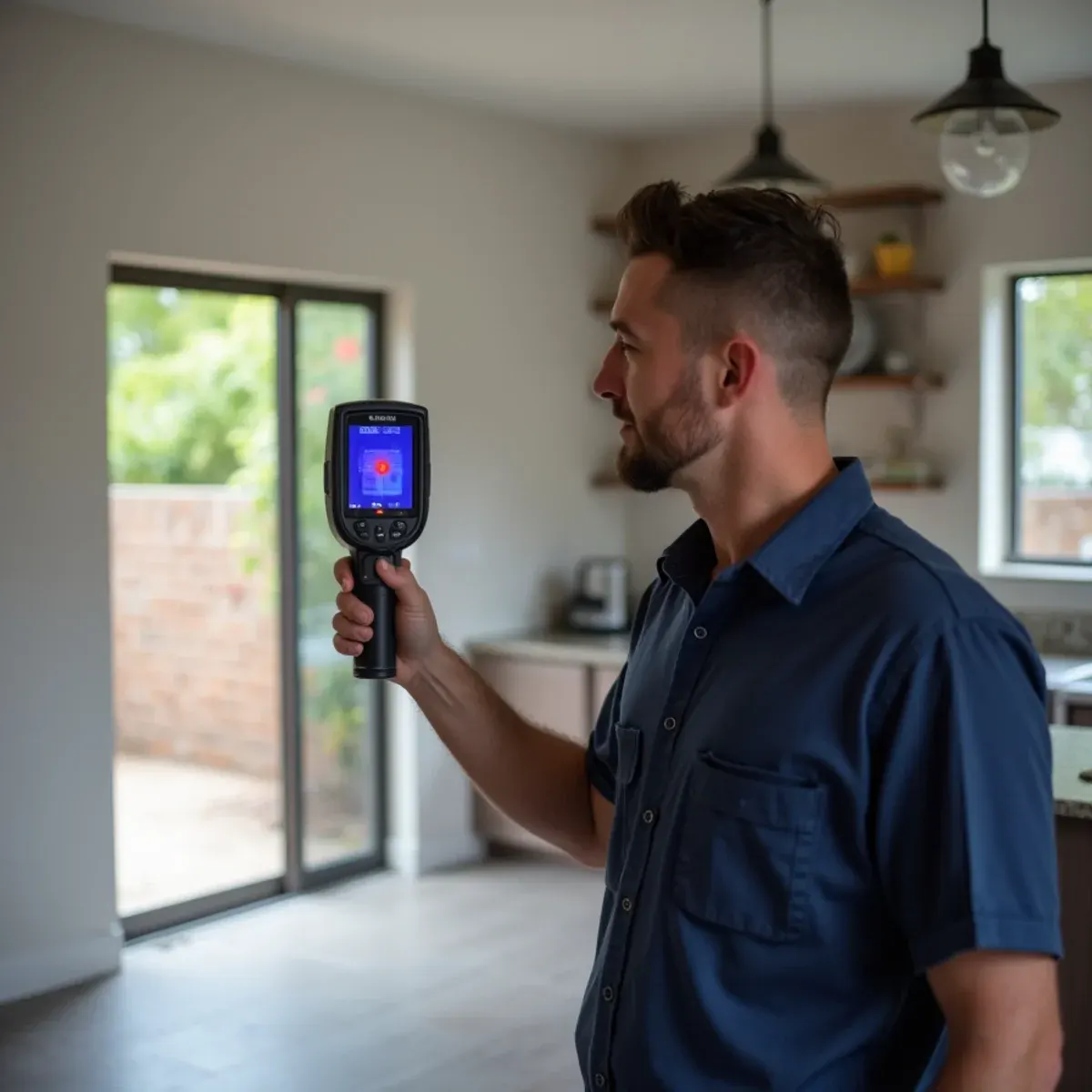
- Thermal imaging survey
- Confirm with moisture meters
- Supply-side isolation testing
- Written findings with images
- Options, not a sales pitch
The Whittier Background Worth Knowing
A leak under a raised foundation does not announce itself the way a slab leak does. There is no puddle on the floor and no warm spot underfoot, because the water drips down into the soil and stays there. What you get instead is a smell that is stronger in the morning, a board that feels slightly soft, and eventually a floor that has been quietly feeding fungal growth for months. By the time an Uptown homeowner calls us about a crawl space leak, the question is rarely how to dry it. It is how much of the joist and subfloor is still doing its job.
There is more on the housing stock, drainage and plumbing history of this city on our water damage restoration in Whittier page.
Whittier at a glance
- Dominant construction era
- 1890–1980
- Foundation type
- mixed on grade
- Supply piping found here
- original turn-of-century piping, galvanized steel, under-slab copper
- Drain line materials
- cast iron, clay
- Terrain and water table
- hillside-mixed, moderate water table
- Most common local failure
- raised-foundation crawl-space leaks in Uptown, and slope drainage failures in the hillside tracts
- Highest-value local prevention
- an annual crawl-space or slope-drain check, depending which Whittier you live in
What It Costs in Whittier
We do not quote a number over the phone before seeing the property — anyone who does is guessing. The variables that actually move the price on a inspection & leak detection job are standard moisture inspection — no charge, electronic slab leak location, pre-purchase moisture survey, and they are broken down in full on the water damage inspection & leak detection page. The assessment and the written estimate are free anywhere in Whittier, day or night, with no obligation.
Inspection & Leak Detection Questions from Whittier Homeowners
On a raised-foundation house of that age, mostly the crawl space. We go under, take moisture readings across the subfloor and along the mudsill and posts, thermal-scan for active drips, and check whether any past repair was done to the framing or only to the finish above it. We also test the supply side for pressure loss. You get written findings with readings by location and dated, which is a real document to negotiate with.
The standard moisture inspection is — thermal imaging, moisture mapping, and written findings, with no obligation. Specialized services like electronic slab leak location, a full pre-purchase survey, or lab sampling carry a fee, and we tell you the number before we start.
Twenty to forty minutes for a targeted check of a specific concern. A comprehensive whole-home survey for a real estate transaction runs about ninety minutes to two hours.
It cuts both ways. A crawl space leak hides longer, because the water drips into soil instead of pooling on your floor, so it often runs for months and reaches the framing before anyone notices. The upside is real though: the plumbing is accessible, so locating and repairing it does not mean breaking concrete. On balance, detection is your weak point in Uptown, which is why an annual look under the house is worth doing.