
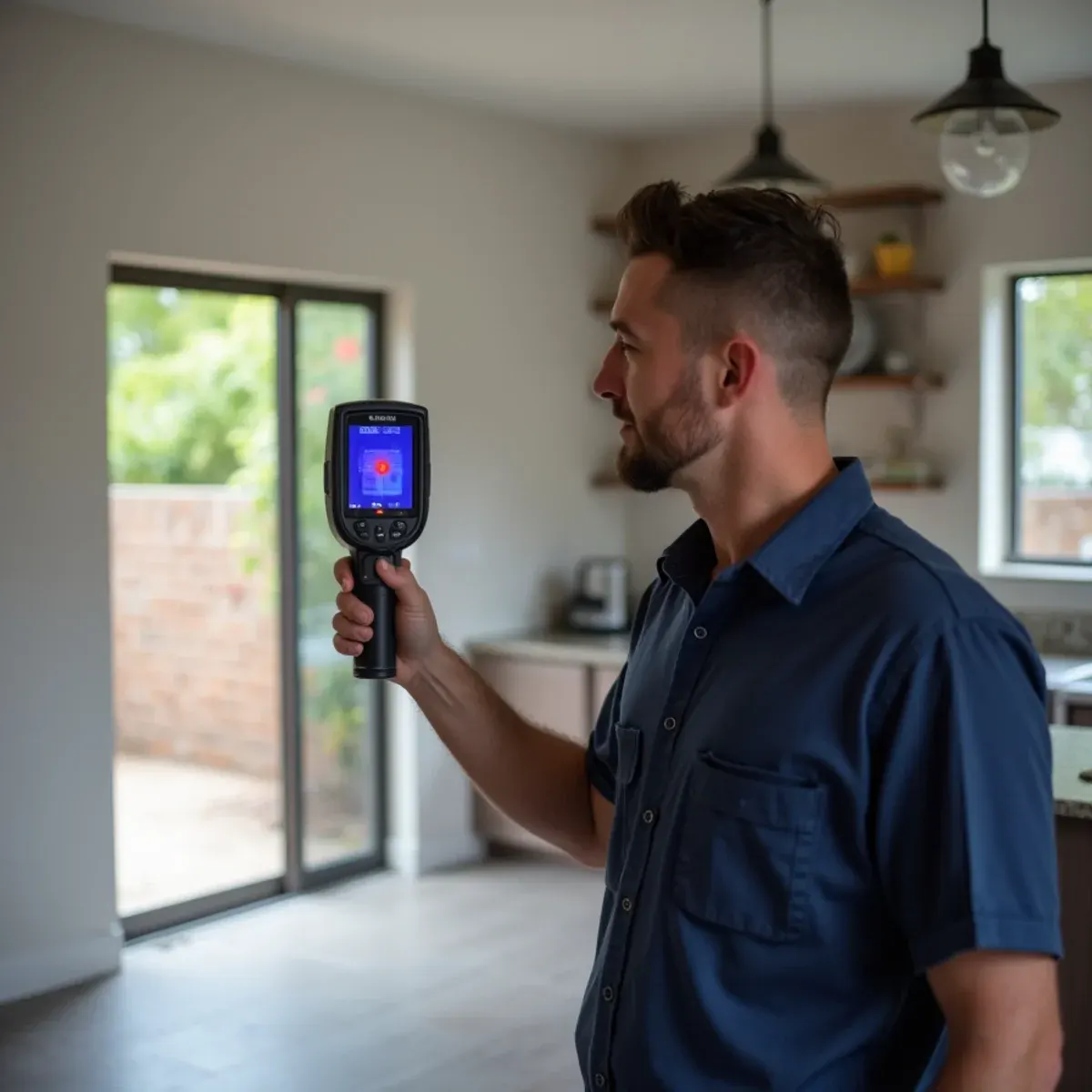
Costa Mesa is one of the harder places we work, and it's worth being honest about why. The coast is close, the marine layer sits over the city most mornings, and the ambient humidity is high enough that a wet crawl space or a damp wall doesn't dry on its own the way it would ten miles inland. Add a shallow water table and a lot of Eastside cottages on raised foundations under heavy tree canopy, and you get moisture that lingers quietly for months instead of resolving itself.
That changes what an inspection is for. Here it's less about catching a dramatic failure and more about answering whether the moisture already in your house is stable or slowly getting worse. On the Eastside we go under the floor, meter the joists and subfloor, and check whether the foundation vents are actually open or have been blocked by decades of landscaping. In Mesa Verde it's a 1960s slab and a meter test. On the Westside, mixed use means we're often looking at a residence and the shop behind it.
What Costa Mesa Changes About Inspection & Leak Detection
1Humidity slows every natural drying process
Inland, a small spill can dry itself out. Near the coast it often doesn't. Air already holding a lot of moisture pulls very little out of wet framing, so what would be a nuisance in Placentia becomes a microbial risk here. That's why we take relative humidity and dew point readings alongside material moisture — S500 treats the air and the material as one system, and on this coastline that isn't academic.
2Eastside crawl spaces stay damp
Under a 1920s Eastside cottage, the dirt is often damp year-round, the vents are frequently blocked by planting or a later addition, and the tree canopy keeps sun off the foundation entirely. We measure the subfloor from beneath and check vent openings before concluding anything, because a high reading down there can be a plumbing leak or just a crawl space doing what it always does.
3Santa Ana River edge and shallow groundwater
On the western side of the city, near the river and the low ground around Fairview and Talbert, the water table sits close enough to matter. Slab moisture there isn't always a leak — vapor drive through concrete produces steady, broad, low-level readings, while a supply failure gives you a concentrated hot spot. We distinguish the two before anyone starts opening floors.
How the Work Runs
The method is the same one we use on every inspection & leak detection job, documented to the IICRC S500:2025 standard. Here it is in short — the full water damage inspection & leak detection process explains each stage in detail.
- Talk through the history
- Thermal imaging survey
- Confirm with moisture meters
- Supply-side isolation testing
- Written findings with images
- Options, not a sales pitch
The Costa Mesa Background Worth Knowing
Under a raised Eastside cottage there is bare soil, and that soil is supposed to stay dry because the foundation vents exchange air with the outside. That system depends on the outside air being drier than the space under the house. For a good part of the year in Costa Mesa it is not. The marine layer holds humidity high through the night and well into the morning, so the crawl space never gets the dry stretch it needs, and moisture that arrives from a plumbing drip, a downspout, or an irrigation line just accumulates.
There is more on the housing stock, drainage and plumbing history of this city on our water damage restoration in Costa Mesa page.
Costa Mesa at a glance
- Dominant construction era
- 1920–1980
- Foundation type
- mixed on grade
- Supply piping found here
- original 1920s–1940s piping on the Eastside, galvanized steel, under-slab copper
- Drain line materials
- cast iron, clay
- Terrain and water table
- coastal-flat, shallow water table
- Most common local failure
- crawl-space moisture under Eastside cottages, held in by a marine layer that slows every natural drying process
- Highest-value local prevention
- confirming crawl-space vents are actually open and that the ground under the house is dry
What It Costs in Costa Mesa
We do not quote a number over the phone before seeing the property — anyone who does is guessing. The variables that actually move the price on a inspection & leak detection job are standard moisture inspection — no charge, electronic slab leak location, pre-purchase moisture survey, and they are broken down in full on the water damage inspection & leak detection page. The assessment and the written estimate are free anywhere in Costa Mesa, day or night, with no obligation.
Inspection & Leak Detection Questions from Costa Mesa Homeowners
The crawl space first. Under a raised Eastside cottage, a musty smell usually means the subfloor or joists are carrying moisture, either from a slow supply leak, a drain line, or a damp dirt floor with blocked vents. We take readings from underneath, thermal-scan the framing, and check the vents and grade around the perimeter. If the smell is coming from a wall instead, the meter pattern will tell us that, and we'll say so plainly.
The standard moisture inspection is — thermal imaging, moisture mapping, and written findings, with no obligation. Specialized services like electronic slab leak location, a full pre-purchase survey, or lab sampling carry a fee, and we tell you the number before we start.
Twenty to forty minutes for a targeted check of a specific concern. A comprehensive whole-home survey for a real estate transaction runs about ninety minutes to two hours.
Almost always the crawl space. On these raised 1920s to 1940s houses the soil under the floor stays damp when the foundation vents are blocked and the marine layer keeps outside air humid overnight. That moisture moves up through the subfloor and into the rooms above it. Before assuming anything, walk your perimeter and see whether a planter, a poured patio or landscaping has covered the vents that are supposed to be breathing.