
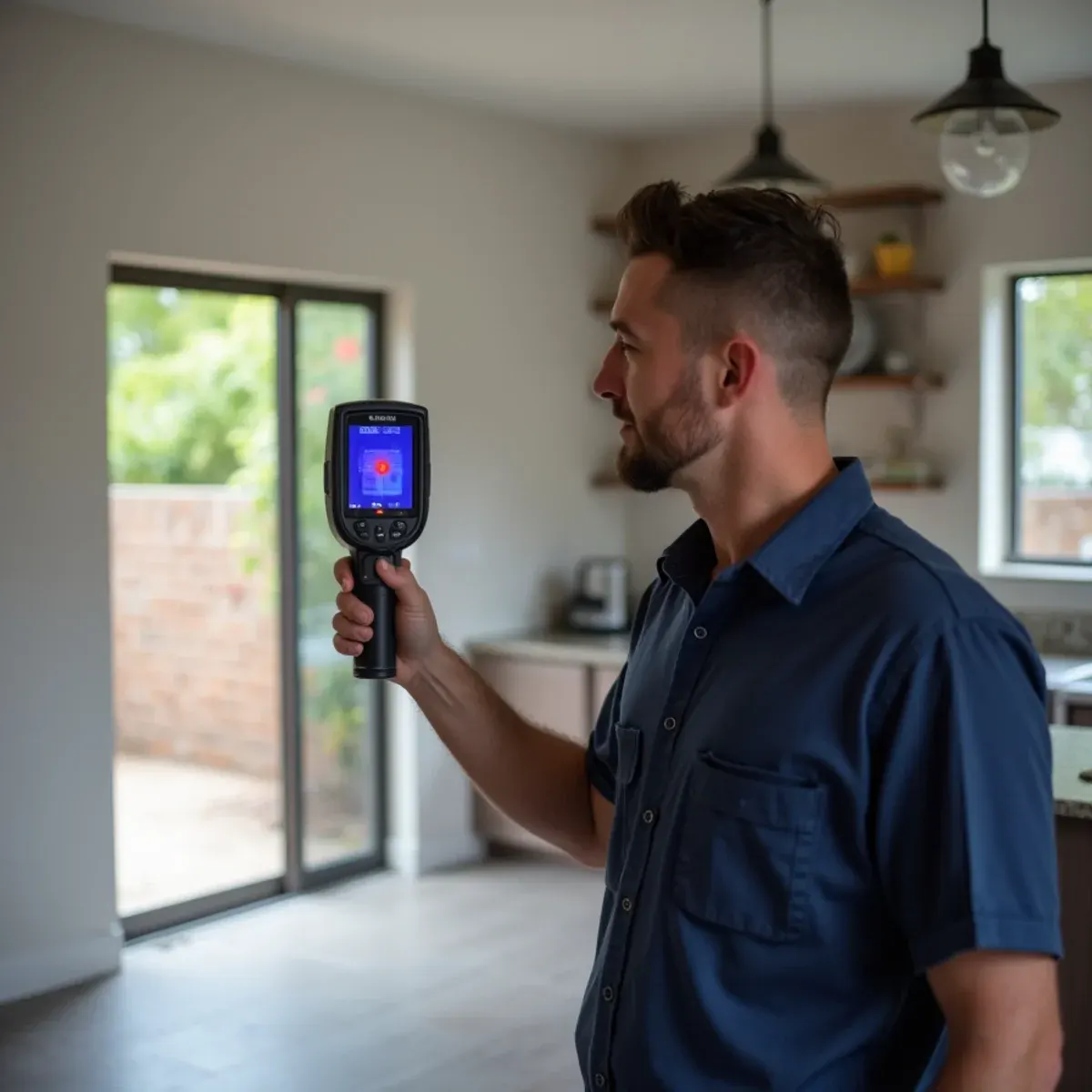
The call usually comes the day after a storm, and the description is almost always the same: water down an interior wall, no plumbing anywhere near it. This is the most coastal-exposed city we serve, and salt does something here that it doesn't do inland. It works on every exterior fastener, flashing and sealant joint continuously, so a window head that was watertight for fifteen years starts admitting wind-driven rain from the southwest without any visible warning. Which means a proper inspection in Huntington Beach includes the outside of the building, not just the plumbing.
Location within the city changes the rest. Around Huntington Harbour, groundwater responds to tide, seawalls and dock structures age in salt water, and lower levels sit close to a table that moves. Downtown, near Main Street and Pacific City, lots are narrow with no driveway, so if an inspection turns into extraction, the hose runs are long and the staging has to be worked out before a truck arrives. Inland in the 92646 and 92647 tracts it's more familiar ground: slab on grade, under-slab copper from the sixties through the eighties, cast iron and ABS drains.
What Huntington Beach Changes About Inspection & Leak Detection
1Scanning the envelope, not just the plumbing
We start outside on coastal properties: window and door heads, roof-to-wall flashings, stucco terminations, sealant joints on the weather side. Thermal imaging from inside after a wet period shows where water is tracking, and a controlled water test at a suspect joint often confirms it in twenty minutes. Chasing the plumbing first on a house like this wastes a day and finds nothing.
2Tidal groundwater around Huntington Harbour
Groundwater near the channels rises and falls with tide, so a lower-level slab or a garage floor can read damp in the afternoon and drier in the morning for reasons that have nothing to do with your pipes. We take readings at more than one point in the day where that's practical, and we note seawall and drainage conditions in the findings because they affect what a repair should look like.
3Narrow downtown lots and equipment access
On the numbered streets downtown there's often no driveway and limited street parking. That doesn't affect a non-invasive inspection much, but it decides everything about what happens next. We note access constraints in the written findings — hose run distance, where a truck can legally sit, whether equipment has to come through the front — so nobody discovers the problem when the water is already down.
How the Work Runs
The method is the same one we use on every inspection & leak detection job, documented to the IICRC S500:2025 standard. Here it is in short — the full water damage inspection & leak detection process explains each stage in detail.
- Talk through the history
- Thermal imaging survey
- Confirm with moisture meters
- Supply-side isolation testing
- Written findings with images
- Options, not a sales pitch
The Huntington Beach Background Worth Knowing
Salt does not damage buildings directly. It damages the details that keep water out, and then water does the rest.
There is more on the housing stock, drainage and plumbing history of this city on our water damage restoration in Huntington Beach page.
Huntington Beach at a glance
- Dominant construction era
- 1960–1990
- Foundation type
- slab on grade
- Supply piping found here
- under-slab copper
- Drain line materials
- cast iron, ABS
- Terrain and water table
- coastal-flat, shallow water table
- Most common local failure
- wind-driven rain entering through salt-corroded window flashing and failed exterior sealant
- Highest-value local prevention
- renewing exterior caulking and flashing on a far shorter cycle than inland guidance suggests
What It Costs in Huntington Beach
We do not quote a number over the phone before seeing the property — anyone who does is guessing. The variables that actually move the price on a inspection & leak detection job are standard moisture inspection — no charge, electronic slab leak location, pre-purchase moisture survey, and they are broken down in full on the water damage inspection & leak detection page. The assessment and the written estimate are free anywhere in Huntington Beach, day or night, with no obligation.
Inspection & Leak Detection Questions from Huntington Beach Homeowners
Usually. We identify the likely entry points by inspecting the exterior for salt-degraded flashing and failed sealant, then run a controlled water test — spraying specific joints in sequence, one at a time, while thermal imaging and metering the inside. Sequencing matters, because wetting the whole wall at once proves nothing. It doesn't work every time; some leaks need wind behind the rain. When that happens we say so rather than guessing.
The standard moisture inspection is — thermal imaging, moisture mapping, and written findings, with no obligation. Specialized services like electronic slab leak location, a full pre-purchase survey, or lab sampling carry a fee, and we tell you the number before we start.
Twenty to forty minutes for a targeted check of a specific concern. A comprehensive whole-home survey for a real estate transaction runs about ninety minutes to two hours.
Ambient humidity near the coast stays high enough for long enough that materials dry slowly on their own, which widens the window in which growth can establish after any moisture event. Combined with salt-accelerated failures of exterior sealants and flashings, coastal homes simply get more moisture intrusion and dry from it more slowly.