The water damage that costs the most is almost never the dramatic kind. A burst pipe that floods a kitchen at least announces itself — you know within minutes and you act. The expensive losses are the quiet ones: a pinhole weeping inside a wall for eight months, a shower pan seeping into the subfloor, a slab leak running under the living room since last spring.
By the time those become visible, the drywall is gone, the framing has grown something, and a repair that would have been a few hundred dollars is a five-figure remediation.
The good news is that hidden leaks do give signals. Here are the nine most reliable ones, roughly in order of how definitive they are.
1. A Musty Smell With No Visible Source

This is the strongest single indicator on the list. That earthy, damp-basement odor is not just the smell of moisture — it is microbial volatile organic compounds, the actual metabolic byproduct of active mold growth.
If you can smell it, something is growing somewhere. And the fact that you cannot see it means it is inside an assembly — behind drywall, under flooring, or inside a cabinet.
One useful diagnostic: the odor often gets stronger on warm days or when the HVAC runs, because warming a wall increases off-gassing from what is inside it. A smell that comes and goes with the temperature is almost always in a wall cavity.
2. Your Water Bill Went Up and Nothing Explains It
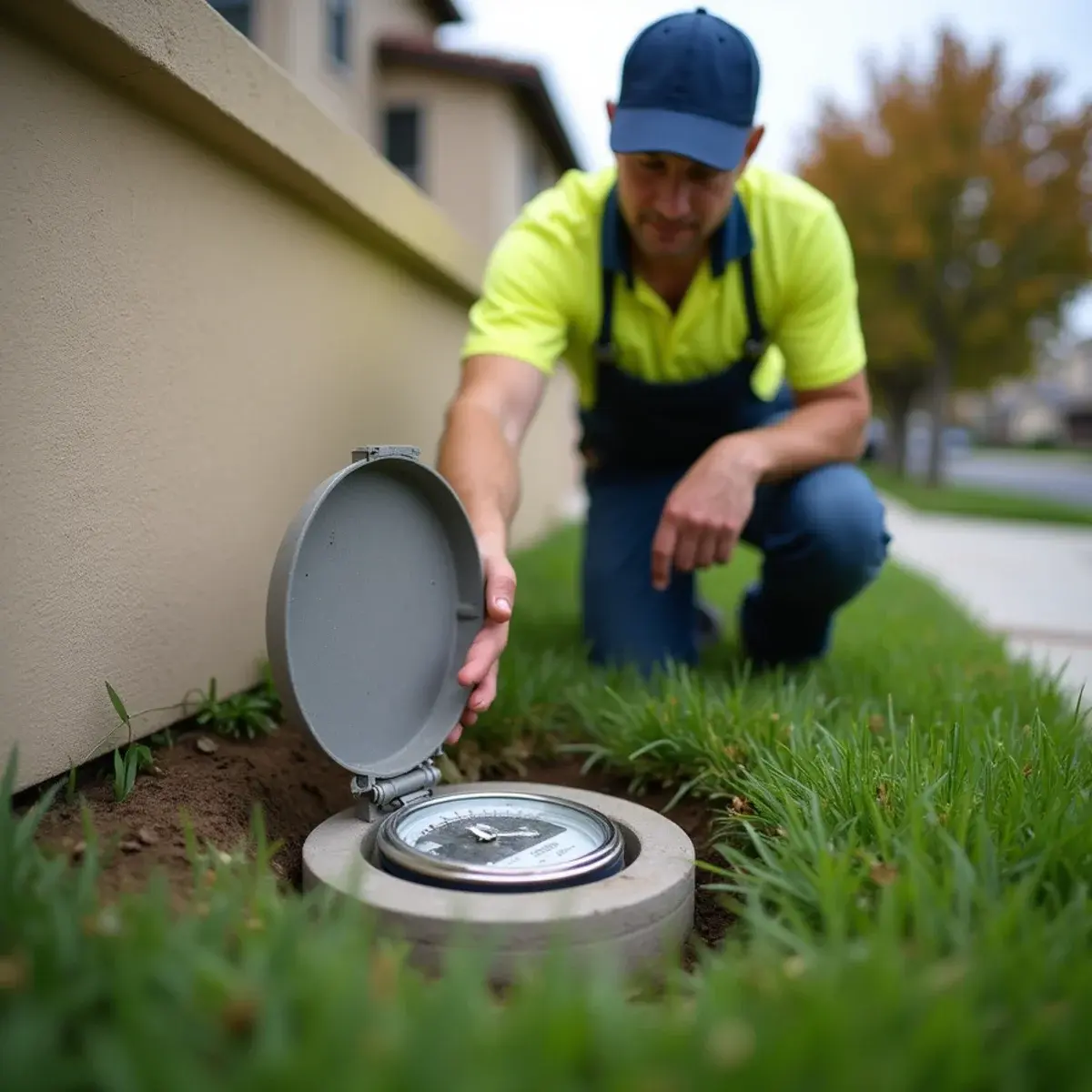
This is the most objective test available to a homeowner and it costs nothing.
Turn off every fixture and appliance in the house that uses water — including the ice maker and any irrigation. Go to your water meter and look at the low-flow indicator, which is usually a small triangle or dial that spins with even minimal flow. Watch it for fifteen minutes.
If it moves at all, water is escaping the system somewhere. If nothing in the house is visibly wet, that leak is inside a wall or under the slab. Every Cypress homeowner should run this test once a year — it takes fifteen minutes and it is the single best free diagnostic there is.
3. Paint or Wallpaper That Bubbles, Peels, or Lifts
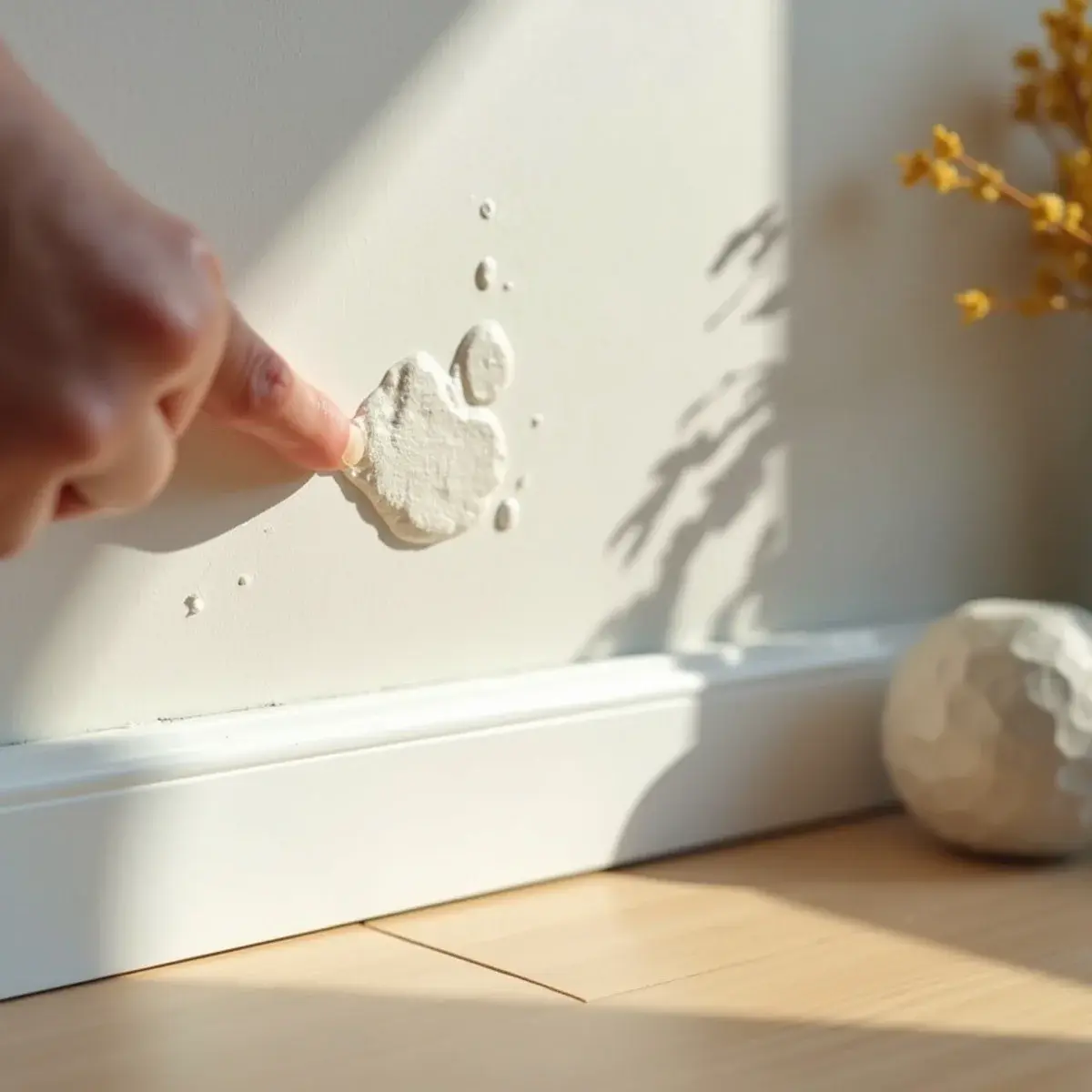
Paint adheres to a dry surface. When moisture pushes from behind, it breaks that bond, and the paint blisters, bubbles, or peels away.
The tell is location. Peeling paint high on a wall near a window is probably a weather-sealing issue. Peeling in the lower few inches of a wall, or in a defined patch in the middle of an otherwise fine wall, means moisture is coming through the drywall from inside.
Wallpaper is worse than paint because it is a vapor barrier. Moisture that gets behind wallpaper cannot escape, which creates ideal growth conditions on the back side while the front looks perfect except for one lifting seam.
4. Discoloration or Staining You Do Not Remember
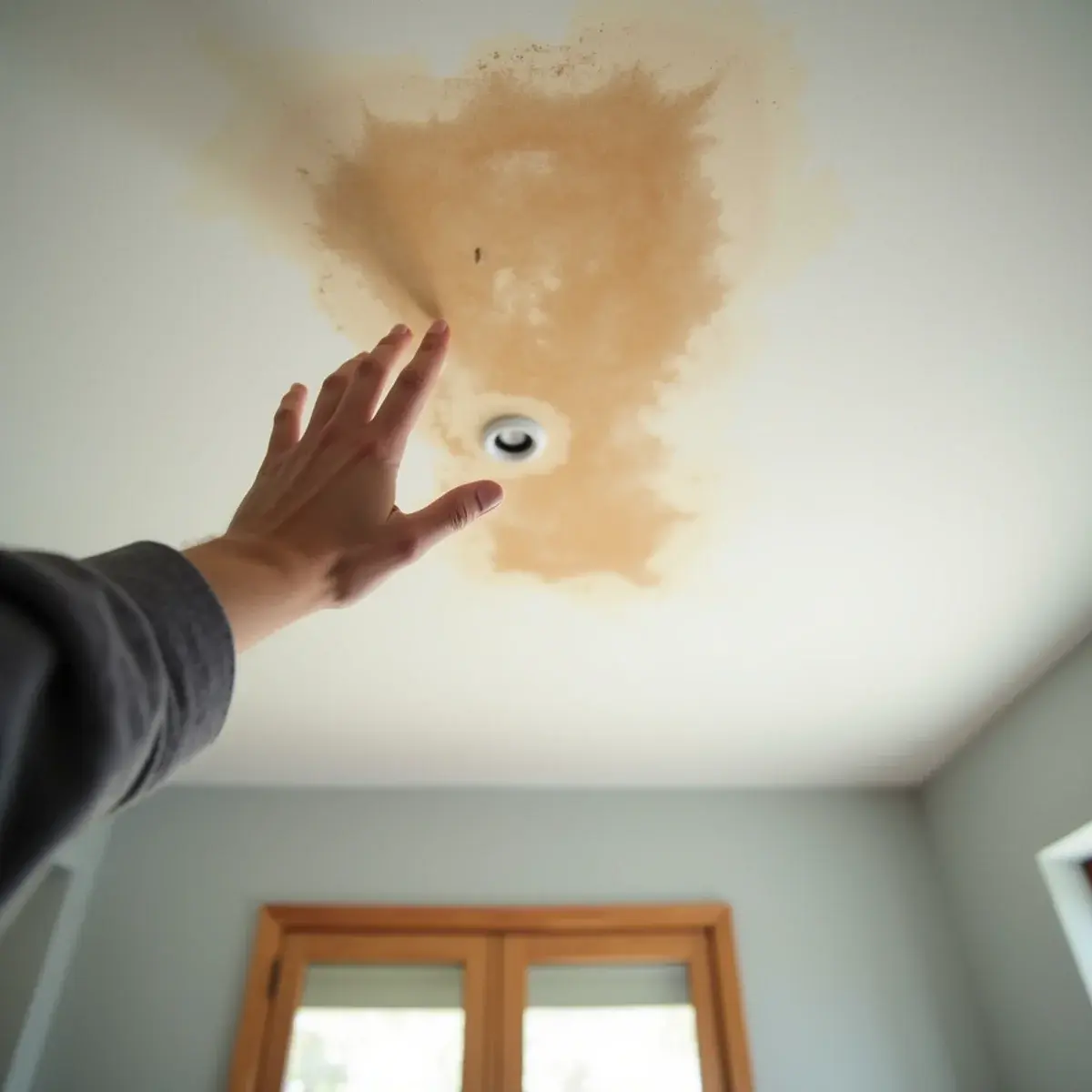
Yellow, brown, or copper-colored staining on drywall or a ceiling is water carrying minerals and tannins out of the material it passed through.
A stain with a defined ring around it has cycled wet and dry more than once, which means it is not a one-time event — it is an ongoing leak that gets active periodically, typically with rain or with a fixture being used.
You cannot tell by looking whether a stain is active or historical. A meter reading answers it in about ten seconds, which is why it is worth having any stain you did not cause read rather than guessed at.
5. Drywall That Feels Soft, Spongy, or Bulging
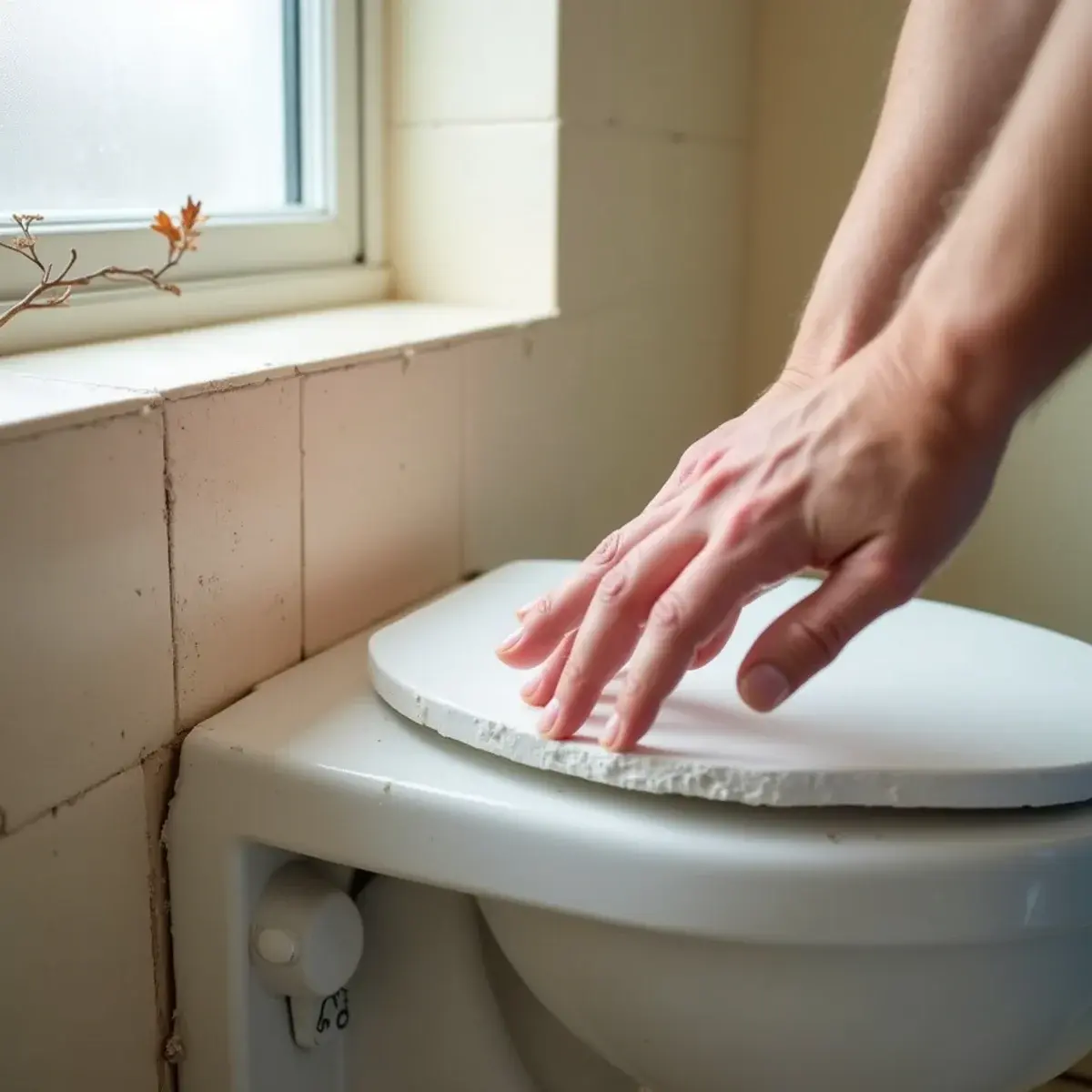
Press gently on a suspect area. Sound drywall is firm and unyielding. Drywall that has absorbed water gives slightly, feels spongy, or shows a visible bulge.
This is a late-stage sign. Gypsum losing structural integrity means it has been wet for a while, and the framing and insulation behind it have been wet longer.
On a ceiling, a bulge is a safety issue rather than a diagnostic one. It is holding water and can fail without warning. Clear the room and do not poke it from underneath.
6. Warped, Cupped, or Lifting Flooring
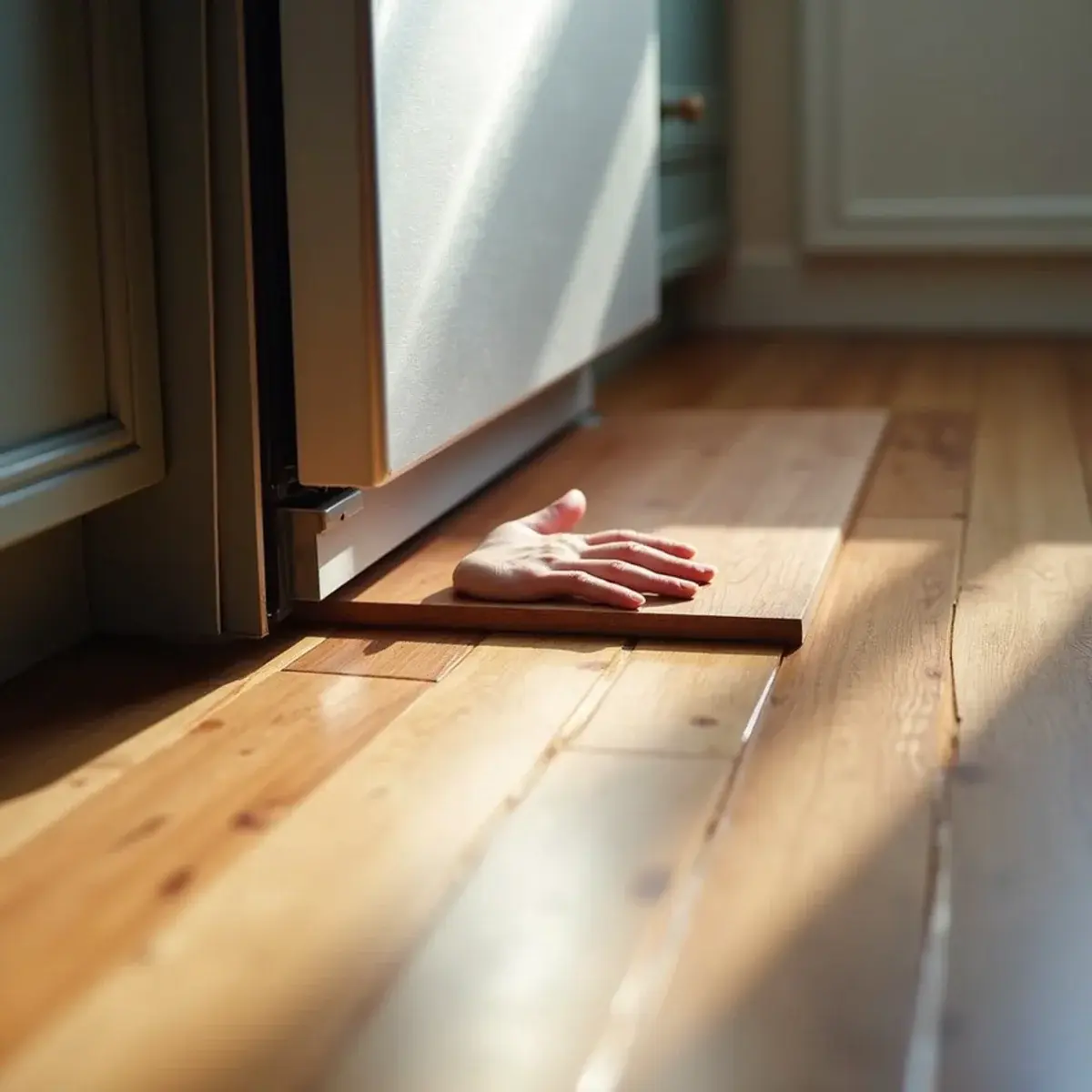
Flooring reacts to moisture from underneath before anything else in a room shows it.
Hardwood cups — the edges of each board rise higher than the center — when the underside absorbs moisture and swells. Laminate swells and separates at the seams. Vinyl plank lifts or bubbles as the adhesive bond releases. Tile grout cracks in a line, or the tile itself sounds hollow when tapped.
In Orange County's slab-on-grade housing, flooring that changes without an obvious spill is frequently the first visible symptom of a slab leak — moisture pushing up from the concrete rather than down from anything you can see.
7. The Sound of Running Water When Nothing Is On

Stand in a quiet house at night with everything off and listen. A faint continuous hiss, trickle, or rushing sound is a pressurized leak.
A supply line under pressure that has developed a pinhole makes a distinctive high-frequency hiss. A larger leak sounds more like flowing water. If it seems to come from the floor rather than a wall, that points toward a slab leak.
This works better than people expect, and it costs nothing but two minutes of standing still.
8. A Warm Spot on the Floor

Walk barefoot across your tile or vinyl. If one area is noticeably warmer than the surrounding floor, a hot water line beneath the slab is leaking there.
This is essentially diagnostic for a hot-side slab leak, and it is common in the 1960s and 1970s slab-on-grade housing throughout Cypress, Rossmoor, Lakewood, and the surrounding tracts.
It only works for hot lines, so a cold-side slab leak will produce the meter movement and the running-water sound without the warm spot.
9. Symptoms That Improve When You Leave the House

This is the least specific sign on the list and it is worth taking seriously anyway.
Congestion, itchy eyes, headaches, or asthma symptoms that ease within a few hours of leaving home and return when you come back are a genuine indoor air quality signal. Mold is one of several possible causes, but it is a common one, and hidden moisture is what feeds it.
If a household member has been unwell in a way that tracks with being at home, and any of the other eight signs are also present, get the house checked.
What a Thermal Camera Actually Shows You
From our crews in the field
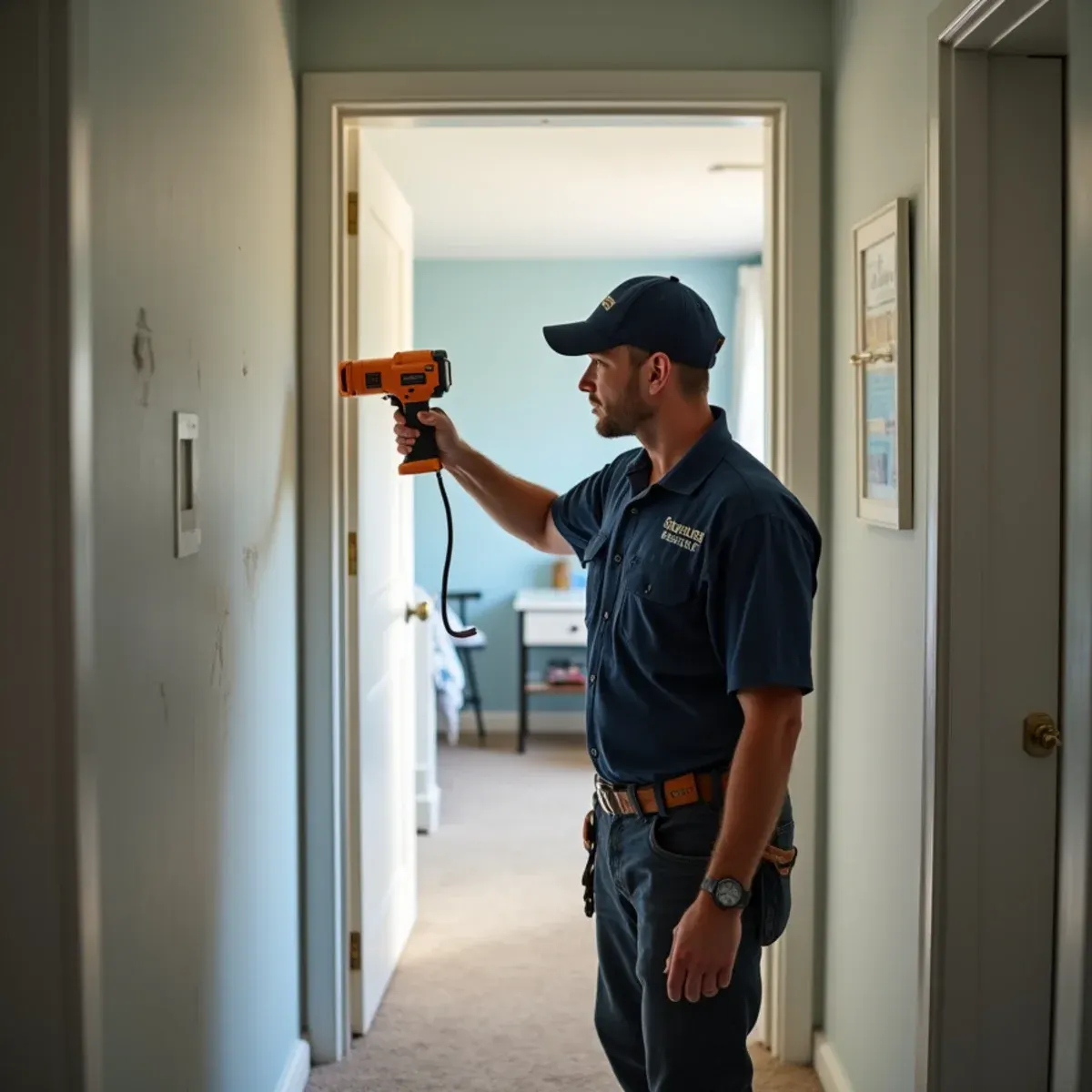
Thermal imaging does not see moisture. It sees temperature difference, and wet material is usually cooler because it is evaporating. That distinction matters because plenty of things produce a cold spot on a wall — a missing insulation batt, a duct run, an exterior shadow line — and none of them are leaks.
This is why a camera reading is never the finding on its own. Every thermal anomaly gets confirmed with a moisture meter before anyone opens a wall. Contractors who show homeowners a dramatic blue patch on a screen and start cutting are sometimes right and are not doing diagnostics.
The most reliable early sign is still the least technological one: the water meter. Close every fixture, note the leak indicator, come back in an hour. If it moved, water is going somewhere. On the under-slab copper failures that dominate Cypress and Rossmoor, that test finds problems months before anything appears on a wall.
- Thermal shows temperature difference; a meter confirms moisture — you need both
- A cold spot can be missing insulation or a duct, not a leak
- The water-meter test costs nothing and catches under-slab leaks earliest
- A musty smell in a closed room is a real signal even with nothing visible
Services Mentioned in This Guide
- Water Damage Inspection & Leak Detection in Cypress, CA — Thermal imaging and moisture meters that find what a visual inspection cannot — free, and with no obligation.
- Mold Remediation & Removal in Cypress, CA — We fix the moisture source first — because remediation without correcting the cause is a temporary result.
- Slab Leak Water Damage Repair in Cypress, CA — Orange County's slab-on-grade homes hide leaks under concrete for months. We find them, dry the slab, and restore the floor.
- Water Damage Restoration in Cypress, CA — Predominantly single-story slab-on-grade tract homes built between 1960 and 1980, with a newer band of construction from the 1990s onward on the west side.
- Water Damage Restoration in Rossmoor, CA — An unincorporated community of roughly 3,500 homes built in a single burst between 1957 and 1961 — meaning nearly identical plumbing, all reaching end of life together.
Frequently Asked Questions
When in Doubt, Get It Read
None of these signs is proof on its own, and any two of them together is a strong reason to have someone look. A moisture meter answers in ten seconds a question you could spend six months worrying about.
We offer that inspection free anywhere in Cypress and the surrounding cities, and there is no obligation attached to it. Finding nothing is a perfectly good result — and finding something in month one instead of month twelve is the entire point.
Open 24 hours a day, 7 days a week — including holidays
On-site within 60 minutes of your confirmed emergency call anywhere in Cypress — or we credit $100 off your final invoice.