Southern California's rainfall arrives in concentrated bursts. We can go nine months with almost nothing and then take four inches in two days when an atmospheric river parks over the coast. That pattern is uniquely hard on buildings, because everything sits dry and UV-exposed for most of the year and then gets tested all at once.
The consequence, from where we sit, is that storm calls arrive in floods of their own. During a major event our volume goes up by an order of magnitude in a few hours, and so does every other restoration company's in the county.
Almost every one of those calls traces back to something that could have been fixed in an afternoon in October. Here is that afternoon.
Start With Drainage — It Causes More Losses Than the Roof
Roof leaks get the attention, but in the flat cities across north Orange County the majority of our storm calls are ground water finding its way in. Drainage is where the highest-value work is.
Yard drains and area drains silt up completely over a dry summer. Leaves, dust, and sediment accumulate in the basins and the underground lines, and by November many of them are functionally sealed. A drain that does not drain is worse than no drain at all, because the landscaping was graded on the assumption it works.
Clear every basin by hand, then run a hose into each one and confirm water comes out where it is supposed to. If it does not, the line is blocked and needs to be snaked or jetted before the season, not during it.
- Clear all yard and area drain basins of leaves and sediment
- Hose-test each drain and confirm discharge at the outlet
- Snake or jet any line that does not flow
- Check that the discharge point is not itself blocked or buried
Gutters and Downspouts
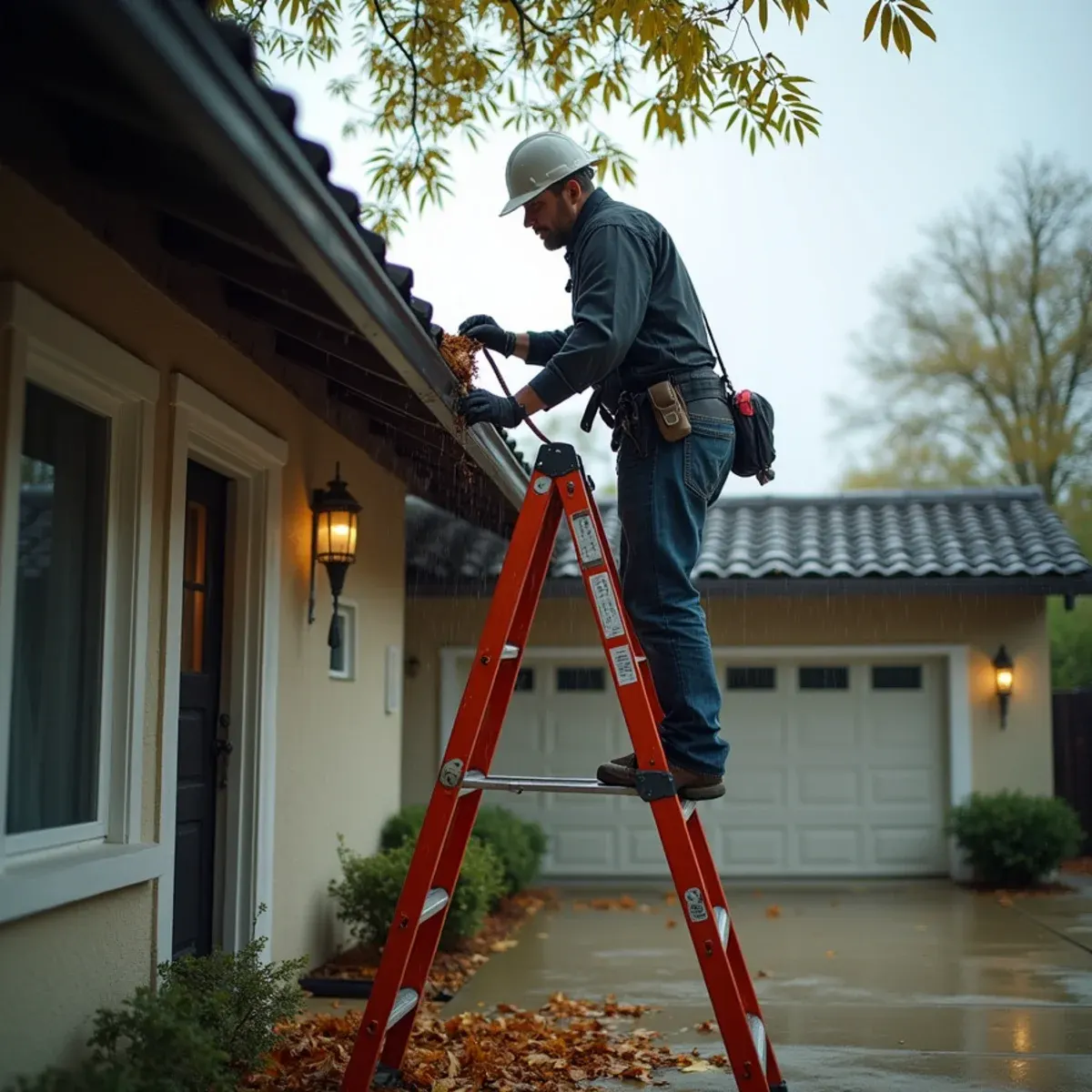
Clean gutters are the obvious item and people still skip them. A gutter full of leaves overflows at the fascia, sending water behind the gutter into the eave and down the exterior wall — which is a far worse outcome than having no gutter at all.
The item people genuinely miss is the downspout discharge. A downspout that dumps at the base of the foundation is concentrating the entire roof plane's runoff into one spot against your wall. Extensions that carry it several feet away, onto a splash block or into a drain line, cost very little and eliminate a common cause of wall intrusion.
- Clear gutters and confirm they drain rather than pond
- Flush downspouts to confirm they are not blocked partway down
- Add extensions so discharge lands well away from the foundation
- Check that fascia behind the gutter is sound and not already rotted
The Roof: Focus on Penetrations, Not the Field
Most roof leaks in Orange County are not failures of the roofing material. They are failures at penetrations — the places where something comes through the roof plane.
The single most common one is the rubber pipe boot around a plumbing vent. Nine months a year of UV exposure cracks it, and once it splits, water runs straight down the pipe into the attic. They are inexpensive to replace and they are the highest-value roof item on this list.
After that: flashing at chimneys and wall transitions, skylight seals, and any patio cover or flat-roof section that ties into the house wall. Those tie-in points are chronic leak sources because two different systems meet there.
- Inspect and replace cracked rubber pipe boots at vent penetrations
- Check flashing at chimneys, walls, and skylights
- Look for slipped, cracked, or missing tiles after Santa Ana wind events
- Inspect any flat patio-cover membrane and its tie-in to the house wall
- From inside the attic, look for daylight and for any staining on the deck underside
Windows, Sliders, and the Garage Door
Wind-driven rain finds failed perimeter sealant, and in coastal cities that sealant degrades faster than manufacturers' inland guidance suggests.
Walk the exterior and look at the caulking around every window and door. Cracked, shrunken, or missing sealant is a five-minute fix per opening and it prevents intrusion that shows up as a stain on the interior wall below the sill.
The garage door is the single most common water entry point in Cypress homes and it is almost always overlooked. The bottom seal degrades, the slab sits low relative to the driveway, and fifty years of hardscape changes have often re-graded the approach toward the house. A replacement threshold seal is inexpensive and it addresses the most likely intrusion on the property.
Trim the Trees
Saturated soil plus wind is what brings limbs down, and it happens during the storm rather than before it.
Anything overhanging the roof is worth trimming back before the season. Beyond impact risk, overhanging limbs drop debris directly into gutters and onto the roof plane, which is how gutters get blocked in the first place.
Trees also matter below ground here. The mature street trees in older Cypress, Los Alamitos, and Lakewood neighborhoods have root systems that find cracked sewer laterals, and a storm surcharging the municipal system is exactly when a partially blocked lateral backs up into the house.
The Ten-Minute Test Nobody Does
Here is the most useful thing on this entire list, and it costs nothing.
During the first real rain of the season, put on a jacket and walk your property while it is actively raining. Watch where water goes. Where does it come off the roof? Where does it pool? Which direction does the patio drain? Is the driveway sending water toward the garage? Is that planter holding water against the wall?
Nearly every drainage-related loss we handle would have been visible to the homeowner during a single storm, often years before it became a problem. You cannot see any of it on a dry day, which is why almost nobody catches it.
During the Storm: Call Early
One operational note that genuinely affects outcomes.
When a significant event hits, restoration crews across the county get committed in the order calls come in. The homeowner who calls at 9 p.m. when a ceiling first drips gets a tarp that night. The homeowner who waits until Thursday morning has had water running into the attic for eleven more hours and joins a much longer queue.
Emergency tarping and board-up happen in the rain. That is what they are for. If water is coming in, call while it is happening rather than after.
What We See in the First Twelve Hours of a Real Storm
From our crews in the field
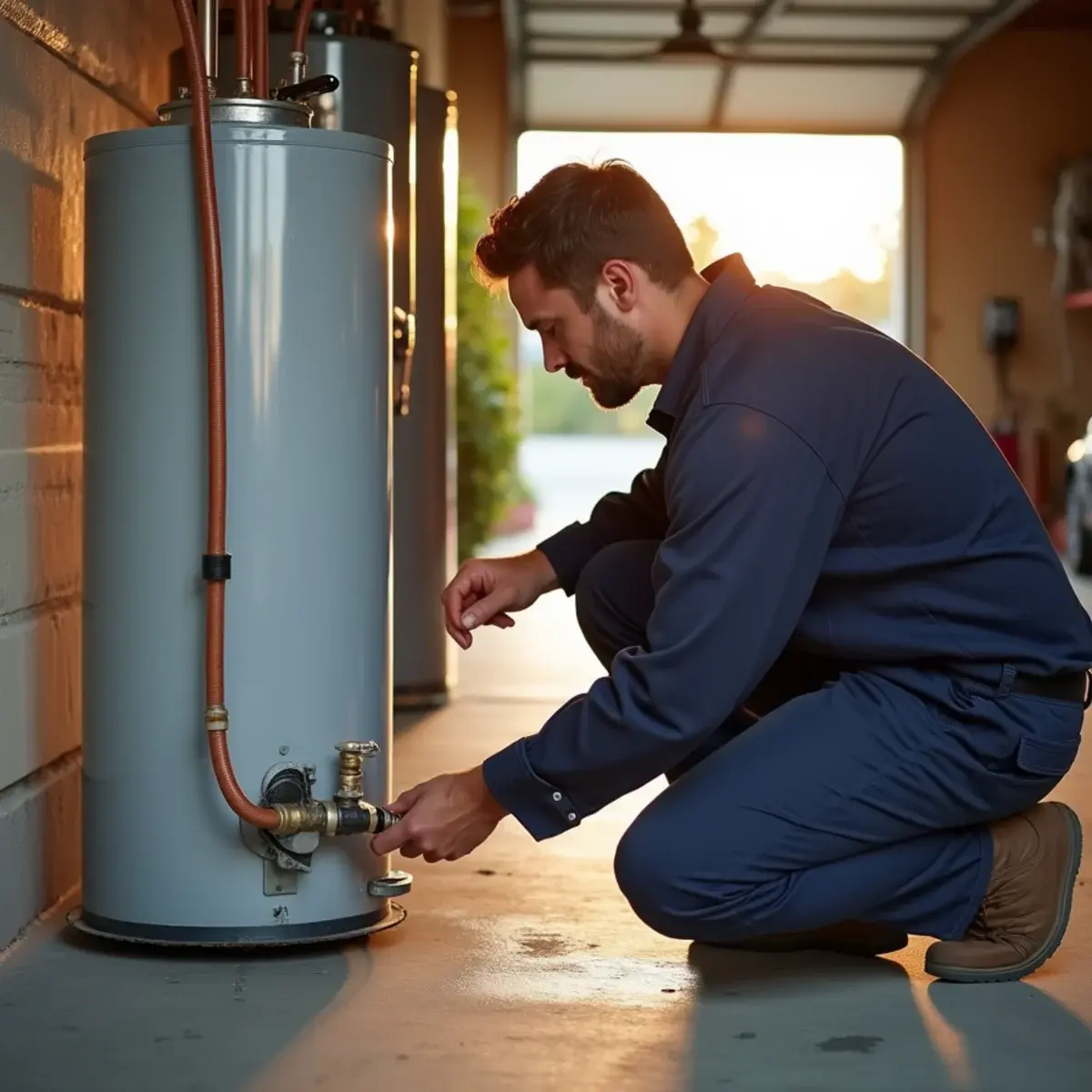
Almost none of the storm calls we take are roof failures. They are drainage failures — blocked area drains, downspouts discharging against the foundation, and slope drains on hillside lots in Brea, Yorba Linda and Signal Hill that silted up over a dry summer and nobody checked. The rain is not usually the problem; the path the water takes when it cannot leave is.
The second pattern is timing. Everyone calls at once. During a sustained atmospheric river every restoration company in the county is committed within hours, which is why we stage equipment ahead of a forecast event rather than after it starts. If a storm is coming and you have a known drainage weak point, the time to call is before the front arrives.
The honest limitation: during a widespread event we prioritise active intrusion and contaminated losses over dry-out of a loss that has already stopped. We will tell you plainly where you sit in that queue rather than promising an hour we cannot hold.
- Clear area drains, gutters and slope drains before the first front, not after
- Extend downspouts so they discharge well clear of the foundation
- Photograph the exterior before a forecast storm — it dates pre-existing condition
- Call before the storm if you have a known weak point; capacity disappears fast
Services Mentioned in This Guide
- Storm Damage Restoration in Cypress, CA — Tarped and secured while it is still raining — then dried, documented and rebuilt after the storm passes.
- Ceiling & Roof Leak Water Damage in Cypress, CA — Bulging drywall relieved safely, attic insulation dried or replaced, and a ceiling that finishes without a ghost stain.
- Flood Damage Cleanup in Cypress, CA — Floodwater is contaminated water. We handle it with containment, disinfection, and full documentation for your claim.
- Water Damage Restoration in Cypress, CA — Predominantly single-story slab-on-grade tract homes built between 1960 and 1980, with a newer band of construction from the 1990s onward on the west side.
- Water Damage Restoration in Fountain Valley, CA — Built almost entirely between 1960 and 1980 on former wetland known historically as Gospel Swamp, giving the city one of the highest water tables in Orange County.
Frequently Asked Questions
October, before the first significant rain. If you are reading this in December, do it now anyway — most of our storm season falls between December and March, and there is usually plenty of weather left.
Sudden wind and rain damage is generally covered, including the resulting interior water damage. What gets excluded is damage from an already-failing roof or deferred maintenance, and any water that reached your home across the ground, which requires flood insurance.
If your property has flooded before or you can see water pooling toward the house during rain, yes. Cypress and several surrounding cities make sandbags available to residents before storm season — worth checking your city's website in the fall rather than the night before.
Clearing the yard and area drains. They silt up completely over a dry summer, almost nobody checks them, and a blocked drain in a flat city means water ponds against the house instead of leaving the property.
One Afternoon in October
Clear the drains, clean the gutters and extend the downspouts, replace the cracked pipe boots, re-caulk the windows, seal the garage threshold, and trim the overhanging limbs. That is most of it, and it is one afternoon.
Then walk the property during the first real rain and watch where the water goes. If you find something you cannot solve — or if a storm has already gotten in — we are 24/7 across Cypress and the surrounding cities, and we tarp during the storm rather than after it.
Open 24 hours a day, 7 days a week — including holidays
On-site within 60 minutes of your confirmed emergency call anywhere in Cypress — or we credit $100 off your final invoice.