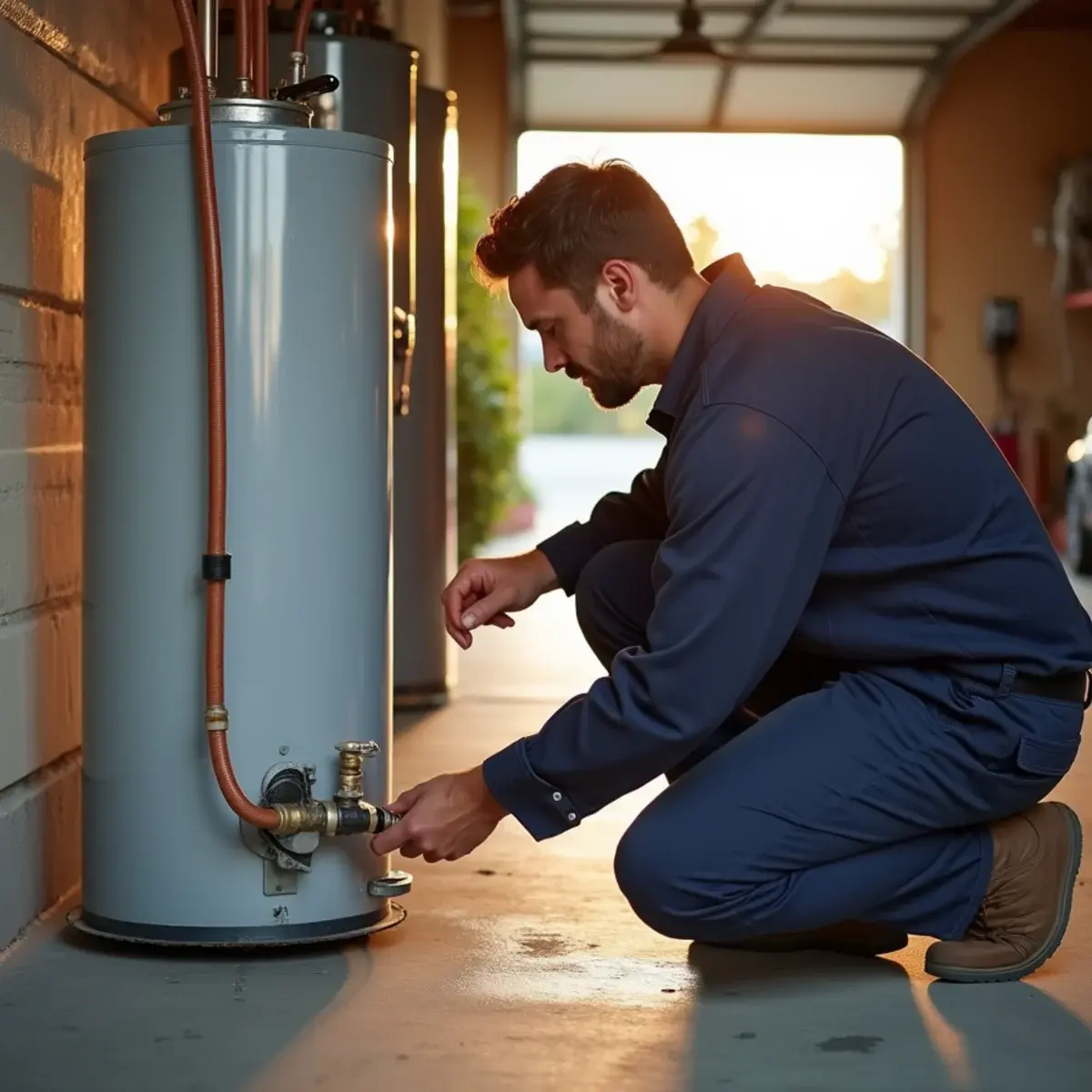
Nearly every home built in Cypress, Rossmoor, Lakewood, Los Alamitos, and the surrounding tracts since the 1960s sits on a concrete slab with copper supply lines running through or beneath it. When one of those develops a pinhole, the water goes into the soil under your house, and nothing appears inside for a long time.
That delay is the entire problem. A leak found in month one is a targeted repair. The same leak found in month twelve has saturated a wide area of sub-slab soil, pushed moisture up into the wall base and flooring across multiple rooms, and often started microbial growth.
These are the signs that show up before the water does.
The Definitive Test: Your Water Meter
Before any of the softer signals, run this. It is free, it takes fifteen minutes, and it is the only genuinely objective test a homeowner has.
Turn off every fixture and appliance in the house that uses water — faucets, toilets, dishwasher, washing machine, ice maker, and any irrigation. Go to your water meter, usually in a box near the sidewalk. Find the low-flow indicator, a small triangle or dial that spins with even minimal flow. Note its position and watch for fifteen minutes.
If it has moved, water is escaping the system. If nothing inside the house is visibly wet, the leak is under the slab or inside a wall. That is your answer, and it is worth running once a year in any home built before 1990.
A Warm Spot on the Floor
Walk barefoot across your tile, vinyl, or laminate — particularly first thing in the morning when the house is cool.
If one area is noticeably warmer than the surrounding floor, a hot water line beneath the slab is leaking there. This is close to diagnostic, because there is essentially no other explanation for a localized warm patch in a slab floor.
It only works for hot lines. A cold-side slab leak will produce meter movement and running-water sounds without any temperature signature at all, so a lack of warm spots does not rule anything out.
The Sound of Running Water With Nothing On
Stand in a quiet house at night with everything off and listen, particularly near the floor.
A pressurized supply line with a pinhole makes a distinctive faint hiss. A larger breach sounds more like flowing water. When the sound seems to come from beneath the floor rather than from within a wall, that points toward the slab.
It is a crude test and it works surprisingly often. Two minutes of standing still has located a good number of the leaks we have been called out for.
Flooring That Changes Without a Cause
Moisture pushing up through a slab affects the floor covering before it affects anything else, and each material fails differently.
Vinyl plank separates at the seams or lifts. Laminate swells at the edges. Hardwood over the slab cups, with board edges rising higher than centers. Tile grout cracks in a line, or a tile sounds hollow when tapped. Carpet develops a damp patch or a persistent odor in one area.
The key word is uncaused. Flooring that changes with no spill, no appliance nearby, and no obvious explanation is reacting to something underneath it.
Musty Odor and Damp Baseboard
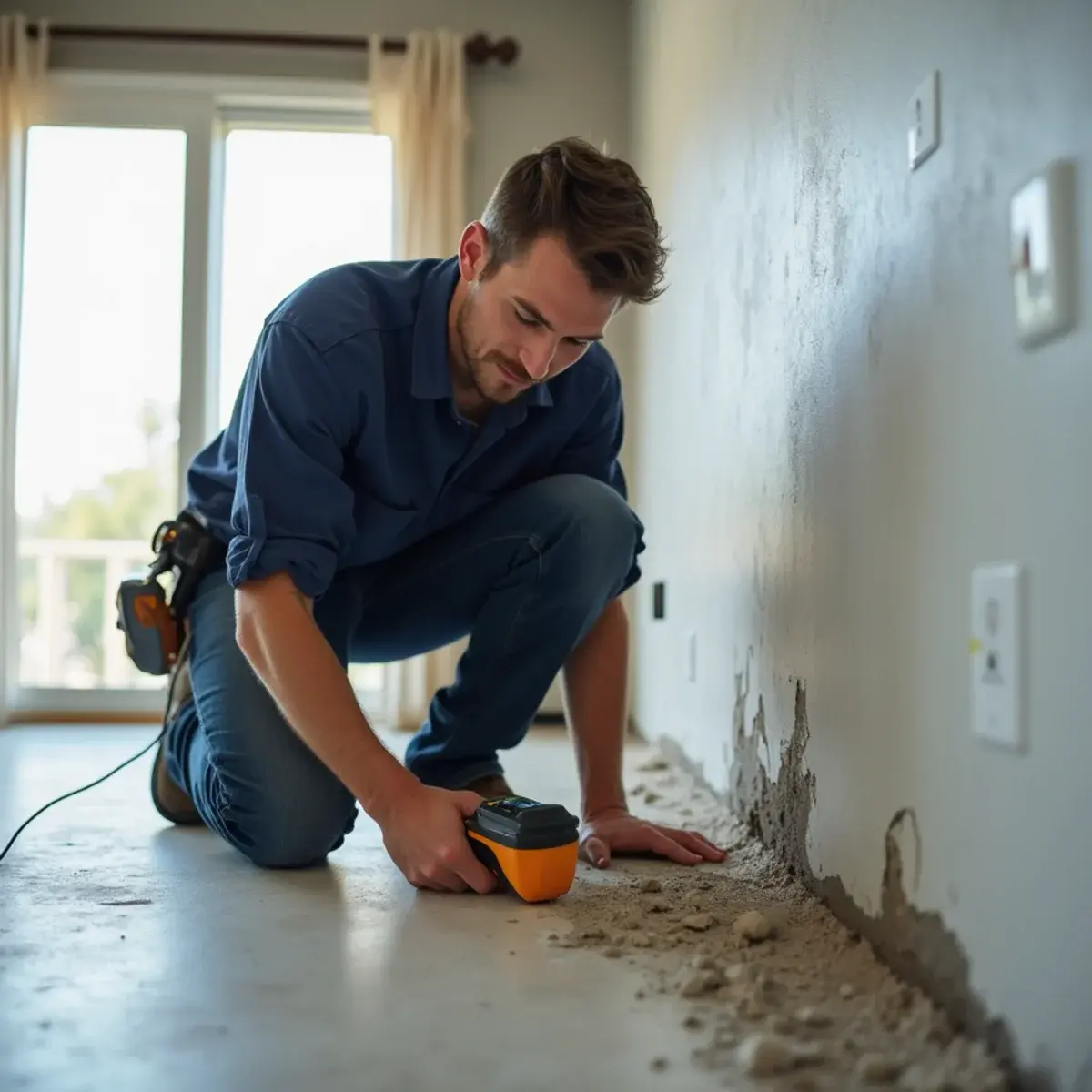
Water under a slab migrates laterally through the soil and reaches the slab edge, where it wicks up into the bottom plate of the wall and into the lower few inches of drywall.
That produces two signals: a persistent musty odor with no visible source, and discoloration or dampness in the lowest inch or two of a wall — often visible as a subtle darkening just above the baseboard, or as baseboard that has begun to separate from the wall.
By the time either of these appears, the leak has been running for a while. They are still worth acting on immediately, because the difference between month twelve and month fifteen is more rooms.
Why Slab Leaks Are So Common Here Specifically
Three factors stack up in this part of Southern California.
Construction era. The tract housing that defines Cypress, La Palma, Rossmoor, Los Alamitos, Lakewood, and Cerritos was built slab-on-grade with under-slab copper — standard practice at the time, and now fifty to seventy years old.
Soil chemistry. Parts of this coastal plain have soils mildly aggressive toward buried copper, producing external pitting that breaches the pipe wall from the outside in.
Water chemistry and velocity. Decades of treated municipal water moving through undersized older lines causes internal erosion-corrosion, worst at elbows and on hot recirculating loops. When a home starts producing repeated pinholes, that is not bad luck — it is the whole system arriving at end of life together.
Your Repair Options
Once a leak is located, there are three realistic paths and they suit different situations.
Spot repair opens a small section of slab and flooring directly over the failure and repairs that section of pipe. It is the least disruptive when the leak is in an accessible location and the rest of the system is sound. It does nothing for the rest of the pipe.
Reroute abandons the failed section and runs new line overhead through the attic and down inside walls. It avoids opening concrete entirely, at the cost of drywall and paint repair. Often the better choice when the leak is under a kitchen island or somewhere else expensive to open.
Full repipe replaces the supply system throughout, usually routed overhead. It is the most expensive up front and the only option that actually ends the problem. If you have had two leaks in a few years, this is almost always the cheaper path over any reasonable time horizon — because the alternative is another leak and another restoration.
The Part People Underestimate: Drying the Slab
Fixing the pipe is half the job. Concrete that has been absorbing water for months holds an enormous amount of it and releases it very slowly.
If you install new flooring over a slab that is still giving up moisture, you have sealed the water in. Adhesive fails, planks lift, and the trapped moisture supports growth underneath — typically showing up twelve to eighteen months later, and not covered by anything.
Proper slab drying means targeted equipment for seven to fourteen days and verification with in-situ relative humidity probes set into the concrete, which is the measurement flooring manufacturers actually specify against. It is worth asking any contractor how they intend to verify the slab is ready, because a surface reading is not an answer.
Why These Run for Months Here
From our crews in the field
An under-slab line gives you no maintenance cue. There is nothing to inspect, nothing that drips into view, and the water often travels along the outside of the pipe and away under the slab rather than surfacing. We regularly find leaks that have been running since before the homeowner noticed anything at all.
The tell that comes first is the water bill, and the tell that confirms it is the meter. Close every tap, watch the leak indicator, wait an hour. That test costs nothing and is the only reliable early detection available for a line you cannot see. In tracts like Rossmoor where the copper all went in within a few years, it is worth doing twice a year.
On repair method: spot repair, reroute, or repipe are all legitimate and the right answer depends on the age of the system and how many failures you have had. Be sceptical of anyone who only ever recommends the most expensive of the three. A first failure on an otherwise sound system is often a genuine spot repair.
- Warm spots on the floor, a running meter, and an unexplained bill are the classic three
- Run the meter test twice a year on any slab home built before 1985
- One failure is often a spot repair; repeated failures point to a reroute
- Locating properly means no exploratory concrete gets broken
Services Mentioned in This Guide
- Slab Leak Water Damage Repair in Cypress, CA — Orange County's slab-on-grade homes hide leaks under concrete for months. We find them, dry the slab, and restore the floor.
- Water Damage Inspection & Leak Detection in Cypress, CA — Thermal imaging and moisture meters that find what a visual inspection cannot — free, and with no obligation.
- Hardwood Floor Water Damage Drying in Cypress, CA — Floor mat drying systems that pull moisture up through the seams — saving floors other companies would tear out.
- Water Damage Restoration in Cypress, CA — Predominantly single-story slab-on-grade tract homes built between 1960 and 1980, with a newer band of construction from the 1990s onward on the west side.
- Water Damage Restoration in Lakewood, CA — One of the most famous postwar developments in America — roughly 17,500 homes built between 1950 and 1953, which means an entire city's plumbing shares a single installation date.
Frequently Asked Questions
Sustained sub-slab saturation can affect the soil supporting the foundation, and in expansive soils that can produce differential movement. It is not the most common outcome, but it is a real one and it is a reason not to let a known leak run while deciding what to do.
A pinhole can waste thousands of gallons a month while producing no visible symptom at all. For many homeowners, an unexplained increase in the water bill is the first and only early evidence.
Typically the resulting water damage and the cost of accessing the pipe are covered, while the pipe repair itself is excluded. Coverage is often denied when a carrier determines the leak was long-term or gradual, which is exactly why the annual meter test and immediate reporting matter so much.
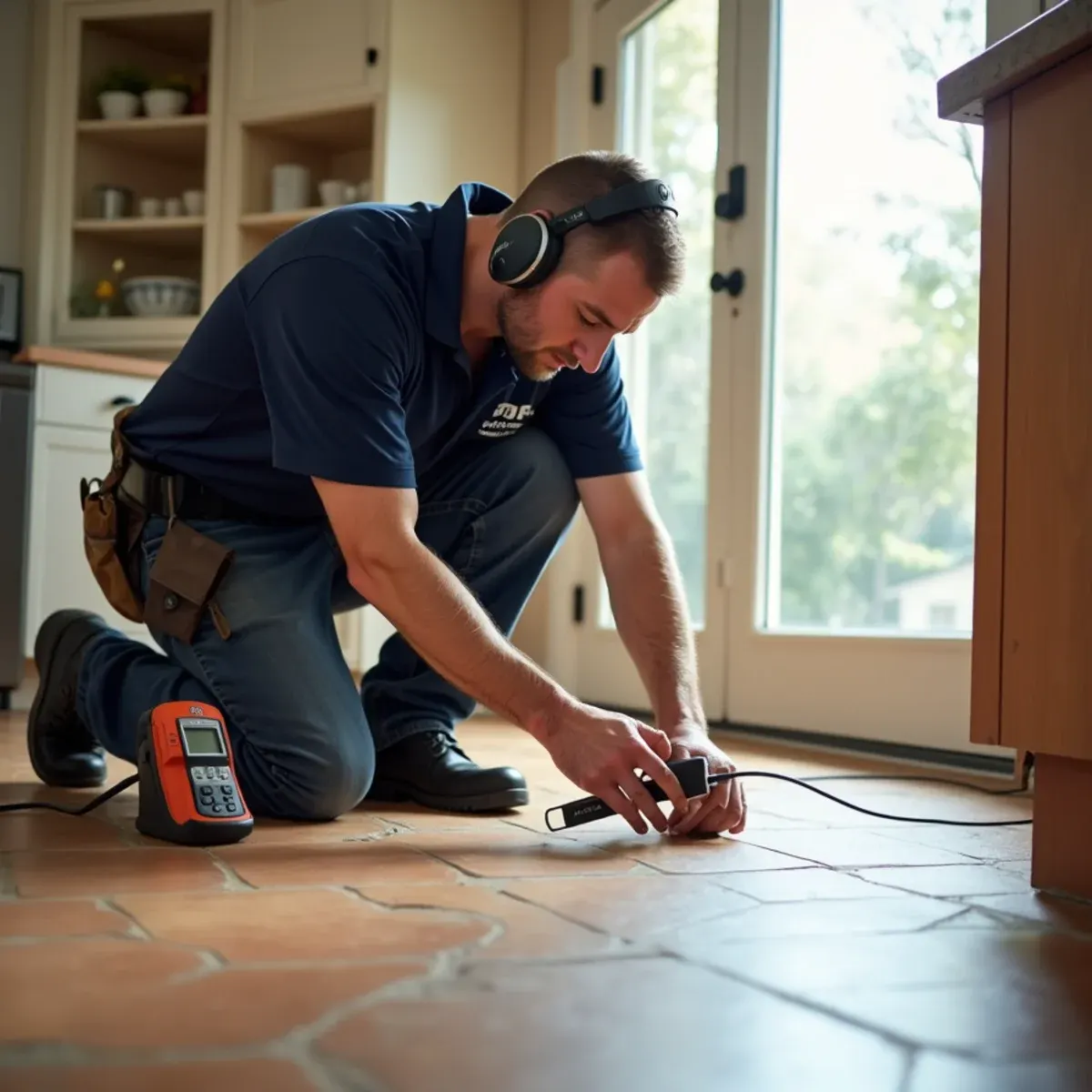
Acoustic listening equipment and line tracing locate a pressurized leak under concrete to within a small area, combined with thermal imaging and moisture mapping to confirm the extent. Precise location is what determines whether the repair is a two-foot opening or an exploratory search.
Fifteen Minutes, Once a Year
The single highest-value habit for anyone in a slab-on-grade Orange County home is the annual meter test. Every fixture off, fifteen minutes of watching a dial. It costs nothing and it is the only thing that reliably catches this failure while it is still small.
If your meter moved, or any of the other signs sound familiar, our inspection is free — thermal imaging, moisture mapping, and written findings, with no obligation attached.
Open 24 hours a day, 7 days a week — including holidays
On-site within 60 minutes of your confirmed emergency call anywhere in Cypress — or we credit $100 off your final invoice.