You have walked into a room and there is water on the floor. Your first instinct is to grab towels. Your second is to panic a little. Both are understandable and neither is the most useful thing you can do right now.
The next thirty minutes matter more than any other half hour in this process. Materials that get dried within the first day can almost always be saved. Materials that sit for two days usually cannot. And the documentation you capture before you start cleaning is the single largest factor in whether your insurance claim gets paid in full.
Here is the order to do things in.
Minute 1: Make Sure the Room Is Safe
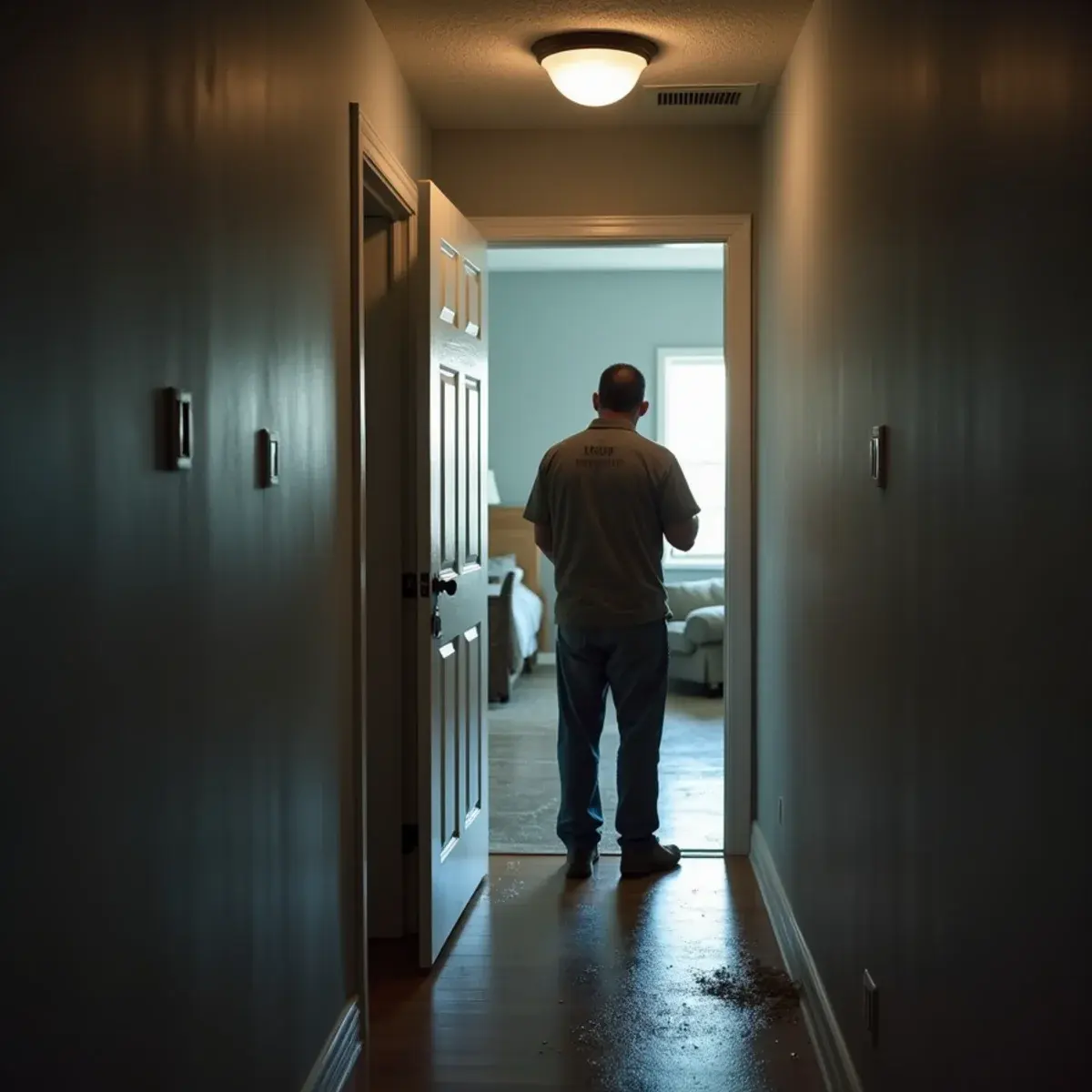
Before you step into standing water, look at what is around it. Water and electricity together are the way people get seriously hurt during a water loss, and it happens most often in the first minute when someone is not thinking about it.
If water has reached outlets, an appliance, a wall heater, or your electrical panel, do not enter the room. Shut off power to that area at the breaker if — and only if — the panel is somewhere dry and you can reach it without walking through water. If you cannot do that safely, leave the area, keep everyone out, and call an electrician or your utility.
- Do not walk into water that has reached outlets or an electrical panel.
- Do not touch a wet appliance that is still plugged in.
- If the ceiling is bulging or sagging, clear the room entirely — it is holding a lot of weight and can come down without warning.
- If you suspect the water came from a sewer line or a toilet, treat it as contaminated and stay out.
Minute 2: Stop the Water
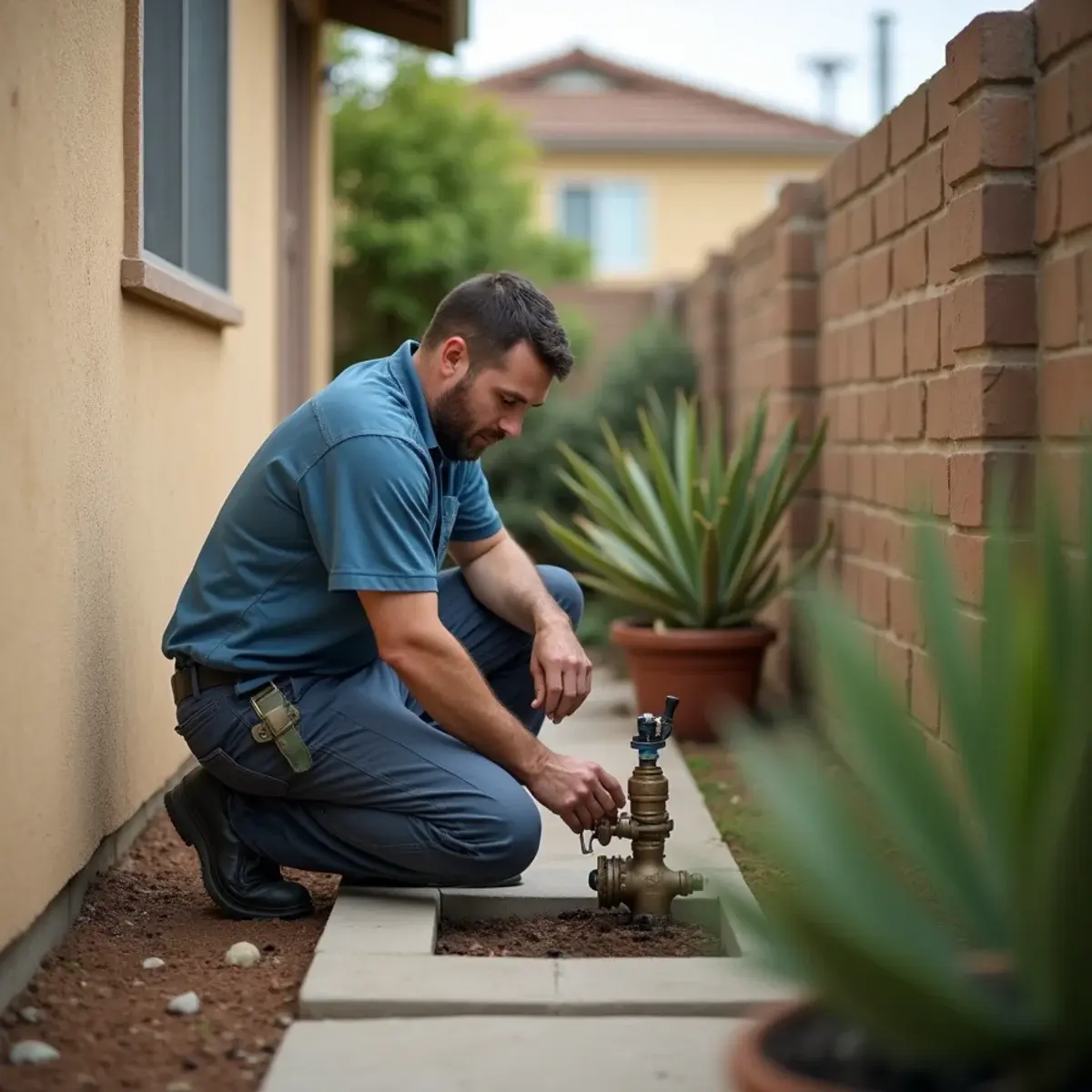
If the source is still running, everything else is secondary. Find the shutoff and close it.
For a fixture — a toilet, a sink, a washing machine — there is usually a local shutoff valve right at the connection. Turn it clockwise. For anything else, or if the local valve will not close, go to the main.
In most Cypress homes the main shutoff is at the front of the house near the hose bib, or in a box at the sidewalk near the meter. It is worth knowing where yours is before you need it — and worth confirming once a year that it actually turns, because valves that have not moved in twenty years frequently will not.
Minutes 3-8: Photograph Everything Before You Touch Anything
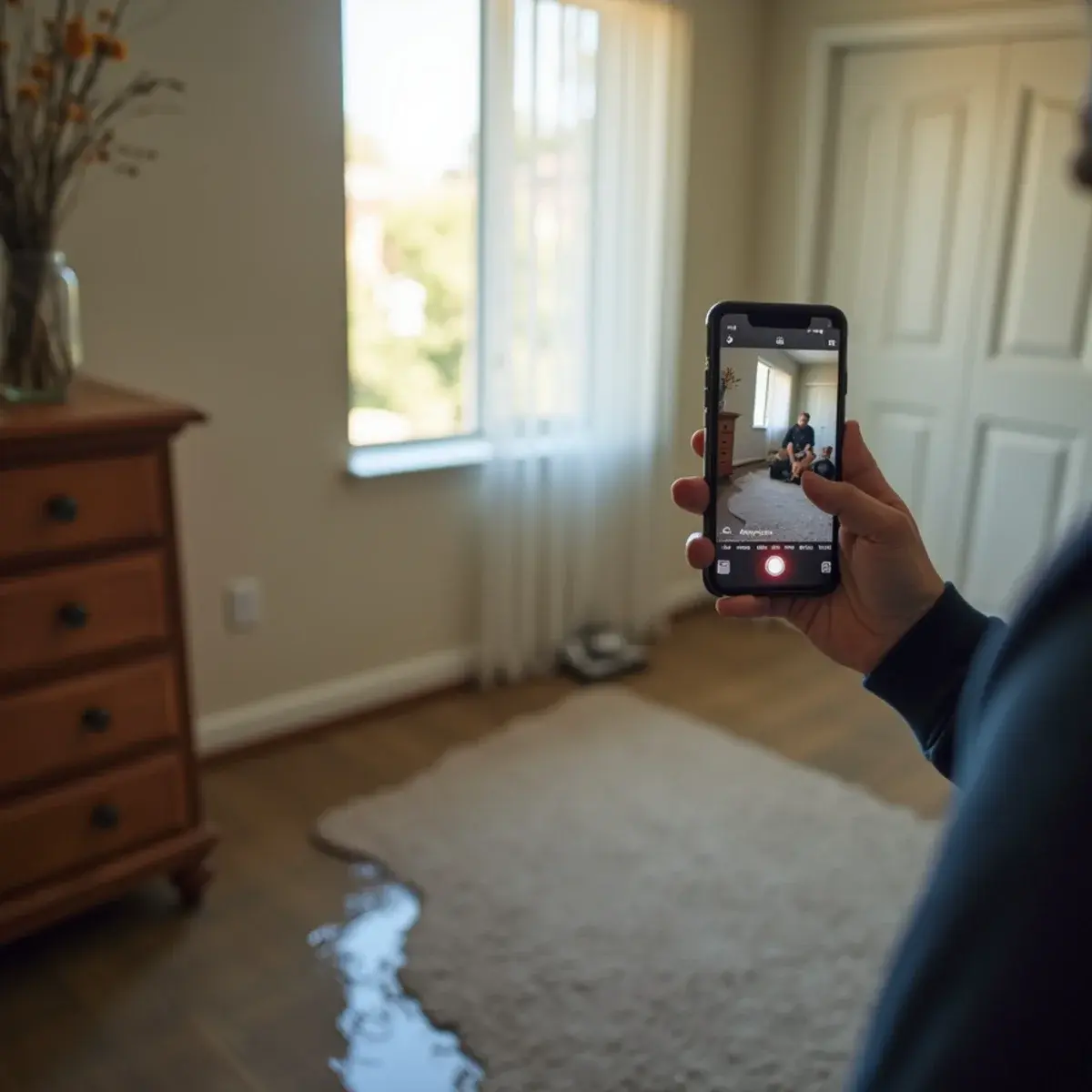
This is the step people skip, and it is the one that costs them the most money later.
Your insurance adjuster is going to make decisions about your claim based on evidence. If the only evidence is a dry room and your description of how bad it was, you are negotiating from a much weaker position than if you have thirty photographs and a two-minute video.
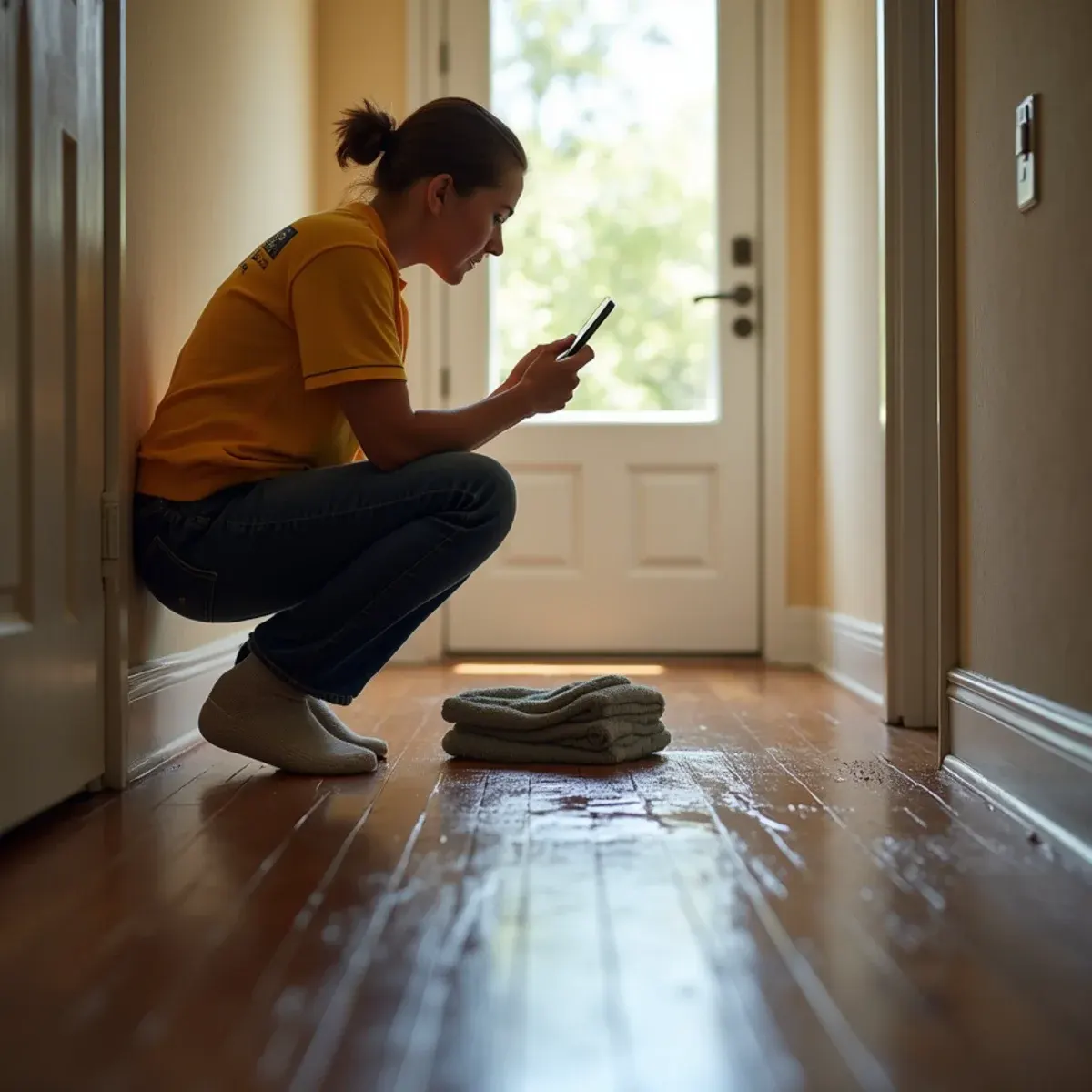
Walk every affected room with your phone. Take wide shots that establish the whole room and the water level. Take close-ups of the damage — the wet baseboard, the stained ceiling, the swollen cabinet, the source itself if you can see it. Get the contents: furniture legs sitting in water, a rug, boxes in a garage. Shoot a slow video narrating what you are seeing and when.
- Wide shots of every affected room showing the extent of the water
- Close-ups of damaged materials — baseboard, drywall, flooring, cabinetry
- The source of the leak if it is visible
- Every belonging that got wet, before you move it
- A short video walkthrough with the date said out loud
Minutes 8-12: Call for Professional Help
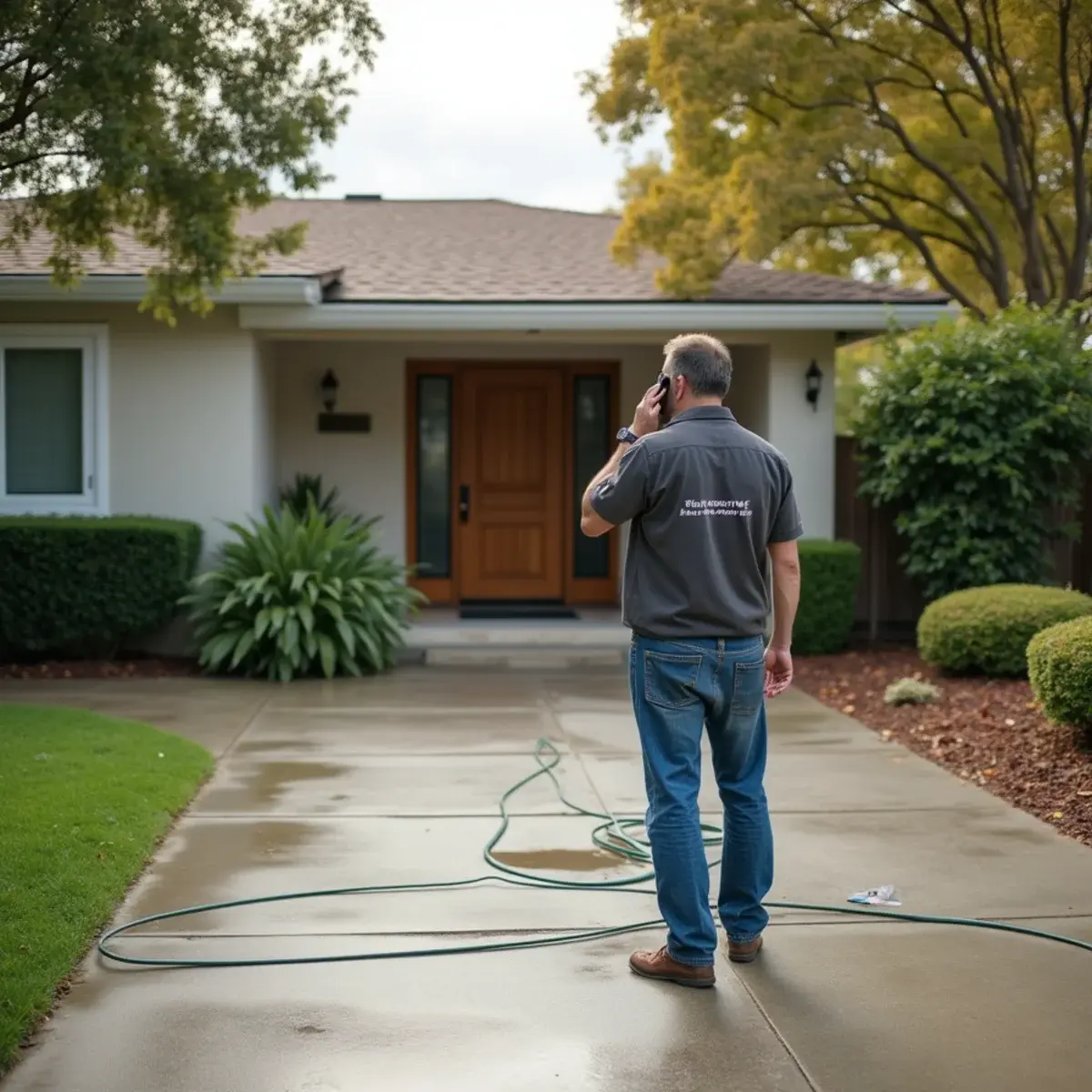
Call a restoration company before you call your insurance company. That order surprises people, but it is right for two reasons.
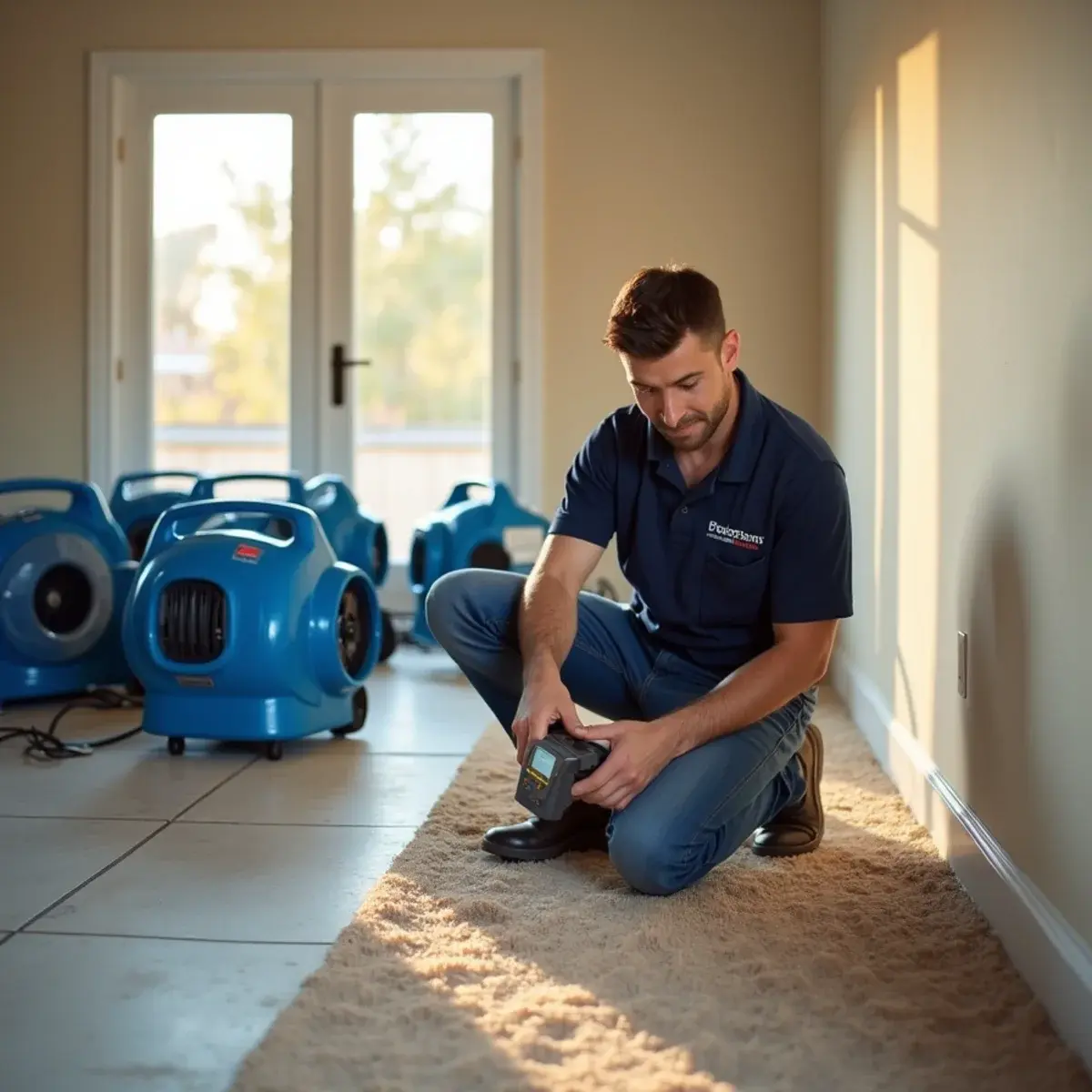
First, your policy requires you to mitigate further damage. Getting extraction started immediately is exactly that, and no carrier will penalize you for it. Second, a restoration company will document the loss to the standard adjusters expect — moisture readings, thermal images, a written scope — which makes the claim you file afterward considerably stronger than one filed from phone photos alone.
When you call, be ready to say: your address, what you think the source was, roughly how much water and how many rooms, whether the water is still running, and whether you suspect it came from a sewer or toilet. That last one changes what equipment gets loaded on the truck.
Minutes 12-25: Move What You Can, Safely
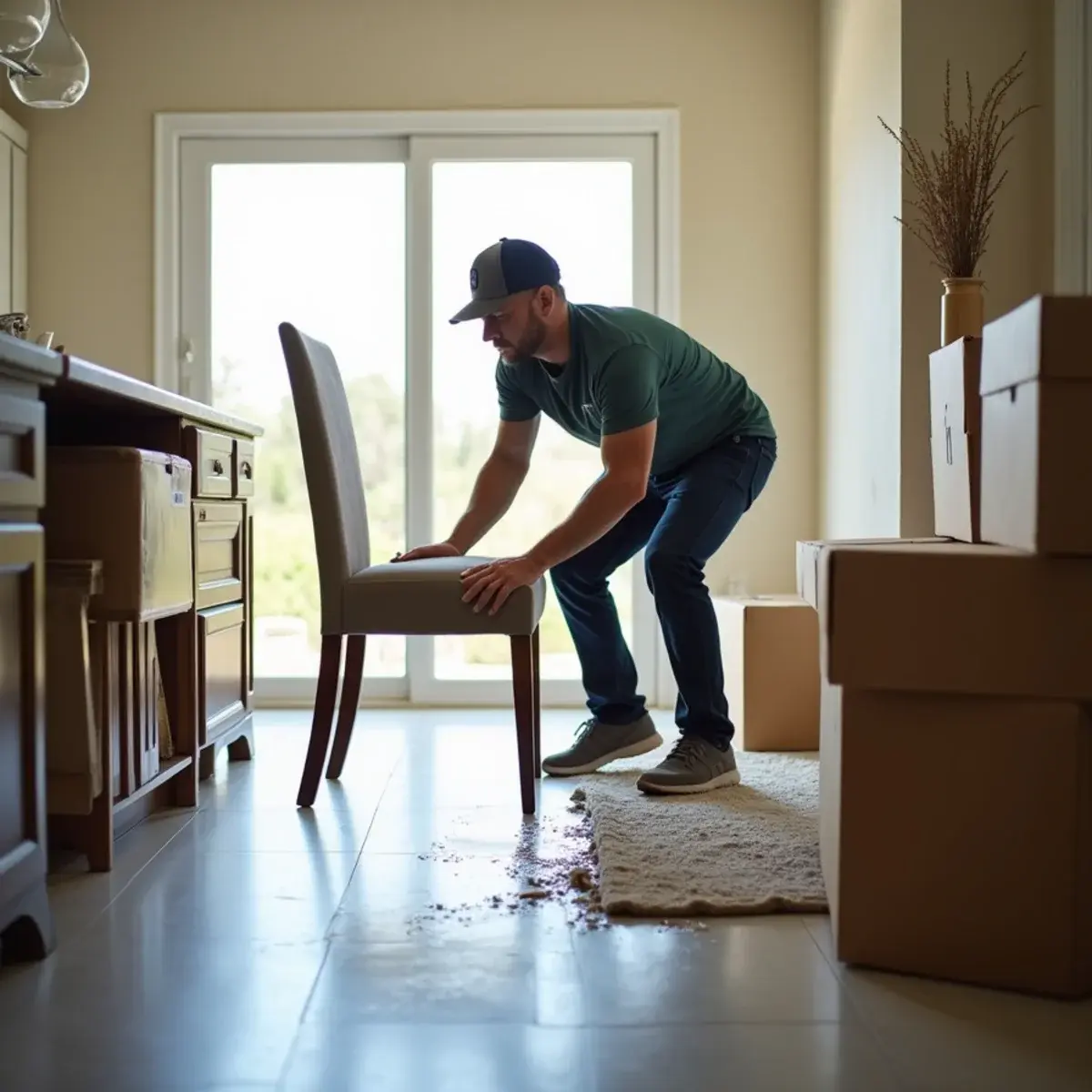
While you wait, there is genuinely useful work to do — and a few things that will make matters worse.
Do move things. Get electronics, documents, photographs, and anything irreplaceable to a dry room. Lift small furniture out of the water. For heavy furniture you cannot move, put aluminum foil or small wood blocks under the legs so the finish does not bleed into wet carpet.
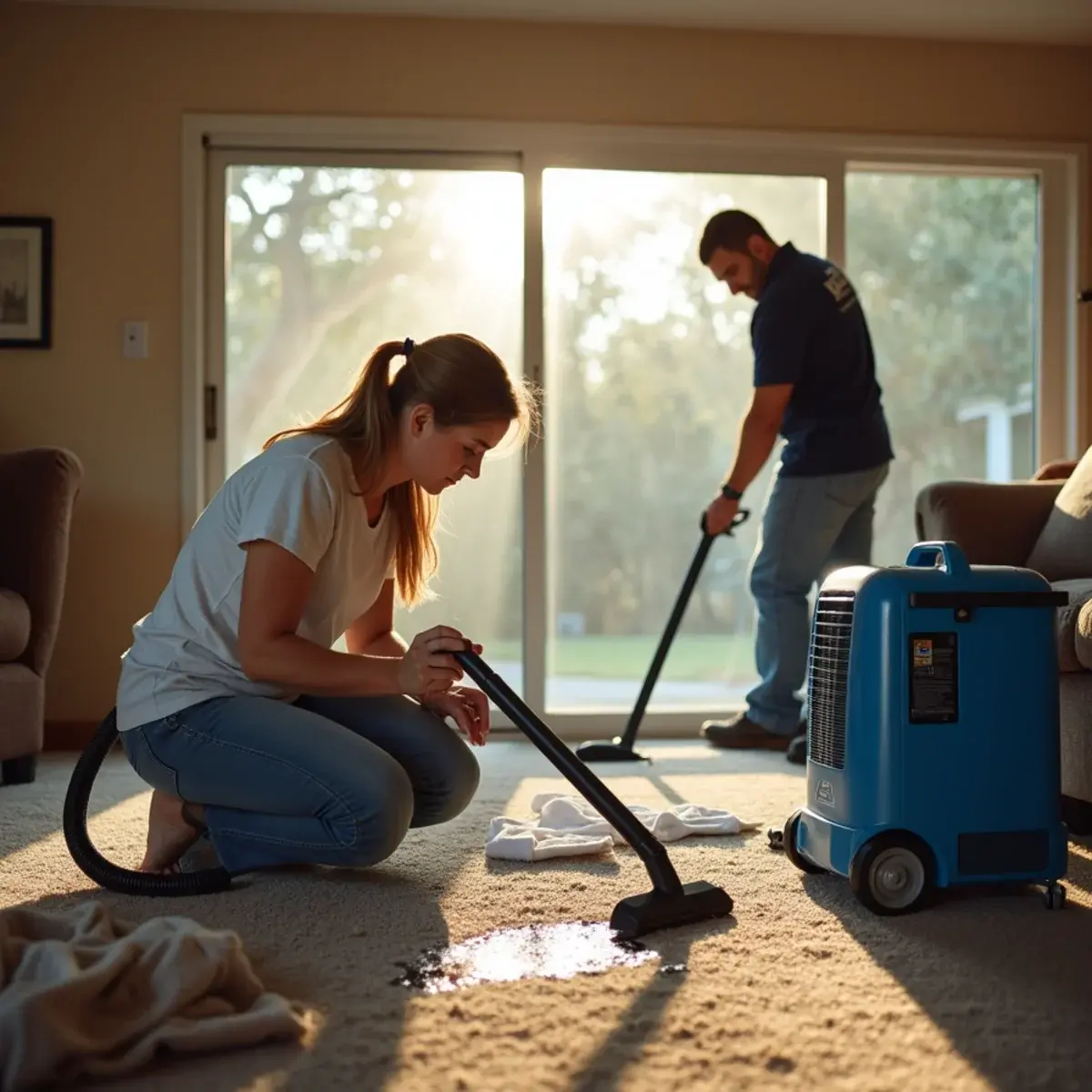
Do not try to extract the water yourself with a household or shop vacuum. That is a real electrocution risk and the machine cannot touch the water absorbed into the carpet pad anyway. Do not turn on ceiling fans or your HVAC system if water reached vents or electrical — you will move contamination and moisture through the whole house. And do not throw anything away, even things that look ruined; many items are restorable and the rest need to be documented for your claim.
- Move electronics, documents, and irreplaceable items to a dry room
- Put foil or wood blocks under furniture legs on wet carpet
- Open interior doors so air can move between rooms
- Do not use a household or shop vacuum on standing water
- Do not run ceiling fans or HVAC if water reached vents or electrical
- Do not discard anything before it is photographed
One Special Case: Wet Photographs and Documents
If photographs, documents, or books got wet, put them in your freezer. Right now, before anything else on the salvage list.
Wet paper and photographs are on roughly a 48-hour clock — after that, mold starts and photographic emulsion begins to fuse as it dries, which destroys the image permanently. Freezing stops both processes completely and buys you unlimited time.
Put items in freezer bags, separate photographs with wax paper where you can, and freeze them. They can be professionally vacuum freeze-dried later, and we have seen family photographs recovered months after a loss because someone spent ninety seconds on this step.
Minutes 25-30: Start Your Claim File

By now a crew is on the way and the immediate work is done. Use the last few minutes to set yourself up for the paperwork.
Start a note on your phone with the date and time you discovered the damage, what you think caused it, what you did, and who you called. Add to it every day. Log every phone call with your carrier — name, date, what was said. Keep every receipt for anything you buy or pay for related to the loss, including a hotel if you end up needing one.
That running log takes two minutes a day and it is the thing that resolves disputes six weeks later when someone's recollection differs from yours.
What We Wish Every Caller Had Done Before We Arrived
From our crews in the field
The single thing that changes an outcome more than anything else on this list is closing the main. Not because of the water already on the floor — that volume is fixed — but because an open valve keeps feeding the loss while you are photographing it. We have arrived at homes where the homeowner did everything else correctly and the supply was still running.
The second is restraint. People instinctively start pulling up carpet and cutting drywall before anyone has documented anything, and it costs them twice: once because the evidence of the loss at its worst is gone, and once because material that could have been dried in place has already been torn out. The urge to do something is strong. Photograph instead.
- Close the main first, photograph second, move belongings third — in that order
- Do not cut, pull, or tear anything before it has been documented
- A ceiling holding water is a collapse risk; do not puncture it yourself
- If the water touched anything electrical, stay out of the room entirely
Services Mentioned in This Guide
- Emergency Water Damage Restoration in Cypress, CA — A live person answers in three rings and a truck rolls in 30 minutes — any hour, any day, anywhere in Cypress.
- Water Extraction & Removal in Cypress, CA — Truck-mounted units and submersible pumps that move hundreds of gallons an hour — not a rented shop vac.
- Contents Restoration & Pack-Out in Cypress, CA — Photographs, furniture, documents and heirlooms inventoried, restored, and stored — not written off by default.
- Water Damage Restoration in Cypress, CA — Predominantly single-story slab-on-grade tract homes built between 1960 and 1980, with a newer band of construction from the 1990s onward on the west side.
- Water Damage Restoration in Los Alamitos, CA — A compact city of roughly 11,500 with housing concentrated in the 1950s and 1960s, plus a meaningful stock of small commercial and medical buildings along Katella.
Frequently Asked Questions
The restoration company. Your policy requires you to prevent further damage, so starting mitigation immediately is what you are supposed to do. It also means the claim you file afterward is backed by professional documentation — moisture readings and a written scope — rather than just phone photos.
You can remove surface water, but that is the visible part of the problem. What matters is the moisture absorbed into drywall, subfloor, and carpet pad, and that only shows up on a meter. A free moisture inspection takes twenty minutes and tells you definitively whether you are actually done.
Roughly 24 to 48 hours under typical Southern California indoor conditions. That window is why response speed matters so much — materials dried inside it can usually be saved, and materials that sit past it usually have to be removed.
The Short Version
Make the room safe. Stop the water. Photograph everything before you touch it. Call for help. Move what you can without using a vacuum on standing water. Freeze wet photographs. Start a log.
If you are reading this while water is on your floor in Cypress or anywhere in north Orange County, stop reading and call. We answer 24 hours a day and there is no charge for the assessment.
Open 24 hours a day, 7 days a week — including holidays
On-site within 60 minutes of your confirmed emergency call anywhere in Cypress — or we credit $100 off your final invoice.