It is the first question almost everybody asks, and the honest answer is that water damage restoration is three separate phases with three very different timelines. Bundling them into one number is how people end up frustrated.
Extraction takes hours. Structural drying takes days. Reconstruction takes weeks. A typical single-room clean-water loss runs about three to five days of drying plus one to two weeks of repairs. A large or contaminated loss can run six weeks or more end to end.
Here is what happens in each phase and what makes it take longer.
Phase 1: Emergency Response and Extraction — Hours
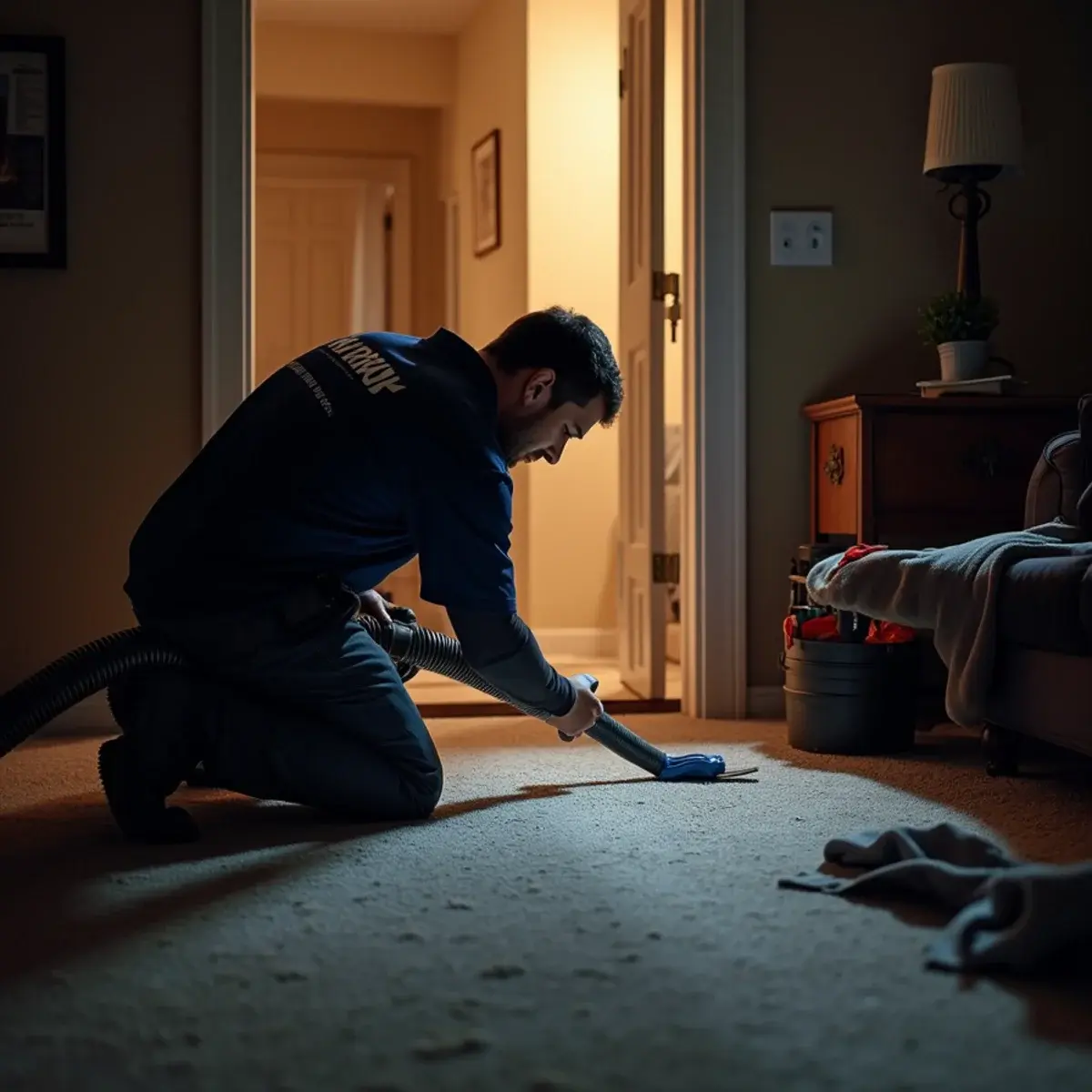
This starts the moment you call and ends when the standing water is out and the drying equipment is running.
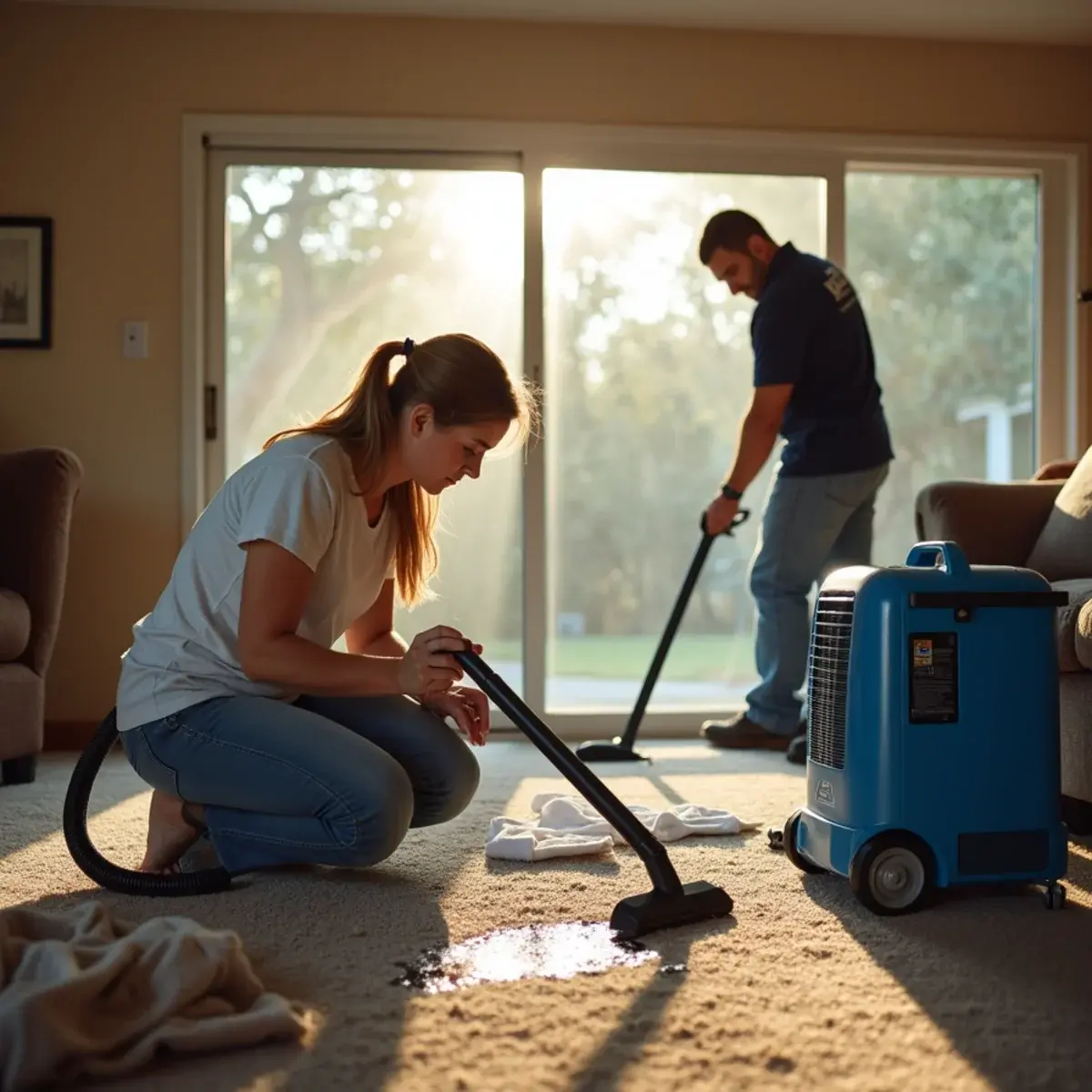
A crew should be on-site within an hour. Assessment and moisture mapping takes twenty to forty minutes. Extraction for a typical single-room residential loss runs one to three hours. Setting the drying chamber takes another hour. So from the call to running equipment is usually three to five hours total.
What stretches it: contaminated water, which requires containment setup before anything else; multiple rooms; difficult access like a second-floor unit with a long hose run; and the need to remove saturated carpet pad, wet insulation, or unsalvageable drywall before drying can start.
Phase 2: Structural Drying — Three to Seven Days, Sometimes More
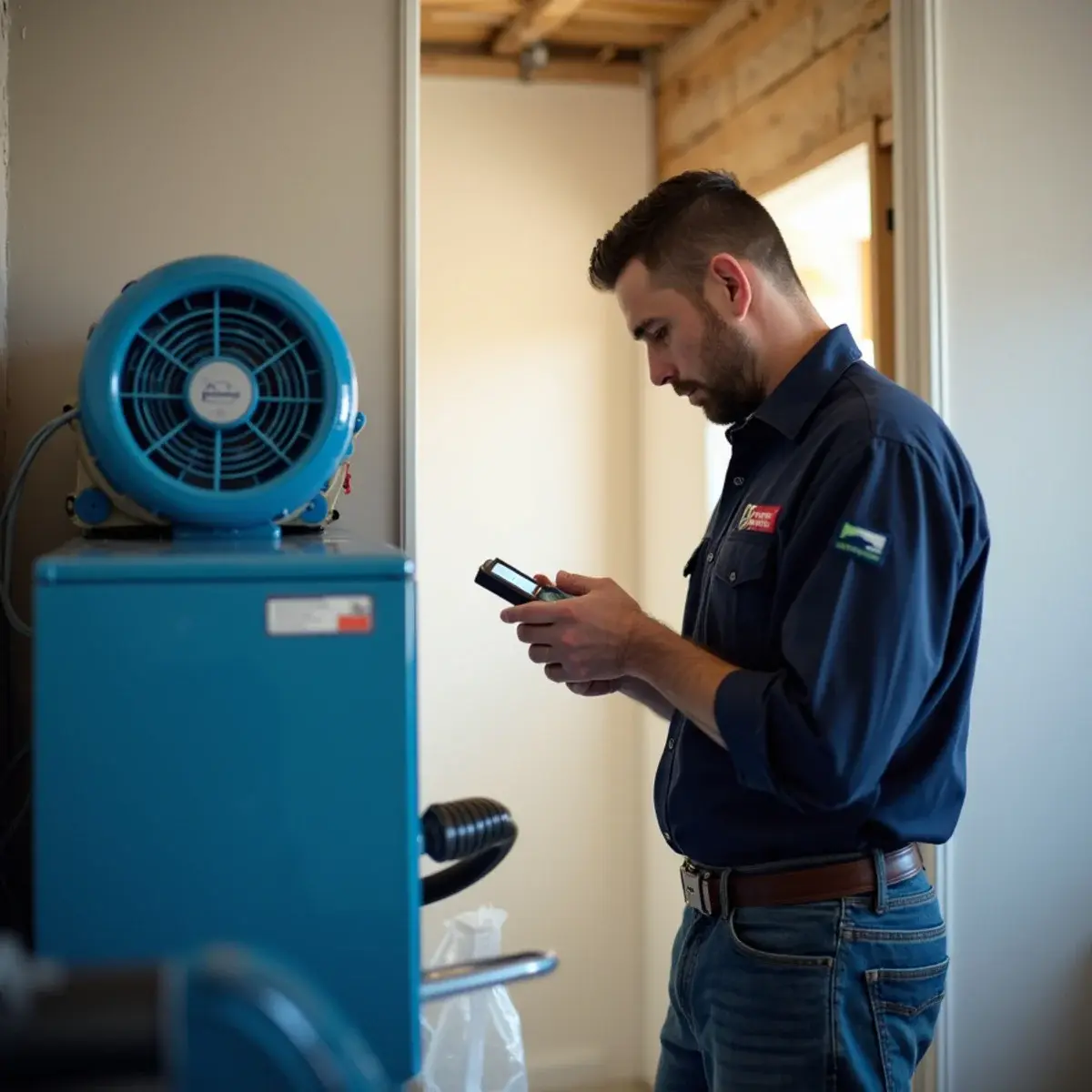
This is the phase people underestimate, and it is where most of the frustration happens — because the house looks fine and there are loud machines in it.
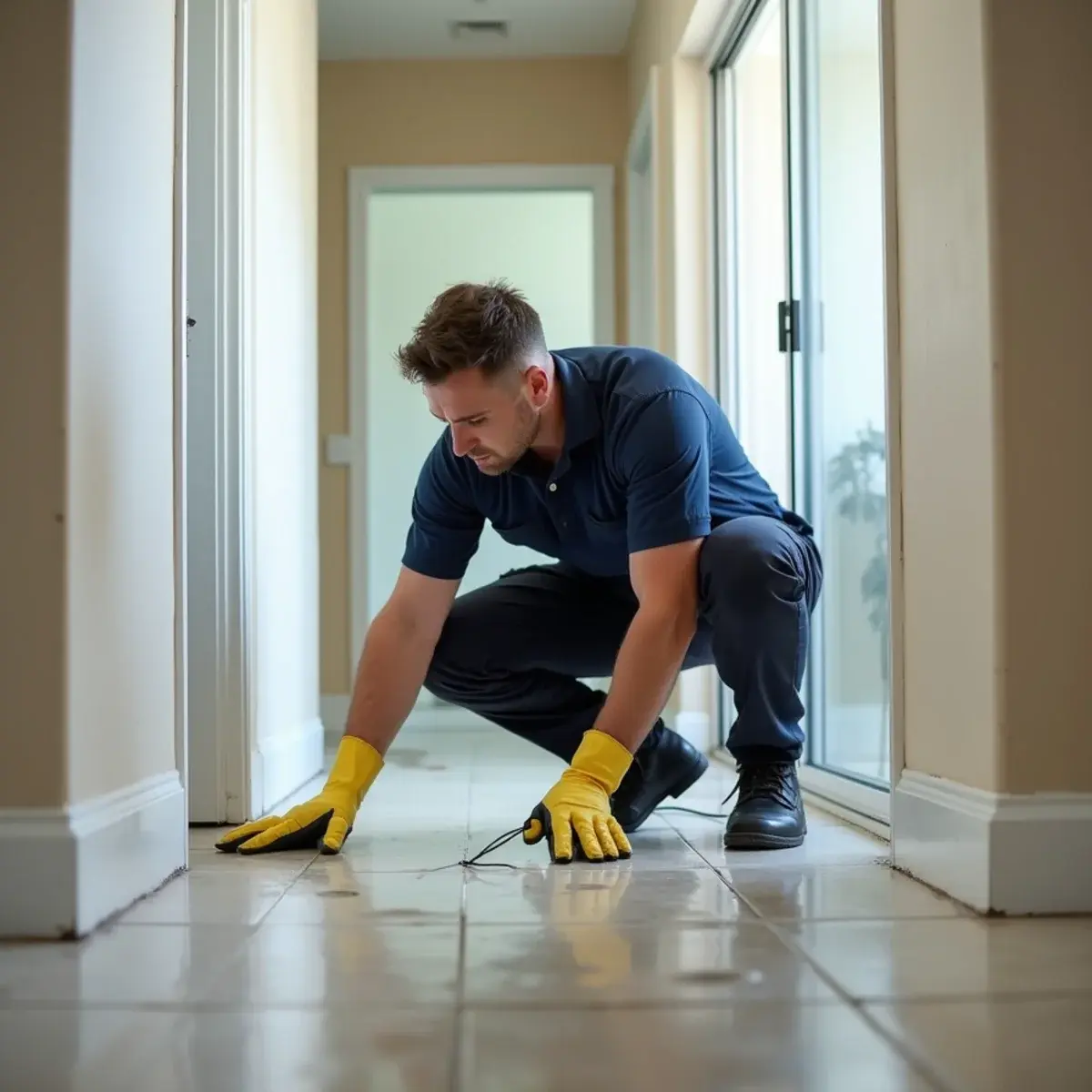
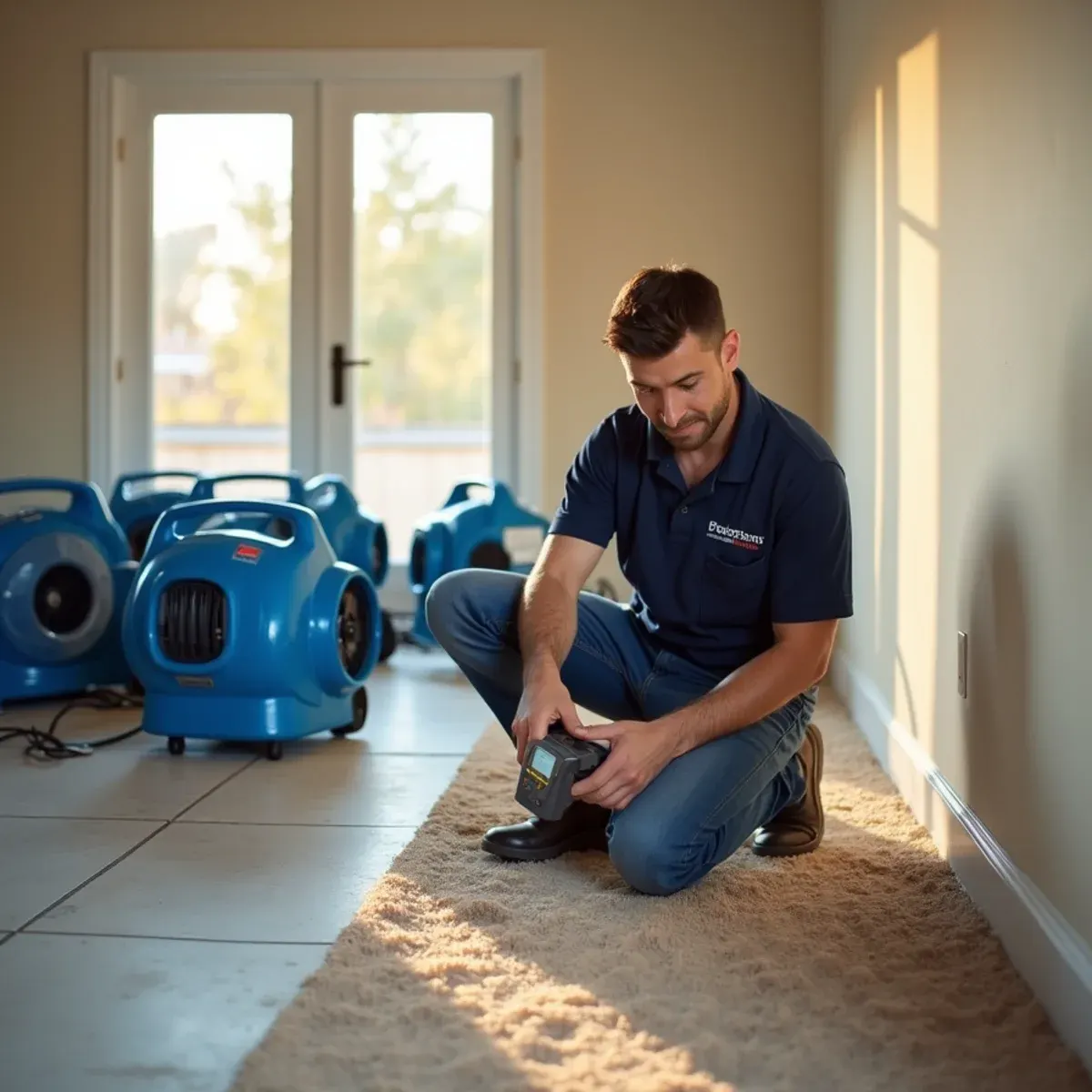
Drying is not finished when a surface feels dry. It is finished when every affected material reaches a documented moisture content matching unaffected material of the same type elsewhere in the home. That is a measured endpoint read daily, not a schedule.
Typical durations by scenario:
- Clean water on drywall and carpet, caught quickly: 3 to 4 days
- Water into cabinetry and subfloor: 4 to 6 days
- Hardwood flooring under a mat drying system: 5 to 10 days
- Concrete slab after a slab leak: 7 to 14 days
- Lath and plaster in a pre-war home: 7 to 14 days
- Category 3 water requiring removal and disinfection first: add 1 to 2 days
Why Drying Cannot Be Rushed
The temptation to pull equipment early is real, especially by day four when the noise is wearing on everyone. It is also the most expensive shortcut in this business.
Material that is pulled at 80% dry looks and feels finished. Four to six weeks later it produces a musty odor, lifting drywall tape, or visible growth — and now you are paying for remediation on top of a job you already paid for, plus reconstruction of a wall that was already repaired.
The other thing that extends drying is unplugging equipment overnight. It is understandable — the machines are loud and the rooms are warm. But drying is a continuous process, and every hour off adds more than an hour to the total. If the noise is genuinely unmanageable, ask about reconfiguring the chamber rather than switching things off.
Phase 3: Reconstruction — One to Six Weeks
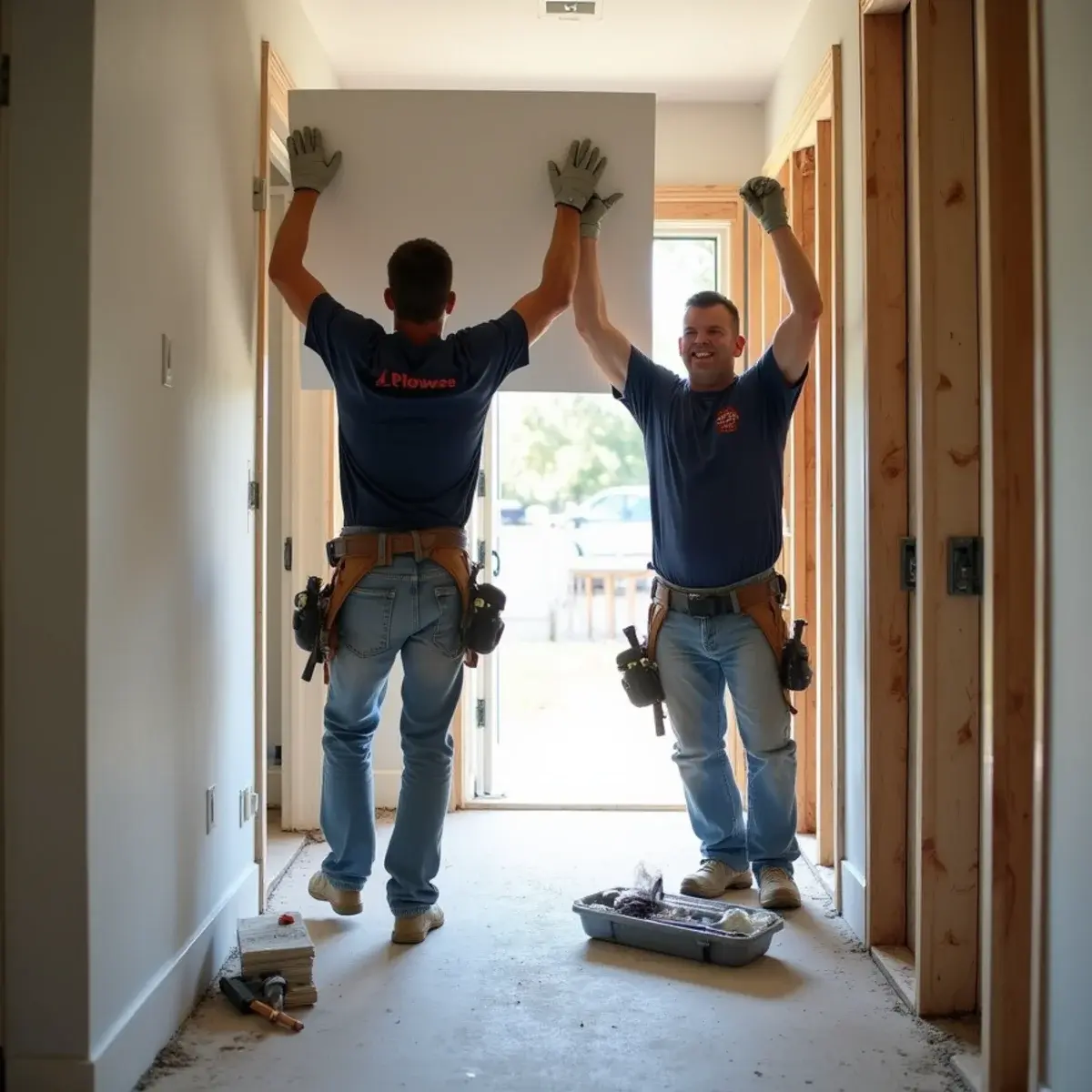
Reconstruction starts after drying is verified complete and takes the longest of the three phases by a wide margin.
A single room with drywall, texture, paint, and baseboard is typically one to two weeks. A kitchen with cabinetry and flooring runs three to six weeks. Anything requiring permits and inspections adds time that is largely outside anyone's control — inspection scheduling is what it is.
The two things that most often stretch this phase are material availability and insurance approval. A discontinued flooring product can add weeks while a match is sourced or a larger replacement area is negotiated. And reconstruction cannot start until you and the carrier have agreed on the scope, which is why we write the repair estimate while drying is still running rather than waiting.
Realistic End-to-End Timelines
Putting the phases together, here is what to actually expect:
- Small clean-water loss, one room, minimal removal: about 1 to 2 weeks total
- Moderate loss across two or three rooms with drywall and flooring replacement: 3 to 4 weeks
- Kitchen or bathroom loss with cabinetry: 4 to 6 weeks
- Category 3 sewage loss with demolition and rebuild: 5 to 8 weeks
- Slab leak with concrete drying and flooring replacement: 4 to 7 weeks
- Major loss requiring permits and structural work: 2 to 4 months
What You Can Do to Keep It Moving
Some of the timeline is genuinely in your hands.
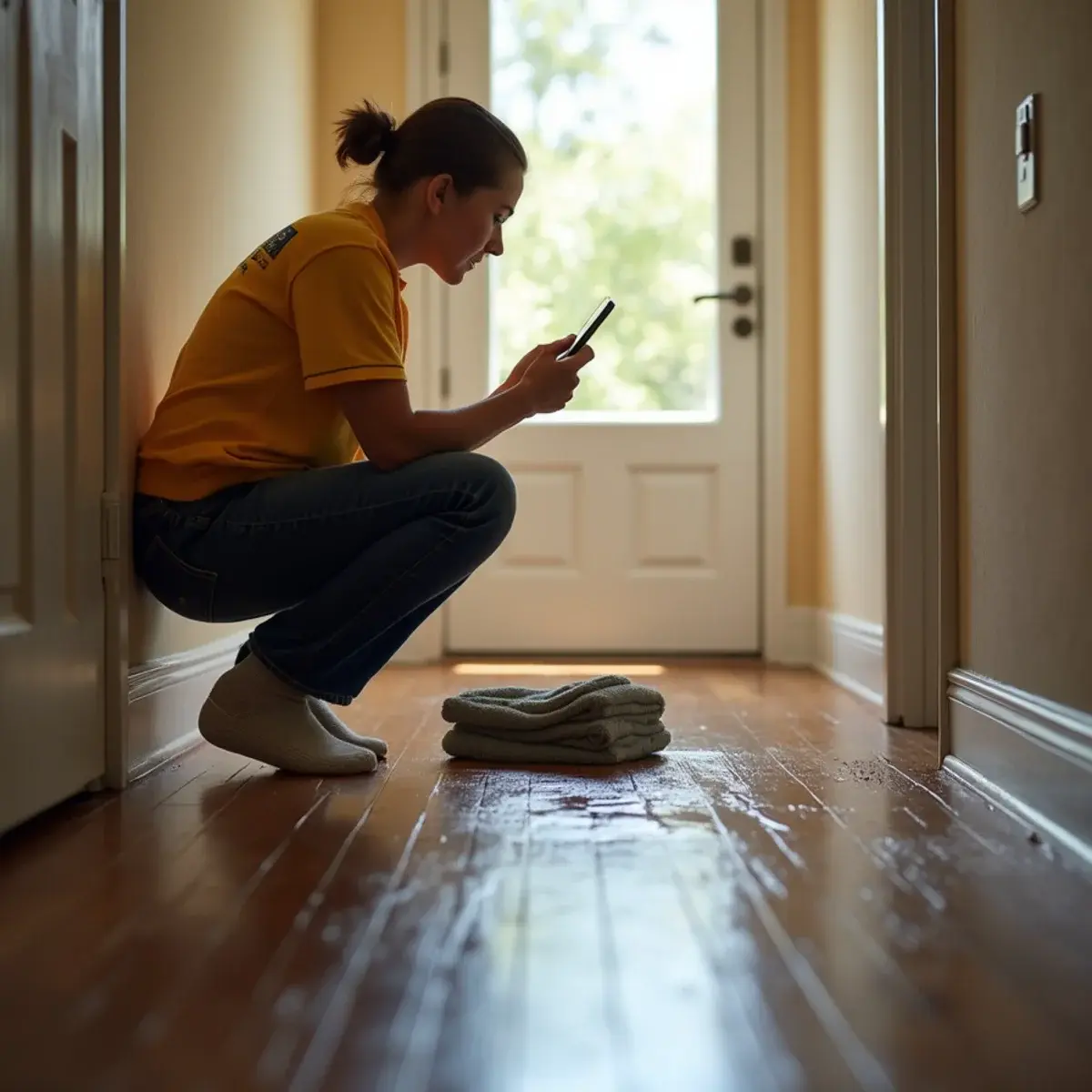
Call the moment you find the damage rather than the next morning — that alone regularly removes days from the drying phase and can be the difference between drying materials and replacing them. Leave the equipment running. Make decisions on materials promptly, since a rebuild frequently sits waiting on a flooring selection. Respond quickly to your adjuster. And be reachable during the drying phase so the daily monitoring visit does not turn into a rescheduling exercise.
The other thing that helps: hire one contractor for both mitigation and reconstruction. Handing off between a drying company and a general contractor routinely adds one to two weeks of dead time while the second company re-scopes work the first one already documented.
Why Timelines Slip, and What Actually Controls Them
From our crews in the field
The drying phase is the one people expect to be able to rush, and it is the one that cannot be. Materials release moisture at a rate set by their density and the vapor pressure around them. Adding fans past the calculated number does not speed that up — past a point it just moves air across a surface that has already given up everything it can at that airflow.
What genuinely does move a timeline is the decision made in the first hour. A loss caught the same day and extracted properly usually dries in three days. The same loss found on day three often needs demolition, which turns a drying job into a reconstruction job and adds weeks. The variable is not our speed; it is how long the water sat.
The other honest answer is that the rebuild is where schedules slip, and usually not because of the contractor. Waiting on an adjuster's approval, on a flooring lot to come in, or on a cabinet that has to be ordered are the delays we see most. We can tell you the drying date with real confidence and the completion date only as a range.
- Drying: three to five days for most losses, seven or more for saturated hardwood or slab
- Same-day response usually means drying in place; a three-day delay usually means demolition
- Reconstruction is where schedules slip — materials and approvals, not labour
- Ask for the drying end date and the rebuild range separately; they are different promises
Services Mentioned in This Guide
- Structural Drying & Dehumidification in Cypress, CA — LGR dehumidifiers, calculated air-mover placement, and a daily moisture log that proves the structure actually dried.
- Emergency Water Damage Restoration in Cypress, CA — A live person answers in three rings and a truck rolls in 30 minutes — any hour, any day, anywhere in Cypress.
- Water Damage Repair & Reconstruction in Cypress, CA — The same team that dried it puts it back — drywall, texture match, flooring, cabinetry and paint, under one contract.
- Water Damage Restoration in Cypress, CA — Predominantly single-story slab-on-grade tract homes built between 1960 and 1980, with a newer band of construction from the 1990s onward on the west side.
- Water Damage Restoration in Cerritos, CA — A carefully master-planned city developed largely between 1965 and 1985, with well-maintained two-story homes and unusually consistent construction quality.
Frequently Asked Questions
Because surfaces dry long before the material behind them does. Drywall, framing, subfloor, and concrete hold moisture that no touch test detects. Equipment comes out when daily meter readings show every material has reached the dry standard — a measured endpoint, not a judgment call.
Not meaningfully. Consumer fans move air but do nothing about humidity, so the moisture just relocates to another part of the house. Effective drying requires matched dehumidification capacity and calculated air-mover placement, plus daily measurement to know when it is done.
Usually you can stay throughout, with the affected rooms unusable during drying. Full normality — furniture back, floors down, everything finished — tracks the reconstruction phase, so one to two weeks for a small loss and four to six for a kitchen.
Speed Where It Matters, Patience Where It Counts
The phases you want to be fast are the ones at the start: calling immediately, extracting quickly, getting equipment running the same day. The phase you want to be patient with is drying, because that is where shortcuts create problems that show up months later.
If you are dealing with a loss in Cypress or the surrounding cities right now, call us. We will give you a realistic timeline after the first assessment and update it every day rather than telling you what you want to hear.
Open 24 hours a day, 7 days a week — including holidays
On-site within 60 minutes of your confirmed emergency call anywhere in Cypress — or we credit $100 off your final invoice.