
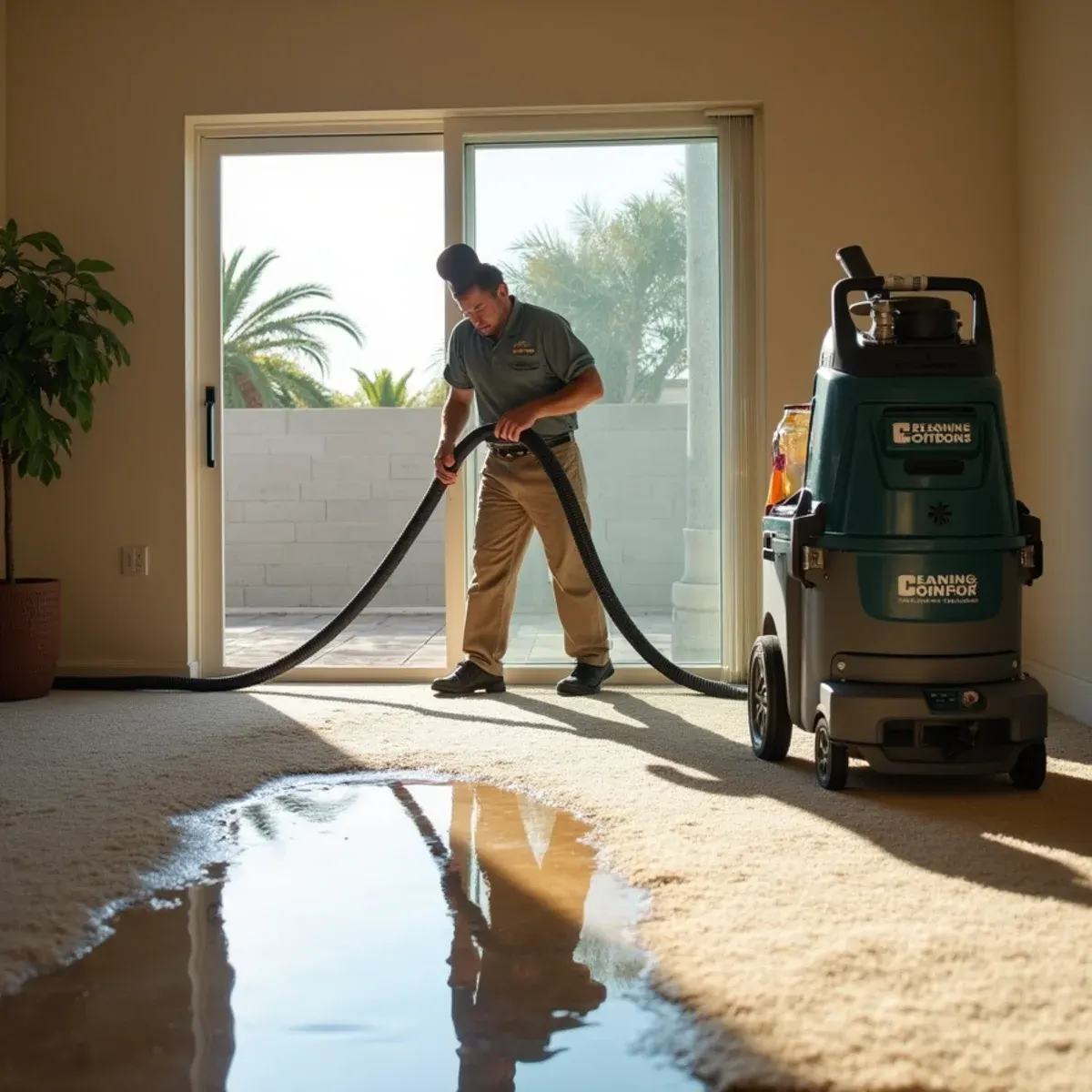
In the Colony District, the carpet is usually not what keeps our equipment in your house. Those homes are lath-and-plaster, and plaster holds several times the water drywall does and releases it far more slowly. So the carpet meters dry on day three while the walls are still climbing down, which surprises homeowners who expected us gone by then. The right move there is to get the pad out early, get airflow at the base of the walls, and accept that the wall assembly rather than the flooring sets the length of the job.
Cross town and it's a different service entirely. The vast West Anaheim postwar tract is plain slab, and carpet there behaves the way it does in Cypress: extract with weight, float over air movers on clean water caught early, pull pad when the category or the clock says so. Anaheim Hills is multi-level with engineered drainage, where an upstairs failure takes the stairs and lands two floors down. The Resort District hospitality properties are almost entirely glue-down commercial carpet with no pad in the equation at all.
What Anaheim Changes About Carpet Drying
1Plaster keeps the room wet after carpet dries
Colony District walls act like a reservoir. Lath-and-plaster absorbs slowly, holds a great deal, and gives it back over days once the surrounding air is dry. That's why we don't pull equipment the moment the carpet meters out. If we did, moisture in the plaster would migrate back down into new pad and you'd have an odor problem inside a month.
2Anaheim Hills stairs move water between levels
Multi-level hillside homes give water a path the flat tracts don't. A second-floor failure runs the stair carpet, soaks the pad on every tread and arrives at a lower level with the source nowhere in sight. We meter the stairs first on Hills calls, because the flight is both the fastest route down and the slowest thing in the house to dry.
3West Anaheim is straightforward, and we'll say so
Nothing exotic happens in the postwar West Anaheim tracts. Slab, pad, wall-to-wall carpet, and a save-or-replace decision that comes down to category and elapsed hours. If your house is one of those, expect a normal three to five day dry with a real chance of keeping the carpet, provided the water was clean and you called the same day.
How the Work Runs
The method is the same one we use on every carpet drying job, documented to the IICRC S500:2025 standard. Here it is in short — the full carpet water damage & drying process explains each stage in detail.
- Map the real wet perimeter
- Identify the pad and the category
- Weighted extraction, pass after pass
- Float the carpet or pull the pad
- Dry the slab or subfloor
- New pad, re-stretch, reinstall
The Anaheim Background Worth Knowing
The Anaheim Colony Historic District and the older streets around downtown contain homes built from the early 1900s through the 1930s, and they are constructed differently in ways that matter enormously during a water loss.
There is more on the housing stock, drainage and plumbing history of this city on our water damage restoration in Anaheim page.
Anaheim at a glance
- Dominant construction era
- 1900–2000
- Foundation type
- mixed on grade
- Supply piping found here
- galvanized steel, under-slab copper, original early-century piping in the Colony
- Drain line materials
- cast iron, clay
- Terrain and water table
- hillside-mixed, moderate water table
- Most common local failure
- lath-and-plaster assemblies that hold several times the water drywall does and release it far more slowly
- Highest-value local prevention
- acting immediately on any plaster-wall loss, because wet plaster keys soften and release from the lath
What It Costs in Anaheim
We do not quote a number over the phone before seeing the property — anyone who does is guessing. The variables that actually move the price on a carpet drying job are whether the pad is salvageable, square footage and equipment days, what sits under the pad, and they are broken down in full on the carpet water damage & drying page. The assessment and the written estimate are free anywhere in Anaheim, day or night, with no obligation.
Carpet Drying Questions from Anaheim Homeowners
Because the plaster hasn't caught up. Lath-and-plaster walls take on far more water than drywall and release it much more slowly, so a room can hold a wet wall assembly long after the flooring meters dry. If we pulled equipment at that point, the moisture would move back down into the pad and the carpet you just saved would sour. We show you the wall readings each day so you can watch the number come down rather than take our word for it.
Frequently it can be saved. The deciding factors are water category, how many hours it sat, and whether the backing has delaminated. Clean supply-line water caught within a day, on carpet that was in decent shape beforehand, usually means we replace the pad and keep the carpet. Anything past Category 1, or carpet that has come apart at the backing, is a different answer. We take the readings and check the backing before saying either way.
No, but it does more often than not. On a clean-water loss we reach quickly, we can float the carpet, push dry air into the pad space, and dry it in place. Moisture-barrier pad, dense slab rubber, and anything that sat overnight in gray water comes out. S500:2025 treats pad as non-restorable once contamination is involved, and field experience supports that. It is inexpensive material against a real risk.
Yes, and we approach them differently. Lath and plaster holds much more water than drywall and dries far more slowly, so it needs more equipment and considerably more patience — but it can usually be saved in place, and original plaster is not something a repair can replace.