
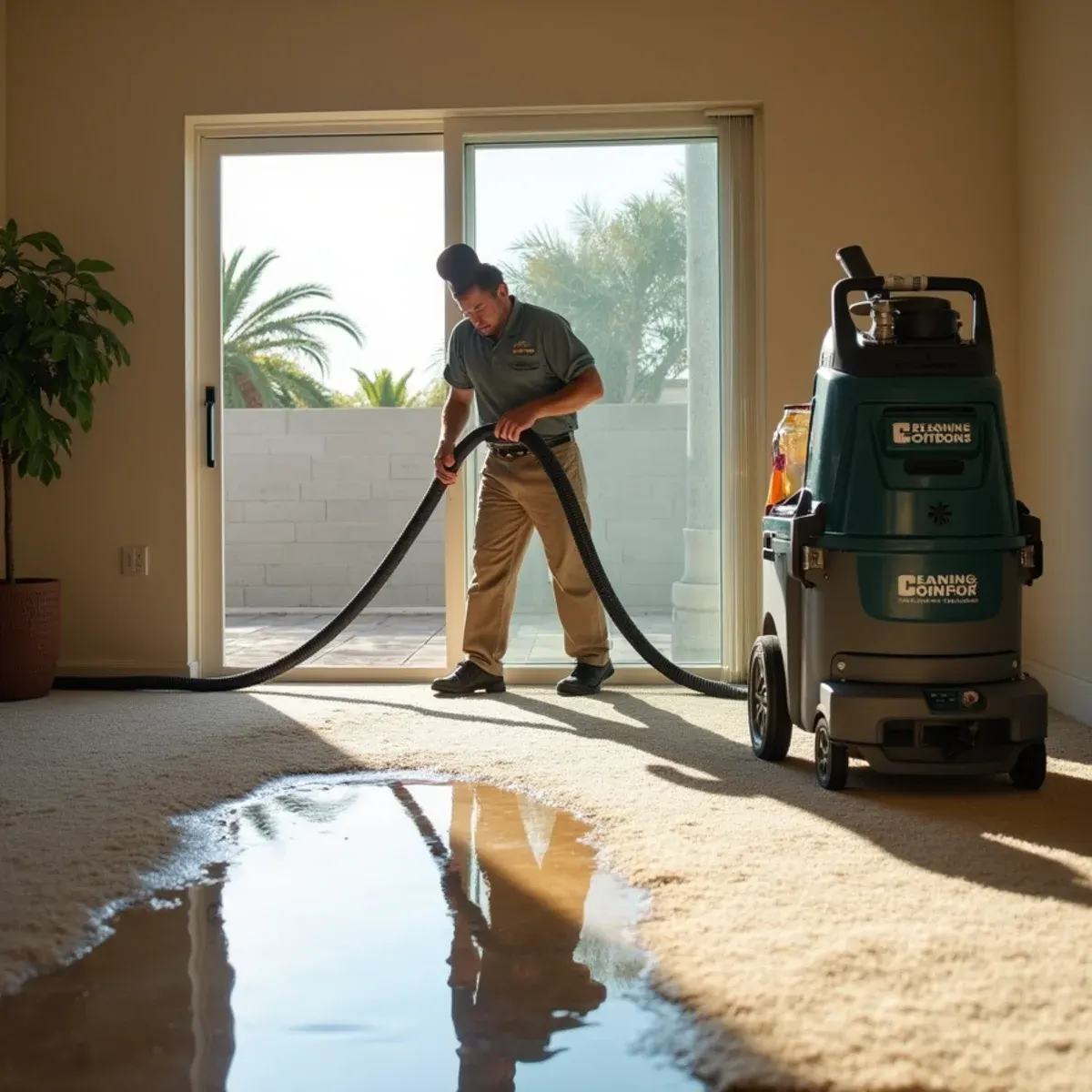
Some of the carpet we look at in Bellflower is not saveable, and it is better to hear that in the first ten minutes than on day four. The reason is the age of what runs underground. Houses here filled in fast after the war on old dairy and orchard land, and in places the original systems are pushing eighty years, older than nearly anything we work on in Orange County. Galvanized supply and cast-iron laterals reach the end of their lives inside the same decade, and a lateral failure is category three.
The other Bellflower factor is density. Small houses on small lots, plus a lot of multi-family added since, means water rarely stays in one household. A backed-up lateral in a duplex or fourplex pushes across the demising wall through the plate line, and the neighbor's carpet becomes part of the same loss even though nothing in their unit failed. We meter both sides on the first visit and document it that way, because splitting the claim later is much harder than describing it correctly at the start.
What Bellflower Changes About Carpet Drying
1Cast-iron laterals put category three under carpet
When a 1940s or 1950s cast-iron lateral gives up, what surfaces is sewage, and sewage-contaminated carpet and pad both go out. There is no drying protocol that makes that carpet safe again, and anyone offering one is selling you equipment time. We remove, clean and disinfect the slab, dry the structure, and document the removal for the carrier.
2Galvanized and cast iron age together
The two systems went in at the same time and are failing in the same window, which is why Bellflower homes often see a supply pinhole and a drain problem within a couple of years of each other. It changes our advice on carpet. On a house at that stage, we will say plainly when replacing carpet now beats drying it twice.
3Multi-family means two units, one loss
Water crosses a shared wall along the plate long before it shows on the neighbor's floor. In the duplexes and fourplexes added around Bellflower's older tracts, we ask for access to the adjoining unit on the same trip. Drying one side while the other stays wet leaves moisture in the shared cavity, and both carpets come back damp at the base.
How the Work Runs
The method is the same one we use on every carpet drying job, documented to the IICRC S500:2025 standard. Here it is in short — the full carpet water damage & drying process explains each stage in detail.
- Map the real wet perimeter
- Identify the pad and the category
- Weighted extraction, pass after pass
- Float the carpet or pull the pad
- Dry the slab or subfloor
- New pad, re-stretch, reinstall
The Bellflower Background Worth Knowing
Galvanized steel was the standard supply pipe when Bellflower was being built, and it fails from the inside out. The zinc lining wears through, the steel underneath corrodes, and scale builds on the interior wall until the pipe is a fraction of its original diameter. Narrower pipe means faster, more turbulent water, which chews at elbows and threaded fittings until one of them lets go. Hot lines corrode faster than cold, which is why hot water pressure is usually the first thing to drop. Eighty years is well past any service life anyone intended when this was installed.
There is more on the housing stock, drainage and plumbing history of this city on our water damage restoration in Bellflower page.
Bellflower at a glance
- Dominant construction era
- 1940–1960
- Foundation type
- slab on grade
- Supply piping found here
- original galvanized steel, early copper
- Drain line materials
- cast iron
- Terrain and water table
- flat, moderate water table
- Most common local failure
- original galvanized supply lines and cast-iron laterals failing together in the same decade
- Highest-value local prevention
- scoping the sewer lateral, which on a house this age has usually never been looked at
What It Costs in Bellflower
We do not quote a number over the phone before seeing the property — anyone who does is guessing. The variables that actually move the price on a carpet drying job are whether the pad is salvageable, square footage and equipment days, what sits under the pad, and they are broken down in full on the carpet water damage & drying page. The assessment and the written estimate are free anywhere in Bellflower, day or night, with no obligation.
Carpet Drying Questions from Bellflower Homeowners
The pad, no. The carpet, almost never, and in Bellflower these are usually original cast-iron laterals, which means the water carried solids and a long history of biofilm. Carpet backing and latex absorb contamination that surface cleaning does not reach. We remove both, disinfect and dry the slab, and treat the wall base where water wicked up. If the loss had come from a clean supply line instead, the conversation would be completely different.
Frequently it can be saved. The deciding factors are water category, how many hours it sat, and whether the backing has delaminated. Clean supply-line water caught within a day, on carpet that was in decent shape beforehand, usually means we replace the pad and keep the carpet. Anything past Category 1, or carpet that has come apart at the backing, is a different answer. We take the readings and check the backing before saying either way.
No, but it does more often than not. On a clean-water loss we reach quickly, we can float the carpet, push dry air into the pad space, and dry it in place. Moisture-barrier pad, dense slab rubber, and anything that sat overnight in gray water comes out. S500:2025 treats pad as non-restorable once contamination is involved, and field experience supports that. It is inexpensive material against a real risk.
It is the most common gap we see here. A cast iron lateral that age has corroded along the bottom, the joints have shifted, and the parkway trees on most Bellflower streets have had seventy years to find them. A camera inspection costs a small fraction of a sewage remediation, and on a line that has never been scoped it usually finds something worth knowing about before it finds you at two in the morning.