
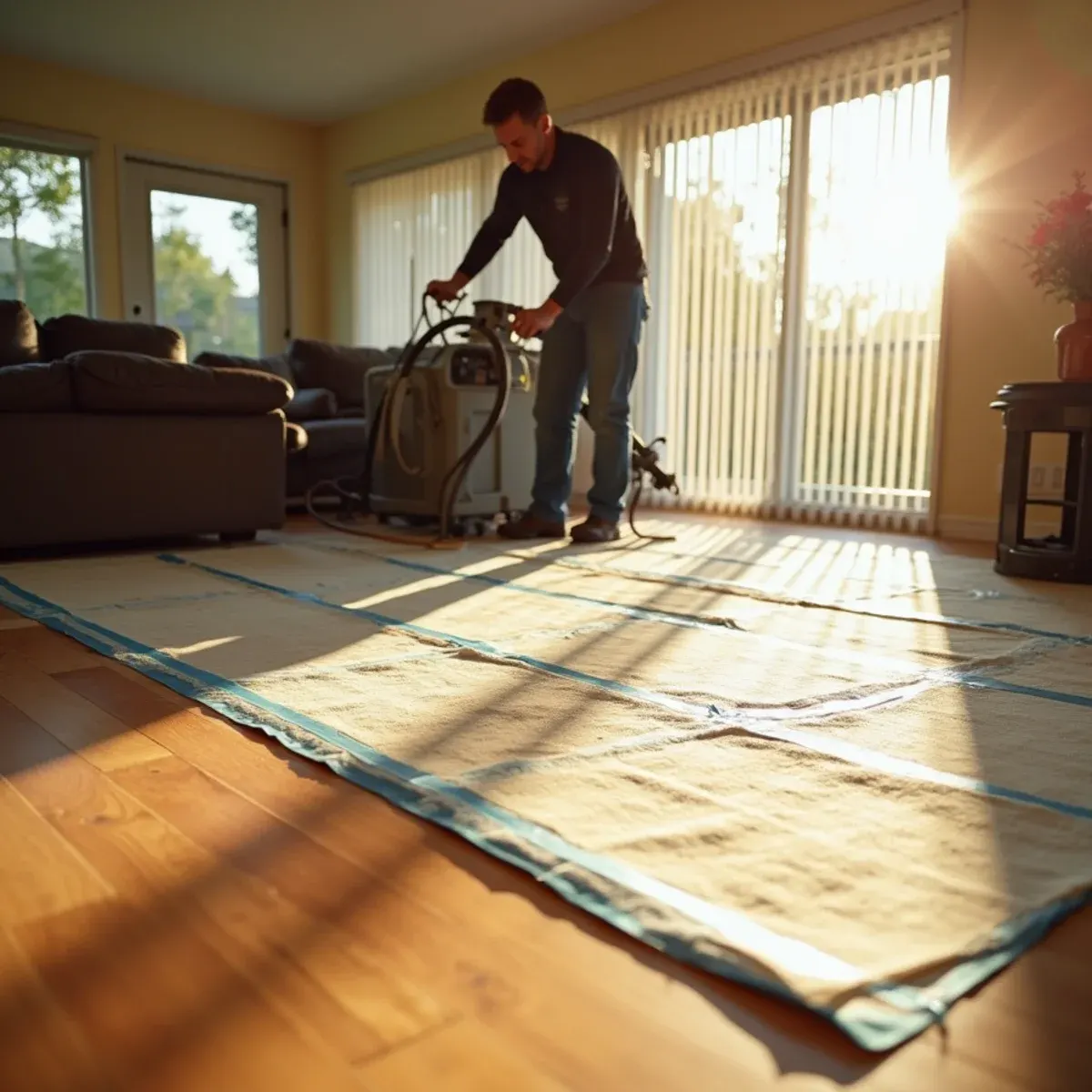
The best hardwood outcomes we get anywhere happen in Fullerton's older neighborhoods, and it comes down to what is underneath. Craftsman and Spanish Revival homes near downtown sit on raised foundations with a crawl space below, so when a floor gets wet we can attack it from both faces at once. Mats pull up through the seams while air moves under the joists. Floors that would take two weeks over a slab stabilize in a fraction of that. The wood helps too: old-growth Douglas fir and thick original oak, denser than anything milled today.
The catch is that the same crawl space hides the leak. Water drips away instead of pooling on a floor, so a supply line can weep for weeks under a Craftsman before the boards above start to cup, and by then the joist tops and subfloor are involved rather than just the finish floor. Around Cal State Fullerton and Fullerton College the rentals add a reporting delay on top of that, since students rarely call anyone until the floor visibly moves. Up in Raymond Hills the multi-level houses spread the same water across floors.
What Fullerton Changes About Hardwood Floor Drying
1Two-sided drying from the crawl space
Raised foundations near downtown give us access to the underside of the floor. Mats work the top face while we run air through the crawl space below, so moisture leaves in both directions instead of one. It is the single biggest reason old Fullerton floors survive losses that would condemn the same boards sitting on a slab in a neighboring city.
2Weeks of dripping before the floor moves
In a crawl space a leaking supply line drips away instead of pooling, so nothing shows on the floor until the boards start cupping. By that point the subfloor and the tops of the joists are usually involved too. We check framing and subfloor moisture, not just the finish floor, or you end up drying the visible half of a wet assembly.
3Student rentals report water damage late
The rental blocks around Cal State Fullerton and Fullerton College have a chronic delay problem. A leak starts Thursday and someone calls the following week. For wood floors that delay is the difference between drying and replacing. A shutoff location and an emergency number posted inside the unit is the cheapest floor insurance a landlord can buy.
How the Work Runs
The method is the same one we use on every hardwood floor drying job, documented to the IICRC S500:2025 standard. Here it is in short — the full hardwood floor water damage drying process explains each stage in detail.
- Measure before deciding anything
- Extract from below the surface
- Control the drying rate deliberately
- Dry the subfloor and any cavity below
- Let it acclimate before judging it
- Sand and refinish only if needed
The Fullerton Background Worth Knowing
The pre-war homes around downtown Fullerton were built with materials that behave completely differently from modern construction. Lath and plaster walls hold several times the water drywall does. Old-growth Douglas fir framing is dense and dries slowly. Original oak and fir flooring is thick, high-quality material that is well worth saving.
There is more on the housing stock, drainage and plumbing history of this city on our water damage restoration in Fullerton page.
Fullerton at a glance
- Dominant construction era
- 1910–1980
- Foundation type
- mixed on grade
- Supply piping found here
- galvanized steel, copper, original pre-war piping
- Drain line materials
- cast iron, clay
- Terrain and water table
- rolling, moderate water table
- Most common local failure
- crawl-space leaks that run undetected for weeks because the water drips away instead of pooling on a floor
- Highest-value local prevention
- posting a shutoff location and emergency contact in every rental, since delayed reporting is the local failure mode
What It Costs in Fullerton
We do not quote a number over the phone before seeing the property — anyone who does is guessing. The variables that actually move the price on a hardwood floor drying job are square footage under the mat system, solid versus engineered wood, what is underneath, and they are broken down in full on the hardwood floor water damage drying page. The assessment and the written estimate are free anywhere in Fullerton, day or night, with no obligation.
Hardwood Floor Drying Questions from Fullerton Homeowners
Check underneath. On a raised foundation a leaking supply line or drain drips into the crawl space instead of pooling on the floor, so the first symptom you see is the wood moving. That means it has likely been running a while and the subfloor is wet from below. It is actually the more recoverable situation, because we can dry both faces, but the crawl space needs looking at today.
Frequently, yes. Cupping is caused by uneven moisture between the top and bottom of each board, and when the moisture equalizes during controlled drying, much of the deformation reverses. Full flattening can take two to four weeks of acclimation after the equipment comes out, which is why we do not recommend sanding immediately.
Five to ten days under the mat system is typical, which is longer than drywall because wood gives up moisture slowly and has to be dried at a controlled rate. Rushing it causes splitting and permanent gapping, so the extra days are doing real work.
Yes, and they need a different approach. Lath and plaster and old-growth framing hold far more water than modern materials and dry much more slowly, so we plan for seven to fourteen days with higher-capacity equipment. The original material is worth that effort — nothing sold today replaces it.