
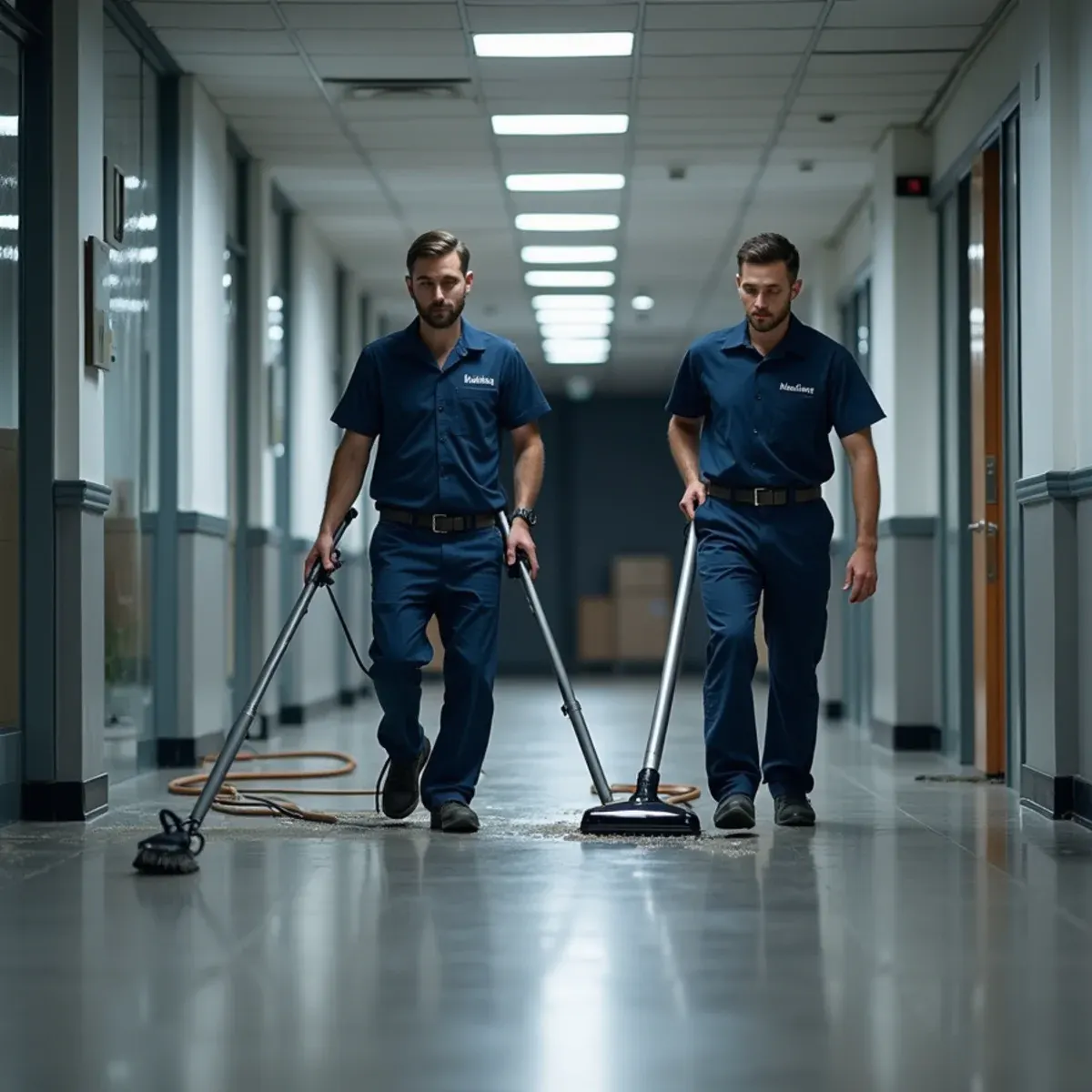
The commercial rows along Bellflower Boulevard and the Rosecrans corridor went up with the housing, fast, in the years after the war on what had been dairy and orchard land. That means original galvanized supply and cast-iron waste lines that are now around eighty years old, older than nearly anything we work on in Orange County. Galvanized fails at the threaded joints first, quietly, behind plaster. Cast iron fails from the inside out. In this stock they tend to reach the end of their service life in the same decade, which is why we see both in the same building.
The practical problem is isolation. A lot of these single-story rows were plumbed with one building shutoff and no per-suite valve, so stopping the water for the tenant who flooded also stops it for the four neighbors who did not. Downtime starts for everyone at once. The city also carries a large amount of multi-family added over the decades, which means an owner-operator with one policy, several occupancies, tenant contents and a loss-of-rents exposure sitting behind a single failure.
What Bellflower Changes About Commercial Restoration
1One shutoff, five tenants
When a row has no suite-level valve, the first hour is about getting a plumber to cut in an isolation point so the neighbors get water back. We treat that as part of the emergency response, not a follow-up. Every hour the whole row is dry-piped is an hour of downtime for businesses that had nothing to do with the failure, and business interruption clocks are running for all of them.
2Cast-iron backups change the category
An eighty-year-old lateral that fails does not deliver clean water. Under S500:2025 that is Category 3, and it changes everything downstream: PPE, containment, which porous materials can stay, disposal handling and the clearance criteria before a food or retail tenant reopens. We will name the category at the first assessment, because it is the difference between a three-day job and a much larger one.
3Owner-operator multi-family, many occupancies
Bellflower's apartment stock is often held by local owners rather than institutional managers, and they are running the claim themselves while fielding calls from tenants. We keep per-unit logs, track which units are habitable and which are not, and give the owner a document set that supports a loss-of-rents figure without them having to assemble it out of texts and photos.
How the Work Runs
The method is the same one we use on every commercial restoration job, documented to the IICRC S500:2025 standard. Here it is in short — the full commercial water damage restoration process explains each stage in detail.
- Rapid assessment with a business continuity lens
- Coordinate with stakeholders
- After-hours mobilization
- Documentation at commercial standard
- Scaled drying and containment
- Phased reconstruction
The Bellflower Background Worth Knowing
Galvanized steel was the standard supply pipe when Bellflower was being built, and it fails from the inside out. The zinc lining wears through, the steel underneath corrodes, and scale builds on the interior wall until the pipe is a fraction of its original diameter. Narrower pipe means faster, more turbulent water, which chews at elbows and threaded fittings until one of them lets go. Hot lines corrode faster than cold, which is why hot water pressure is usually the first thing to drop. Eighty years is well past any service life anyone intended when this was installed.
There is more on the housing stock, drainage and plumbing history of this city on our water damage restoration in Bellflower page.
Bellflower at a glance
- Dominant construction era
- 1940–1960
- Foundation type
- slab on grade
- Supply piping found here
- original galvanized steel, early copper
- Drain line materials
- cast iron
- Terrain and water table
- flat, moderate water table
- Most common local failure
- original galvanized supply lines and cast-iron laterals failing together in the same decade
- Highest-value local prevention
- scoping the sewer lateral, which on a house this age has usually never been looked at
What It Costs in Bellflower
We do not quote a number over the phone before seeing the property — anyone who does is guessing. The variables that actually move the price on a commercial restoration job are square footage and ceiling height, occupancy and access constraints, building systems involved, and they are broken down in full on the commercial water damage restoration page. The assessment and the written estimate are free anywhere in Bellflower, day or night, with no obligation.
Commercial Restoration Questions from Bellflower Homeowners
Very differently. Sewage contact makes it Category 3 under S500:2025, so porous materials that took the water generally come out rather than getting dried in place, the work area gets full containment and negative pressure, and crews work in appropriate PPE. Cleaning and disinfection happen before drying, not after. For a food service or retail tenant, we also plan for verification before reopening. It costs more and takes longer, and cutting corners on it is not something we will do.
Yes, and for most commercial clients that is the default. Night and weekend crews cost somewhat more in labor and almost always cost far less than the revenue lost by closing during business hours.
Regularly. Multi-family losses are documented unit by unit with separate files, moisture mapping, and drying logs, which is what allows multiple owners, an HOA, and several carriers to resolve their portions cleanly.
It is the most common gap we see here. A cast iron lateral that age has corroded along the bottom, the joints have shifted, and the parkway trees on most Bellflower streets have had seventy years to find them. A camera inspection costs a small fraction of a sewage remediation, and on a line that has never been scoped it usually finds something worth knowing about before it finds you at two in the morning.