
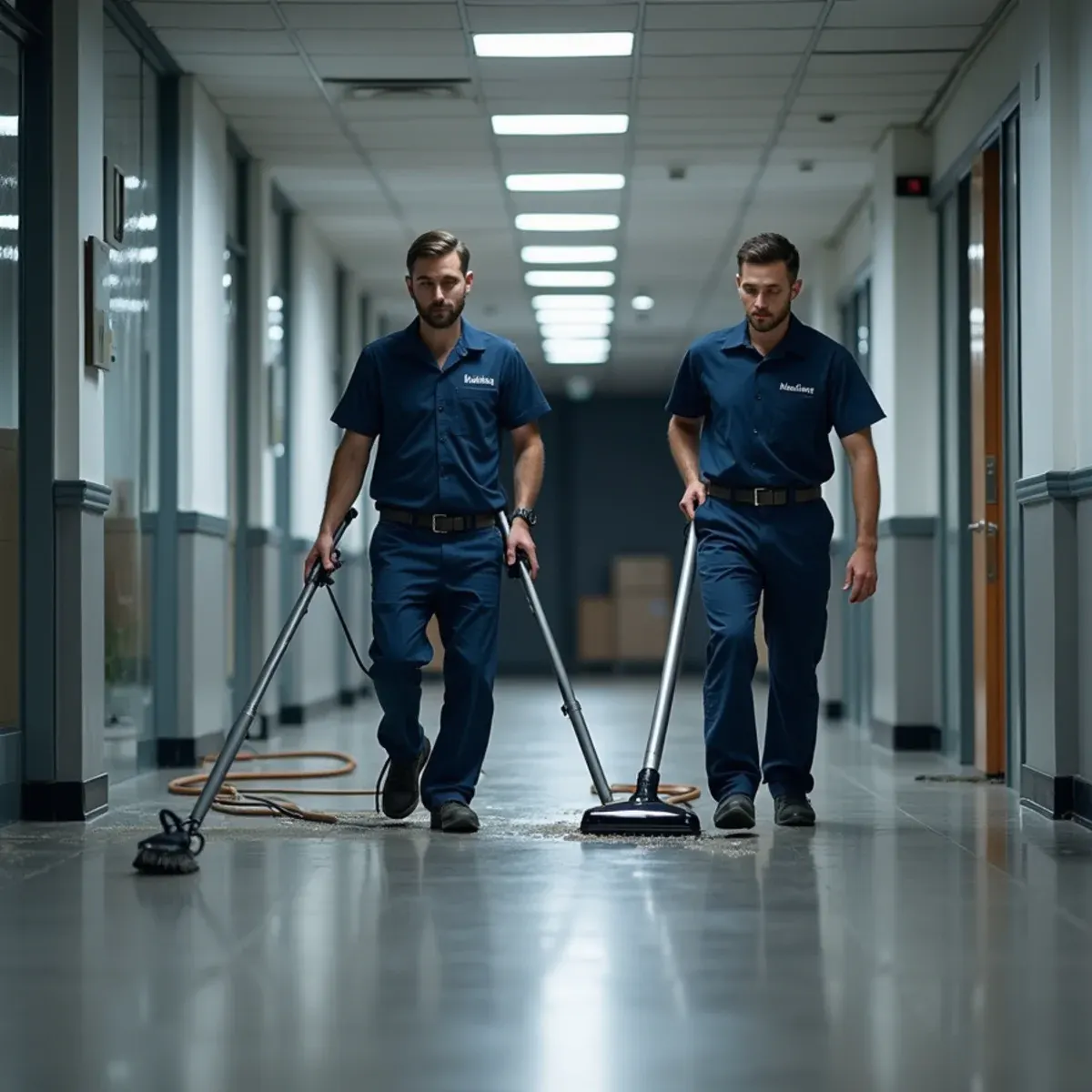
Anaheim is really several cities as far as this work goes. In the Resort District, a hotel loss is a room-night problem with corridors full of guests and a general manager watching occupancy. Two miles north in the Colony Historic District and around the Packing District, the same volume of water lands in lath-and-plaster walls that hold several times what drywall does and give it up far more slowly. In Anaheim Hills, multi-level commercial buildings on engineered slopes send water down through levels nobody expected it to reach.
So the first thing we do is identify what we are actually standing in. Plaster losses need aggressive drying started within hours, because wet plaster keys soften and let go of the wood lath holding them to the wall, and once that happens the wall is a rebuild rather than a dry-out. Hotel losses need staged room releases. Hillside multi-level buildings need us to find the path, not the puddle. Getting that call right on the first visit is most of the outcome.
What Anaheim Changes About Commercial Restoration
1Plaster in Colony and Packing District buildings
Original lath-and-plaster commercial walls behave nothing like drywall. They hold far more water, release it slowly, and fail structurally when the keys behind the lath soften. Under IICRC S500:2025 these are specialty drying situations, and we bring desiccant capacity rather than relying on refrigerant dehumidifiers alone. Started early, plaster is often savable. Started late, it comes off the wall in sheets.
2Resort District hotels release in stages
Occupancy is the number that matters near Disneyland and the Convention Center. We work top down through affected stacks, contain corridors so guests and housekeeping keep moving, and clear equipment from rooms the moment they meet the drying goal. Returning six rooms on day three and six more on day five beats holding all twelve until the file closes.
3Hillside multi-level buildings move water sideways
In Anaheim Hills, commercial and mixed-use buildings step down the slope, so an upper-level failure travels along framing and drops two levels away from its source. Retaining walls and engineered site drainage also put exterior water into lower levels during storms. We trace the path with thermal imaging and meters before opening anything, because guessing here means cutting the wrong floor.
How the Work Runs
The method is the same one we use on every commercial restoration job, documented to the IICRC S500:2025 standard. Here it is in short — the full commercial water damage restoration process explains each stage in detail.
- Rapid assessment with a business continuity lens
- Coordinate with stakeholders
- After-hours mobilization
- Documentation at commercial standard
- Scaled drying and containment
- Phased reconstruction
The Anaheim Background Worth Knowing
The Anaheim Colony Historic District and the older streets around downtown contain homes built from the early 1900s through the 1930s, and they are constructed differently in ways that matter enormously during a water loss.
There is more on the housing stock, drainage and plumbing history of this city on our water damage restoration in Anaheim page.
Anaheim at a glance
- Dominant construction era
- 1900–2000
- Foundation type
- mixed on grade
- Supply piping found here
- galvanized steel, under-slab copper, original early-century piping in the Colony
- Drain line materials
- cast iron, clay
- Terrain and water table
- hillside-mixed, moderate water table
- Most common local failure
- lath-and-plaster assemblies that hold several times the water drywall does and release it far more slowly
- Highest-value local prevention
- acting immediately on any plaster-wall loss, because wet plaster keys soften and release from the lath
What It Costs in Anaheim
We do not quote a number over the phone before seeing the property — anyone who does is guessing. The variables that actually move the price on a commercial restoration job are square footage and ceiling height, occupancy and access constraints, building systems involved, and they are broken down in full on the commercial water damage restoration page. The assessment and the written estimate are free anywhere in Anaheim, day or night, with no obligation.
Commercial Restoration Questions from Anaheim Homeowners
Not necessarily, and that decision is made in the first day. If we get airflow and dehumidification on early, plaster often dries and stays sound. What kills it is time. Once the keys behind the lath soften and release, the plaster loses its grip on the wall and no amount of drying brings it back. We meter the plaster rather than judge by appearance, and we tell you honestly which sections are worth saving.
Yes, and for most commercial clients that is the default. Night and weekend crews cost somewhat more in labor and almost always cost far less than the revenue lost by closing during business hours.
Regularly. Multi-family losses are documented unit by unit with separate files, moisture mapping, and drying logs, which is what allows multiple owners, an HOA, and several carriers to resolve their portions cleanly.
Yes, and we approach them differently. Lath and plaster holds much more water than drywall and dries far more slowly, so it needs more equipment and considerably more patience — but it can usually be saved in place, and original plaster is not something a repair can replace.