
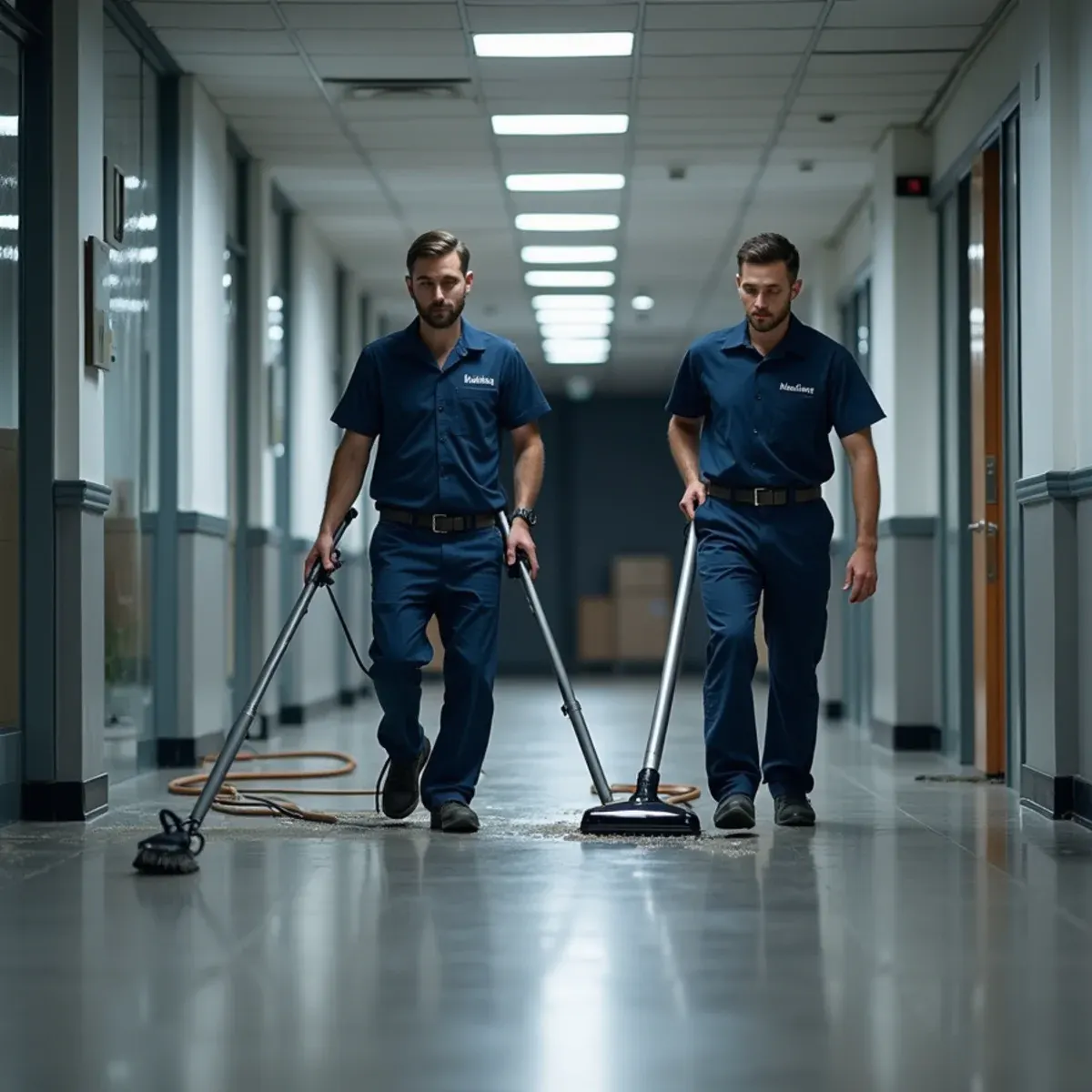
Plaster is the reason Santa Ana jobs are won or lost in the first six hours. This is the county's oldest city, and its commercial core, the Artists Village, and the buildings around Floral Park and French Park are full of lath-and-plaster assemblies that hold several times the water drywall does and release it far more slowly. When plaster stays wet, the keys behind the wood lath soften and let go, and the wall stops being a drying problem and becomes a reconstruction problem with a preservation file attached.
So we start aggressive drying immediately and we bring desiccant capacity rather than assuming standard refrigerant dehumidifiers will pull moisture out of a three-quarter-inch plaster wall. The second consideration is regulatory. Historic preservation review applies to exterior and some interior work in the designated districts, which means the scope your carrier approves and the scope the city will permit are not automatically the same document. We get ahead of that, because a reconstruction that stalls in review is a tenant who stays closed.
What Santa Ana Changes About Commercial Restoration
1Plaster drying needs desiccant capacity
A wet plaster wall holds far more water than drywall and gives it back slowly. Refrigerant dehumidifiers alone often cannot pull the vapor pressure low enough to move it. IICRC S500:2025 treats this as a specialty drying situation, and we size accordingly with desiccant equipment and directed airflow behind the lath where access allows. The alternative is a wall that reads dry on the surface and fails months later.
2Preservation review shapes the schedule
In the historic districts, exterior work and some interior elements go through review before a permit is issued. Original wood windows, storefront details and interior trim frequently cannot simply be replaced with modern stock. We document original materials before demolition and salvage what can be reinstalled, which shortens review and keeps the reconstruction from becoming an argument about substitutions.
3Old-growth flooring is worth saving
Original hardwood in these buildings has no modern equivalent and is often savable even after significant wetting. We use floor drying systems that pull moisture through the board face rather than tearing it out on sight. Cupped boards frequently flatten as the moisture equalizes. That decision is made with a meter and a few days of patience, not on the first walkthrough.
How the Work Runs
The method is the same one we use on every commercial restoration job, documented to the IICRC S500:2025 standard. Here it is in short — the full commercial water damage restoration process explains each stage in detail.
- Rapid assessment with a business continuity lens
- Coordinate with stakeholders
- After-hours mobilization
- Documentation at commercial standard
- Scaled drying and containment
- Phased reconstruction
The Santa Ana Background Worth Knowing
Lath and plaster is wood strips nailed across the studs with several coats of plaster troweled over them. The plaster that squeezes through the gaps between lath forms keys that hook over the wood and hold the whole wall in place. That construction is why plaster walls last a century — and why they behave so differently from drywall when wet.
There is more on the housing stock, drainage and plumbing history of this city on our water damage restoration in Santa Ana page.
Santa Ana at a glance
- Dominant construction era
- 1900–1970
- Foundation type
- mixed on grade
- Supply piping found here
- original early-century piping, galvanized steel, copper
- Drain line materials
- cast iron, clay
- Terrain and water table
- flat, moderate water table
- Most common local failure
- plaster key failure, where wet plaster softens and releases from the wood lath holding it to the wall
- Highest-value local prevention
- starting aggressive drying within hours on any plaster loss — waiting is the one thing that costs you the wall
What It Costs in Santa Ana
We do not quote a number over the phone before seeing the property — anyone who does is guessing. The variables that actually move the price on a commercial restoration job are square footage and ceiling height, occupancy and access constraints, building systems involved, and they are broken down in full on the commercial water damage restoration page. The assessment and the written estimate are free anywhere in Santa Ana, day or night, with no obligation.
Commercial Restoration Questions from Santa Ana Homeowners
That is the goal, and it depends on how fast we start. Plaster and old-growth flooring both respond well to early, aggressive drying and badly to delay. We document original materials before any demolition, salvage trim and flooring where possible, and keep cuts minimal and reversible. Where the historic districts require review, having a photographed record of what was there before the loss makes the permit conversation much shorter.
Yes, and for most commercial clients that is the default. Night and weekend crews cost somewhat more in labor and almost always cost far less than the revenue lost by closing during business hours.
Regularly. Multi-family losses are documented unit by unit with separate files, moisture mapping, and drying logs, which is what allows multiple owners, an HOA, and several carriers to resolve their portions cleanly.
Usually, if drying starts quickly. Plaster holds much more water than drywall and dries far more slowly, so it needs more equipment and often desiccant dehumidification. The risk is the plaster keys softening and releasing from the lath, which is why waiting is the one thing that genuinely costs you the wall.