
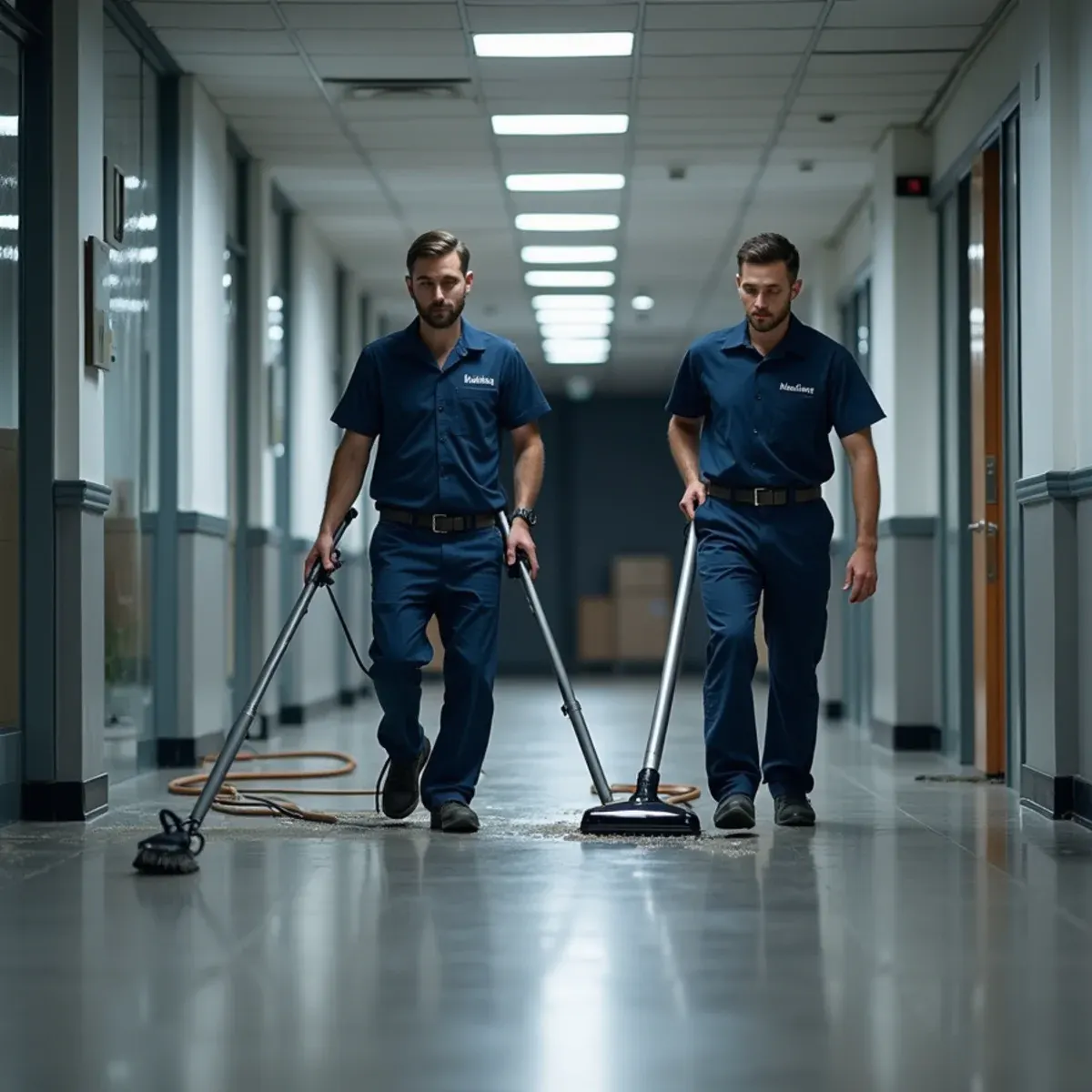
Water is standing two feet deep in a basement under Greenleaf Avenue and the electrical panel is down there with it. That scenario barely exists anywhere else we work, because almost nothing in this part of Southern California has a basement. Uptown Whittier does. The commercial blocks along Greenleaf and Philadelphia went up between the 1900s and the 1920s in masonry, many with basement storage, light wells and offices above the retail, all sharing walls. When something fails upstairs, gravity delivers it to the lowest point in the building and it stays there.
The rest of the city is a different job entirely. College Hills, subdivided in 1923 as the city's first planned hillside development, still has the steep grades and curving streets that push runoff from one property onto the one below. Friendly Hills and the Whittier Hills continue that pattern. East Whittier is conventional postwar slab tract with the commercial corridors to match. Whittier College adds campus buildings of several eras, some of them as old as Uptown and built the same way.
What Whittier Changes About Commercial Restoration
1Basements change the whole approach
Standing water means extraction and pumping before anything else, and it means treating the power as a hazard until it is confirmed off. Contact time also matters: water sitting in a basement degrades in category as the hours pass under S500:2025, and what began as a clean supply break may not be clean by the time we can reach the bottom step. We prioritize these calls accordingly.
2Masonry wicks upward for weeks
Brick and the original plaster over it hold water differently than drywall, drawing it up the wall well above the visible line. Surface meters lie on these assemblies. We take readings into the material, dry the cavity where there is one, and stay on a masonry wall longer than a modern partition would need. Shared party walls mean the neighbor's side gets monitored too.
3Hillside properties drain onto each other
In College Hills and Friendly Hills the grade does the deciding. A failed drain or overwhelmed swale on an upslope property sends water into the building below, which makes the source someone else's and the damage yours. We photograph the flow path while the ground is still wet, because that evidence disappears within a day and it is what the adjusters will want when liability comes up.
How the Work Runs
The method is the same one we use on every commercial restoration job, documented to the IICRC S500:2025 standard. Here it is in short — the full commercial water damage restoration process explains each stage in detail.
- Rapid assessment with a business continuity lens
- Coordinate with stakeholders
- After-hours mobilization
- Documentation at commercial standard
- Scaled drying and containment
- Phased reconstruction
The Whittier Background Worth Knowing
A leak under a raised foundation does not announce itself the way a slab leak does. There is no puddle on the floor and no warm spot underfoot, because the water drips down into the soil and stays there. What you get instead is a smell that is stronger in the morning, a board that feels slightly soft, and eventually a floor that has been quietly feeding fungal growth for months. By the time an Uptown homeowner calls us about a crawl space leak, the question is rarely how to dry it. It is how much of the joist and subfloor is still doing its job.
There is more on the housing stock, drainage and plumbing history of this city on our water damage restoration in Whittier page.
Whittier at a glance
- Dominant construction era
- 1890–1980
- Foundation type
- mixed on grade
- Supply piping found here
- original turn-of-century piping, galvanized steel, under-slab copper
- Drain line materials
- cast iron, clay
- Terrain and water table
- hillside-mixed, moderate water table
- Most common local failure
- raised-foundation crawl-space leaks in Uptown, and slope drainage failures in the hillside tracts
- Highest-value local prevention
- an annual crawl-space or slope-drain check, depending which Whittier you live in
What It Costs in Whittier
We do not quote a number over the phone before seeing the property — anyone who does is guessing. The variables that actually move the price on a commercial restoration job are square footage and ceiling height, occupancy and access constraints, building systems involved, and they are broken down in full on the commercial water damage restoration page. The assessment and the written estimate are free anywhere in Whittier, day or night, with no obligation.
Commercial Restoration Questions from Whittier Homeowners
Power first, always, and not by us guessing at a panel that is already partly submerged. If the disconnect is safely reachable we shut it down; if it is not, the utility or an electrician does it before anyone goes near the water. Then we pump and extract. Basement losses in these Uptown buildings also tend to involve sump conditions and old floor drains, so we check whether the building fights groundwater normally before we call the source.
Yes, and for most commercial clients that is the default. Night and weekend crews cost somewhat more in labor and almost always cost far less than the revenue lost by closing during business hours.
Regularly. Multi-family losses are documented unit by unit with separate files, moisture mapping, and drying logs, which is what allows multiple owners, an HOA, and several carriers to resolve their portions cleanly.
It cuts both ways. A crawl space leak hides longer, because the water drips into soil instead of pooling on your floor, so it often runs for months and reaches the framing before anyone notices. The upside is real though: the plumbing is accessible, so locating and repairing it does not mean breaking concrete. On balance, detection is your weak point in Uptown, which is why an annual look under the house is worth doing.