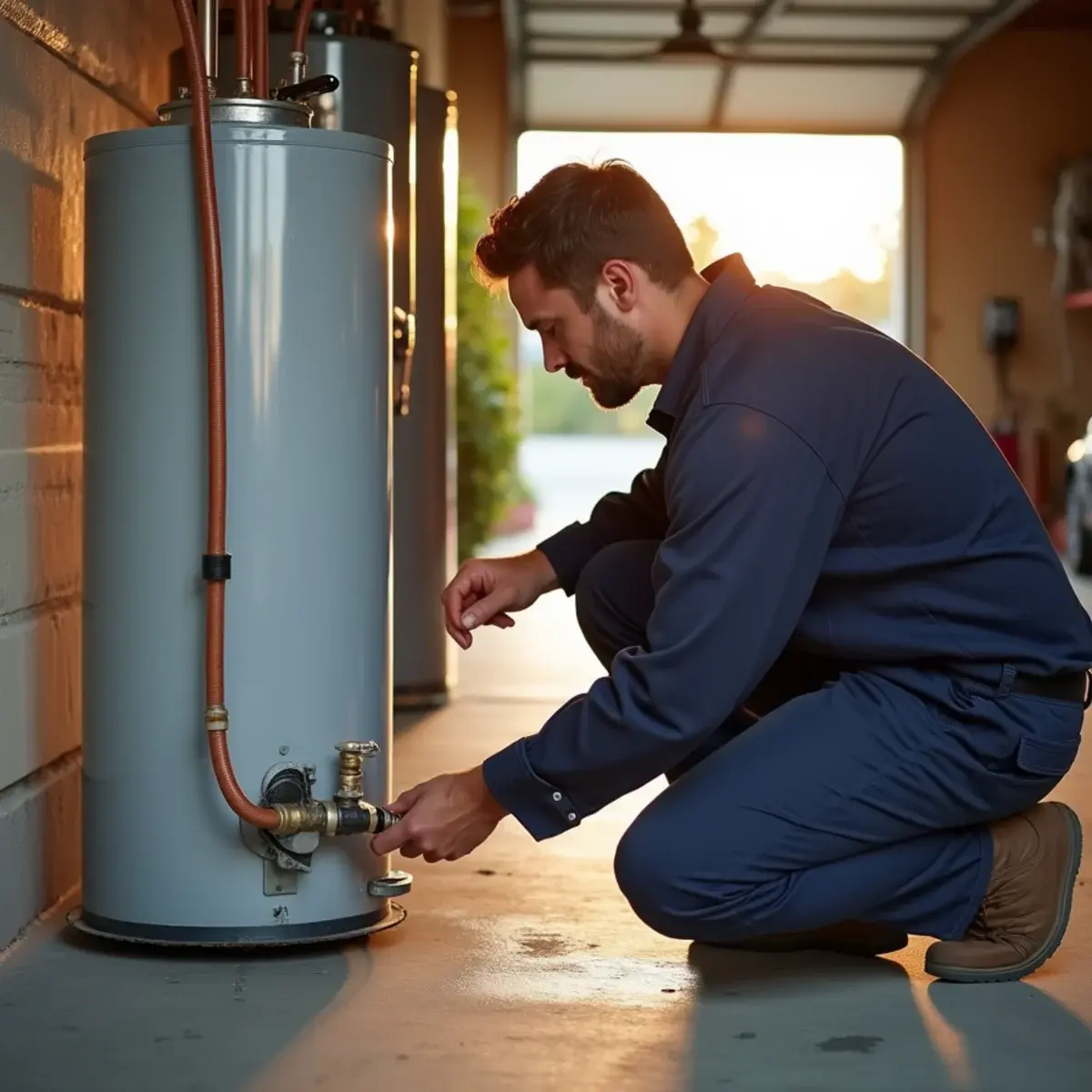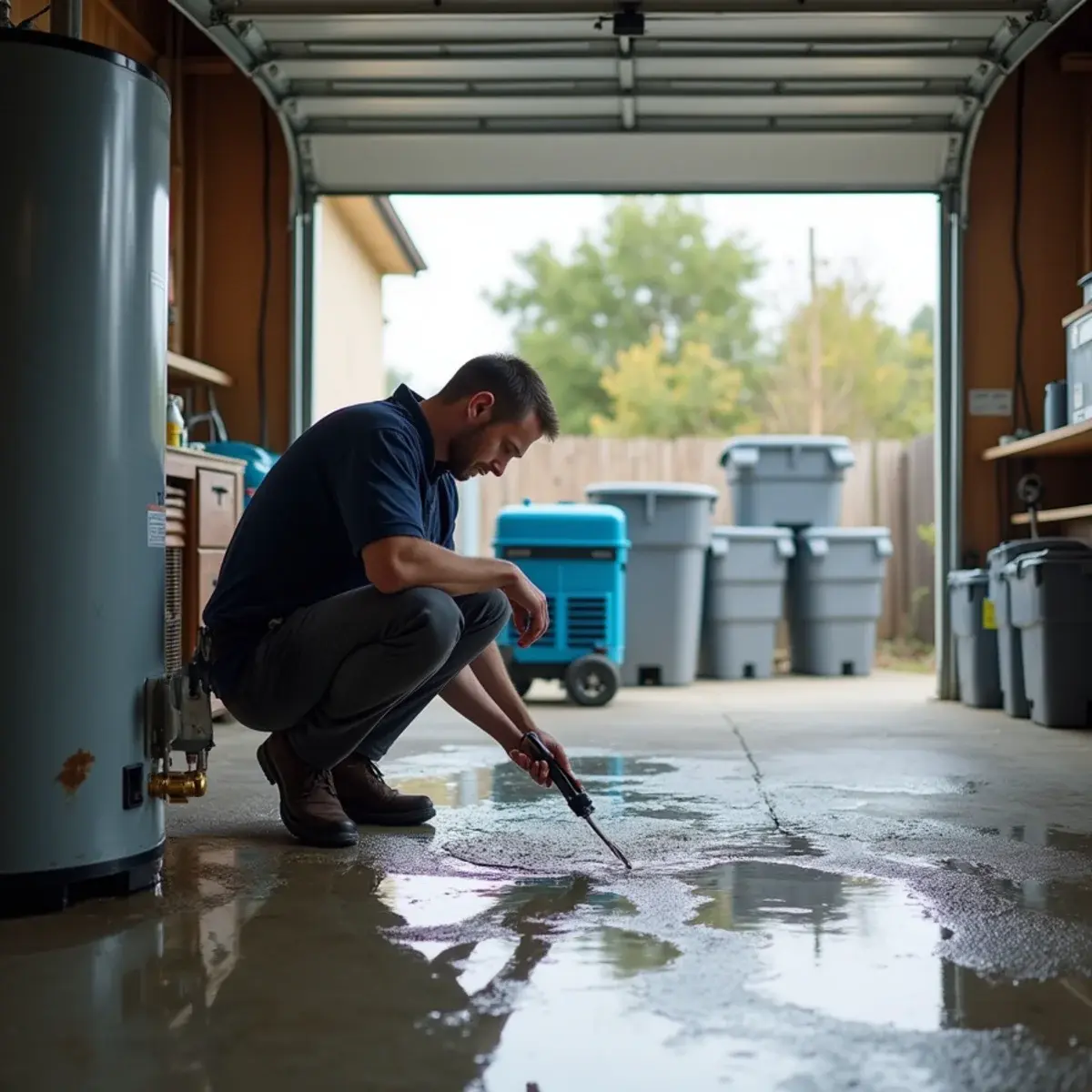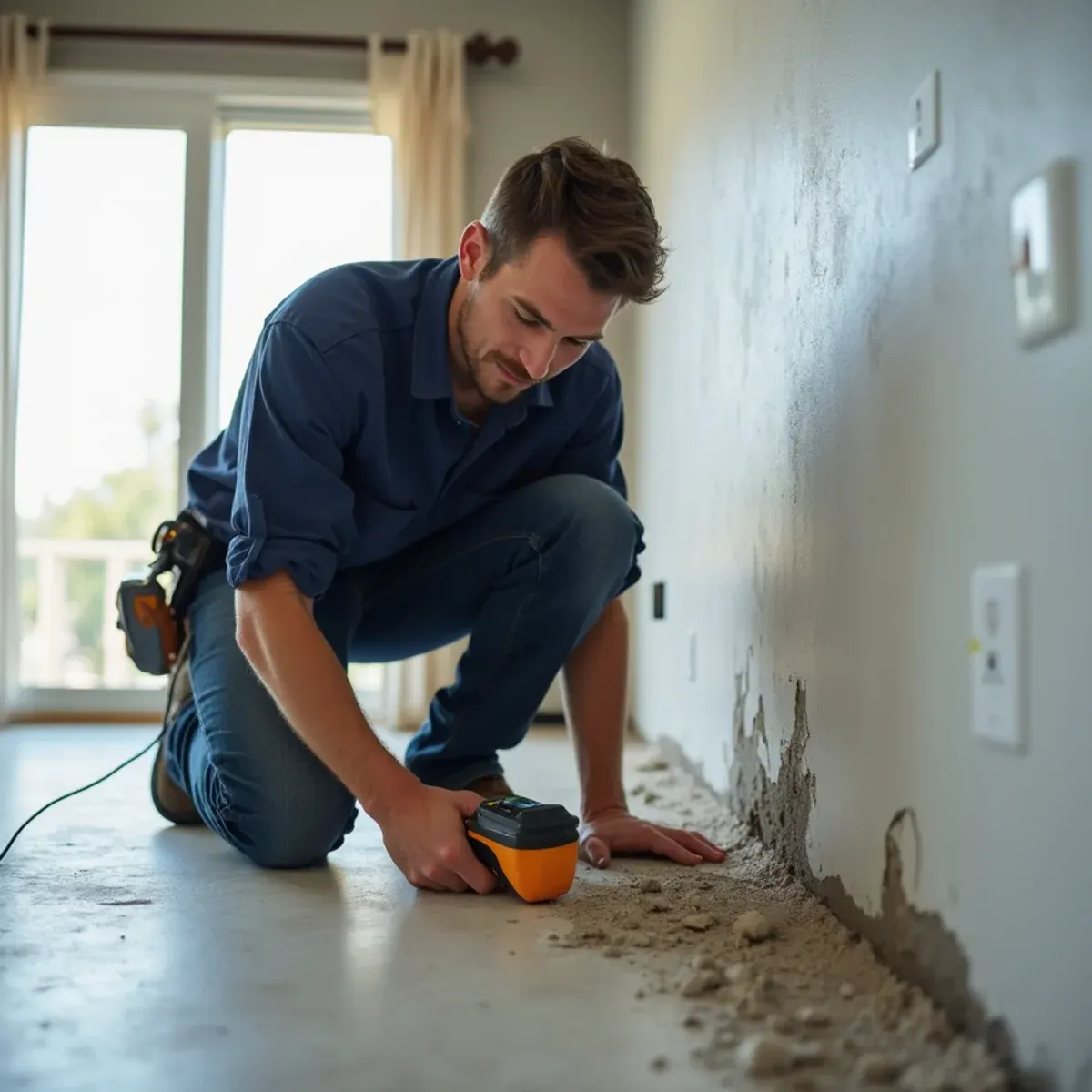
The figure you see everywhere is 24 to 48 hours, and it is broadly accurate — mold spores present in every building can begin germinating on a wet organic surface within roughly a day or two under ordinary indoor conditions.
But that number gets repeated without much explanation, and the explanation is what tells you how urgent your particular situation is. Growth depends on four things, and three of them are already fixed in your home.
Here is the actual timeline and what moves it.
The Four Conditions Mold Needs
Mold requires spores, an organic food source, a suitable temperature, and moisture. Three of those are permanently present in every building in Southern California.
Spores are in the air everywhere, indoors and out, all the time. There is no such thing as a spore-free house and no product that creates one.
Food is your building. Drywall paper, wood framing, carpet backing, dust, and adhesives are all organic. Temperature is whatever is comfortable for you — the range mold prefers is roughly the range humans do.
That leaves moisture as the only variable you control. Which is why every legitimate mold discussion is actually a moisture discussion.
The Actual Timeline
Under typical indoor conditions with sustained moisture:
- Hours 0-24: Spores present on wet material begin absorbing water and germinating. Nothing is visible and there is no odor yet. This is the window where correct drying prevents everything that follows.
- Hours 24-48: Germination establishes and hyphae begin extending into the material. Still generally not visible. A faint musty odor may begin.
- Days 3-7: Visible colonies appear on surfaces. Odor becomes noticeable. Growth extends into porous material rather than sitting on top of it.
- Days 7-21: Colonies mature and begin producing spores, which spread through the air to other damp areas. This is where a localized problem becomes a whole-house problem.
- Beyond 21 days: Established growth with material degradation. Remediation now requires containment, removal, and clearance rather than drying.
What Makes It Faster
Several conditions compress that timeline meaningfully.
Warmth. Growth accelerates in the upper end of the comfortable range, which is why a hot-water line failure produces faster growth than a cold-line failure — the cavity itself is warmed.
Water category. Gray and black water carry organic material and existing microbial load, so growth starts from a much stronger position than with clean supply water.
Enclosed, unventilated spaces. Inside a wall cavity, under a cabinet, beneath flooring, or in a closet, there is no airflow and no light, and moisture cannot escape. Growth in these spaces runs faster than the general timeline and it does so entirely unseen.
Existing humidity. This is where Southern California's specifics matter, and they cut against the intuition that a dry climate protects you.
The Southern California Complication
People assume our climate is protective. It is, in one respect and not in another.
We do not get the sustained summer humidity of the Southeast, so a well-ventilated dry house here is genuinely less prone to background growth than the same house in Florida. That much is true.
But coastal Orange County gets consistent marine layer conditions that push indoor relative humidity into the seventies and eighties overnight and into the morning for much of the year. That is not enough to start growth on its own in a dry house. It is very much enough to sustain growth once a leak has started — and, crucially, it dramatically slows natural drying.
Which is why the common do-it-yourself approach of opening the windows and running a box fan performs so much worse here than people expect. For a good part of the day you are bringing in air that is wetter than what is already inside, and the wet material simply does not dry.
Where the Real Deadline Sits
The practical way to think about it: the 24-to-48-hour figure is when growth begins, not when it becomes a problem you can see. The deadline that matters for you is earlier.
If materials are dried to a documented dry standard within the first 24 to 48 hours, growth generally does not establish, and you have a water damage job rather than a mold job. That is the whole game.
If materials stay wet past 72 hours, assume growth has started somewhere in the assembly, whether or not anything is visible. At that point remediation planning is warranted rather than optimism.
This is why response speed is the single most consequential variable in the entire process — more than equipment brand, more than company size, more than anything else anyone will tell you about.
How to Stay Ahead of It
Four things, in order of impact:
- Call the same day. Not the next morning. The difference between hour 3 and hour 30 is frequently the difference between drying materials and removing them.
- Dry to a measured standard, not to appearances. Surfaces dry days before the material behind them does, and touch is not a test.
- Remove what cannot be dried. Saturated carpet pad, wet fiberglass insulation, and swollen particleboard hold moisture against everything around them and never recover.
- Fix the moisture source. Remediation without correcting the cause is temporary by definition, and the growth will come back on the same timeline.
The 24-to-48-Hour Rule Is a Guideline, Not a Countdown
From our crews in the field
The number gets quoted as though a timer starts when the pipe breaks. In practice growth depends on temperature, the material, and whether the moisture is still there. Paper-faced drywall in a warm closed room can show growth inside two days. A concrete slab in an open, ventilated space may sit wet for a week without anything establishing.
What we actually watch is whether the material is still above its dry standard, because that is the condition mold needs. Once readings come down and stay down, the risk effectively stops regardless of how many hours elapsed. This is why we document daily numbers rather than counting days — the number is the evidence, the clock is only a rule of thumb.
The honest tradeoff: an air-quality test in the first few days after a loss is usually a waste of your money. Spore counts are elevated everywhere immediately after any disturbance. Testing is worth doing when there is a specific question to answer — a smell that persists after drying, a real-estate transaction, or a health concern — not as a reflex.
- Warm, closed, paper-faced material is the fastest-growing combination
- Growth stops when moisture content drops, not when a number of hours passes
- Daily moisture readings are better evidence than an elapsed-time estimate
- Testing immediately after a loss usually tells you nothing useful
Services Mentioned in This Guide
- Mold Remediation & Removal in Cypress, CA — We fix the moisture source first — because remediation without correcting the cause is a temporary result.
- Structural Drying & Dehumidification in Cypress, CA — LGR dehumidifiers, calculated air-mover placement, and a daily moisture log that proves the structure actually dried.
- Emergency Water Damage Restoration in Cypress, CA — A live person answers in three rings and a truck rolls in 30 minutes — any hour, any day, anywhere in Cypress.
- Water Damage Restoration in Cypress, CA — Predominantly single-story slab-on-grade tract homes built between 1960 and 1980, with a newer band of construction from the 1990s onward on the west side.
- Water Damage Restoration in Huntington Beach, CA — A large coastal city where housing ranges from dense downtown lots and waterfront Huntington Harbour properties to inland tracts from the 1960s and 1970s.
Frequently Asked Questions
Routinely, and it is the most common scenario we deal with. Wall cavities are dark, enclosed, and unventilated, which accelerates growth relative to an open surface. The first sign is almost always odor rather than anything visible.
Only if the material actually reached a dry standard, and surface drying does not tell you that. Carpet can feel dry while the pad beneath it stays saturated. A moisture meter reading is the only way to know, and the inspection is free.
Not on porous materials. Bleach is mostly water, and on drywall or wood the water content soaks in while the chlorine stays on the surface — which can make matters worse. Drying quickly and completely is what actually prevents growth.
Watch for four to six weeks. Musty odor, staining, lifting drywall tape, or warping flooring appearing in that window means moisture is still present somewhere. If any of that shows up, get it read rather than waiting to see whether it worsens.
The Clock Starts When the Water Does
Everything about mold prevention reduces to one variable: how long materials stay wet. Not the climate, not the equipment brand, not what anyone sprays on a surface. Time.
If something in your home is wet right now, that is the reason to call today rather than tomorrow. We answer 24 hours a day across Cypress and the surrounding cities, and the assessment costs nothing.
Open 24 hours a day, 7 days a week — including holidays
On-site within 60 minutes of your confirmed emergency call anywhere in Cypress — or we credit $100 off your final invoice.