
Bellflower has some of the oldest working plumbing in this part of the county. Dairy and orchard land — the city takes its name from an apple variety — filled in fast after the war with small houses on small lots, and in places the original systems are pushing eighty years. Galvanized supply and cast-iron laterals installed in the same decade tend to fail in the same decade. Almost all of it sits on slab, which means the water shows up in flooring and baseboard, not in a sub-area under the house.
So crawl-space drying is a minority job here, and we'd rather be straight about that. The sub-floor voids we do find are under the thin band of prewar houses that predate the tract build-out, and under the additions and converted garages that got tacked onto small houses as families grew. There's also a lot of multi-family added since the 1960s, where a ground-floor unit's floor system can sit over a shallow void. Those spaces are low, tight, and almost never sheeted.
What Bellflower Changes About Crawl Space Drying
1Eighty-year-old laterals fail together
When cast-iron drain laterals from the 1940s finally go, they often go on several houses in the same block within a few years — same installer, same material, same soil. A failed lateral under a raised prewar floor puts contaminated water on the dirt, which turns the job from drying into remediation. Category matters more than volume in those cases, and we'll say so before anything starts.
2Prewar voids are low and unsheeted
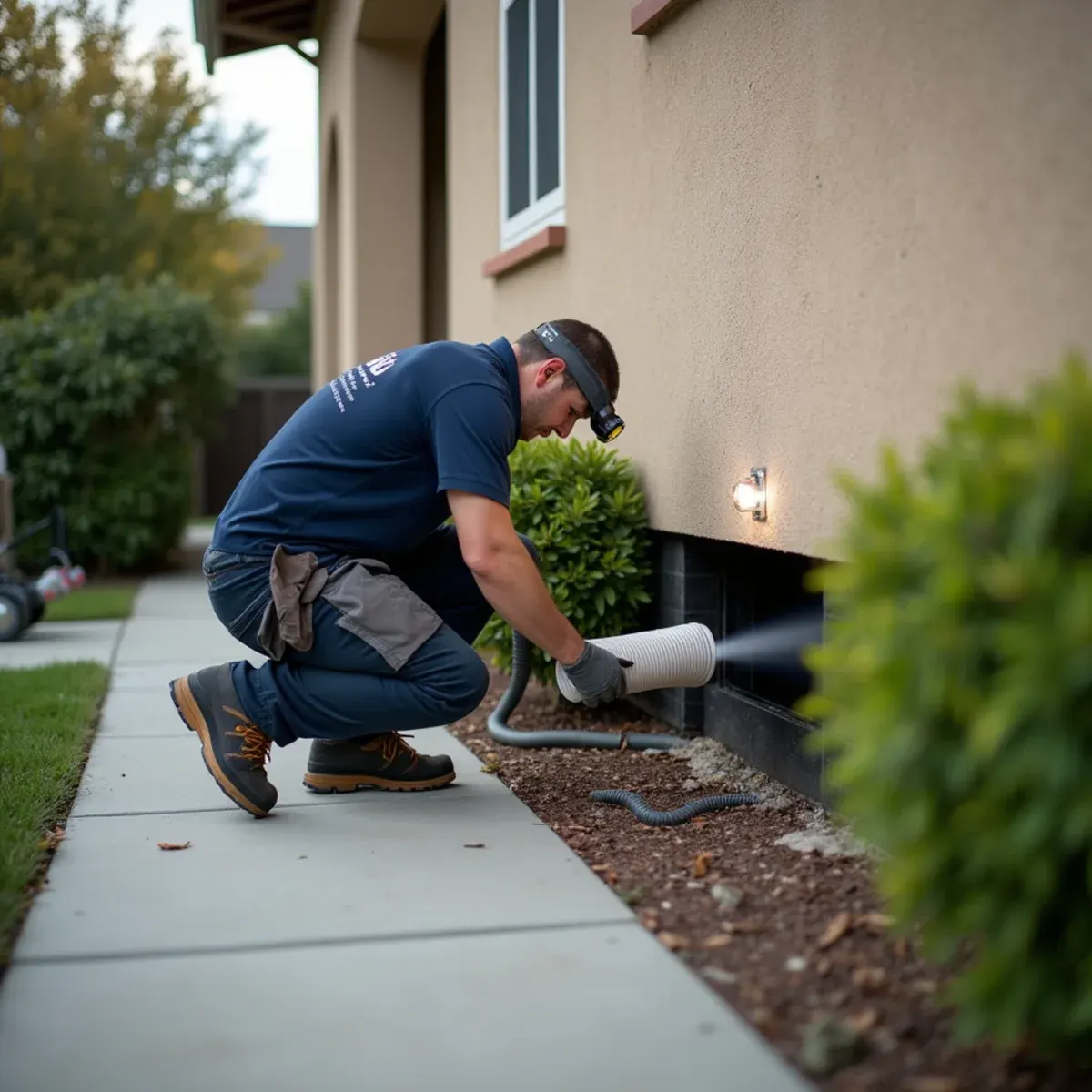
The handful of Bellflower houses that predate the tracts sit low to the ground — sometimes eighteen inches of working clearance or less. Insulation was added late, if at all, and a ground vapor barrier is the exception rather than the rule. Getting equipment in means ducting air from outside rather than setting machines inside, and it means the wet fiberglass comes out in pieces.
3Small lots complicate multi-family jobs
Duplexes and fourplexes on lots originally platted for one small house leave little exterior space. Staging dehumidifiers, running duct to a sub-floor void and keeping walkways clear for other tenants takes planning a single-family job doesn't need. We coordinate placement with owners and occupants up front, and we keep access to the affected unit controlled while equipment runs.
How the Work Runs
The method is the same one we use on every crawl space drying job, documented to the IICRC S500:2025 standard. Here it is in short — the full crawl space water damage & drying process explains each stage in detail.
- Get in and map the whole space
- Extract, then remove what is finished
- Build the crawl space into a chamber
- Dry the framing to a measured standard
- Deal with growth on the joists
- New barrier, insulation, encapsulation if warranted
The Bellflower Background Worth Knowing
Galvanized steel was the standard supply pipe when Bellflower was being built, and it fails from the inside out. The zinc lining wears through, the steel underneath corrodes, and scale builds on the interior wall until the pipe is a fraction of its original diameter. Narrower pipe means faster, more turbulent water, which chews at elbows and threaded fittings until one of them lets go. Hot lines corrode faster than cold, which is why hot water pressure is usually the first thing to drop. Eighty years is well past any service life anyone intended when this was installed.
There is more on the housing stock, drainage and plumbing history of this city on our water damage restoration in Bellflower page.
Bellflower at a glance
- Dominant construction era
- 1940–1960
- Foundation type
- slab on grade
- Supply piping found here
- original galvanized steel, early copper
- Drain line materials
- cast iron
- Terrain and water table
- flat, moderate water table
- Most common local failure
- original galvanized supply lines and cast-iron laterals failing together in the same decade
- Highest-value local prevention
- scoping the sewer lateral, which on a house this age has usually never been looked at
What It Costs in Bellflower
We do not quote a number over the phone before seeing the property — anyone who does is guessing. The variables that actually move the price on a crawl space drying job are access and working height, how much of the footprint got wet, water category and soil contamination, and they are broken down in full on the crawl space water damage & drying page. The assessment and the written estimate are free anywhere in Bellflower, day or night, with no obligation.
Crawl Space Drying Questions from Bellflower Homeowners
Under the slab, most likely. Houses from the postwar build-out here were poured on grade, and at that age the concern is original galvanized supply scaling shut and cast-iron drain lines corroding through. Both push moisture up into flooring and along baseboards. If your house happens to predate the tracts and has foundation vents, then there is a sub-area worth opening, and at eighty years old it almost certainly has no vapor barrier on the dirt.
Often you cannot tell from inside, which is the whole problem. Sub-area odor rises through plumbing penetrations and the baseboard line and reads like a wall or flooring issue. The check takes about twenty minutes: a technician under the house with a light and a moisture meter. If the framing meters dry and the barrier is intact, we tell you it is not the crawl space and go look somewhere else.
Sometimes, over months, and usually not completely. The vents give you passive air exchange, which only helps when outdoor air is drier than the space. On a marine layer morning here that air is above 80% relative humidity, so the vents are bringing moisture in. Meanwhile the wet soil keeps evaporating and the subfloor above keeps taking it up. Left alone, the common outcome is growth on the joists.
It is the most common gap we see here. A cast iron lateral that age has corroded along the bottom, the joints have shifted, and the parkway trees on most Bellflower streets have had seventy years to find them. A camera inspection costs a small fraction of a sewage remediation, and on a line that has never been scoped it usually finds something worth knowing about before it finds you at two in the morning.